
The Senate's September 15 cloture vote on the CLARITY Act is a procedural first step, with prediction markets pricing the bill's passage at 14 percent.
The Senate's September 15 cloture vote on the CLARITY Act is a procedural first step, with prediction markets pricing the bill's passage at 14 percent.
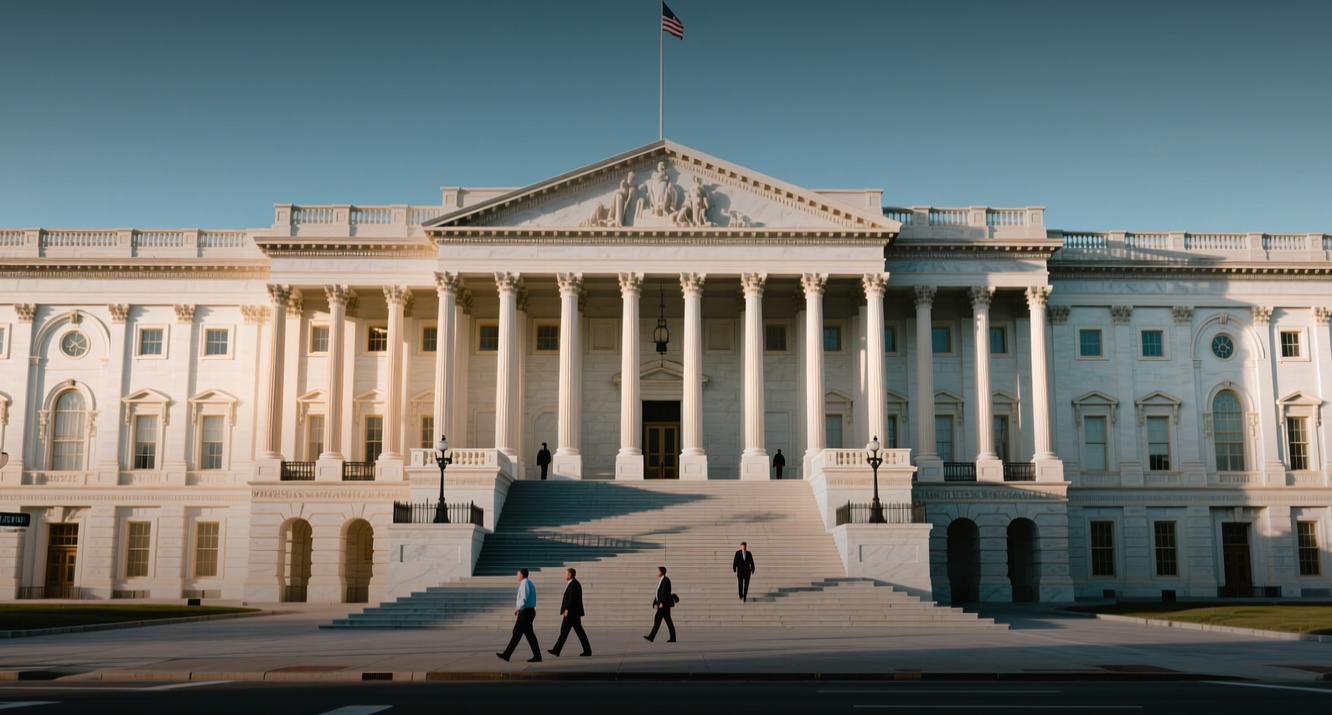
The Senate's September 15 cloture vote on the CLARITY Act is a procedural first step, with prediction markets pricing the bill's passage at 14 percent.
On September 15, the US Senate holds a cloture vote on the CLARITY Act, the bill that would split SEC and CFTC jurisdiction over digital assets, with prediction markets pricing passage at 14 percent.
"That vote on September fifteenth, it's very important for people watching, is not the final passage vote," Cody Carbone, chief executive of The Digital Chamber, said. "It's just kickstarting the process."
The cloture motion, filed by Senate Majority Leader John Thune before the August recess, needs 60 votes to overcome a filibuster. The House passed the bill 294-134 in July 2025, and the Senate Banking Committee advanced it May 14 by a 15-9 vote, with 13 Republicans joined by two Democrats. Polymarket's contract has traded more than $11 million, falling from an 82 percent peak in February to 14 percent.
If cloture fails, the bill is effectively dead for 2026, with only 14 working days before the October election recess and 22 total through year-end. If it clears, the Senate still faces floor debate, amendment votes, and reconciliation with the House version before reaching the president's desk.
Carbone identified ethics provisions as the biggest obstacle to the 60-vote threshold. "Ethics is the biggest challenge by far. You're not gonna get sixty if you don't have ethics figured out," he said. Senators Thom Tillis and Ruben Gallego sent new ethics language to the White House before the recess, and that language remains under review, with no public comment from the administration.
The Blockchain Regulatory Certainty Act, a separate provision, is "in a good place," Carbone said, citing recent support from law enforcement groups. President Trump gathered regulators and exchange executives at the White House on August 19 to press for action, but the negotiation did not unblock the stalemate. Even the two Democrats who backed the bill in committee signaled that a committee vote did not guarantee support on the floor.
Carbone framed the moment as a narrow window for the US to lead on crypto policy, pointing to how Europe fell behind the US during the dot-com boom. "This crypto needs to be the next frontier where the US leads from the very beginning," he said. "We can't squander this chance." He added that regulators Paul Atkins at the SEC and Michael Selig at the CFTC could continue rulemaking if the bill fails, "but we need the durability of legislation."
The vote carries direct implications for XRP, which closed August up 35 percent near $1.41 after a third-quarter rebound of 37 percent, according to CoinGecko data. The token has posted positive September returns for four consecutive years, ranging from 0.42 percent to 46.2 percent, defying the broader market's tendency toward autumn softness. Spot XRP ETFs drew $127.34 million in net inflows in August, lifting cumulative inflows to $1.64 billion, while the XRP Ledger surpassed five billion transactions.
A favorable vote would clarify whether XRP is classified as a commodity under CFTC jurisdiction or a security under SEC oversight, potentially removing years of regulatory ambiguity. A setback would prolong the uncertainty that has weighed on the token, which fell 27.1 percent in the first quarter and 22.4 percent in the second. If XRP manages a fifth consecutive positive September, attention would pivot to the fourth quarter, historically the token's strongest stretch with an average return of 133.3 percent.
The 14 percent odds reflect the compound probability of every step in the chain: cloture, floor passage, reconciliation with the House, and a presidential signature on a bill containing restrictions on his own financial activities. If ten Democrats cross over on September 15, the odds on everything downstream reprice immediately.
This article is for informational purposes only and does not constitute investment advice.
