
SK Hynix shares jumped 8.25 percent to $153.335, pushing its market value past $1.12 trillion as AI memory demand accelerates.
SK Hynix shares jumped 8.25 percent to $153.335, pushing its market value past $1.12 trillion as AI memory demand accelerates.
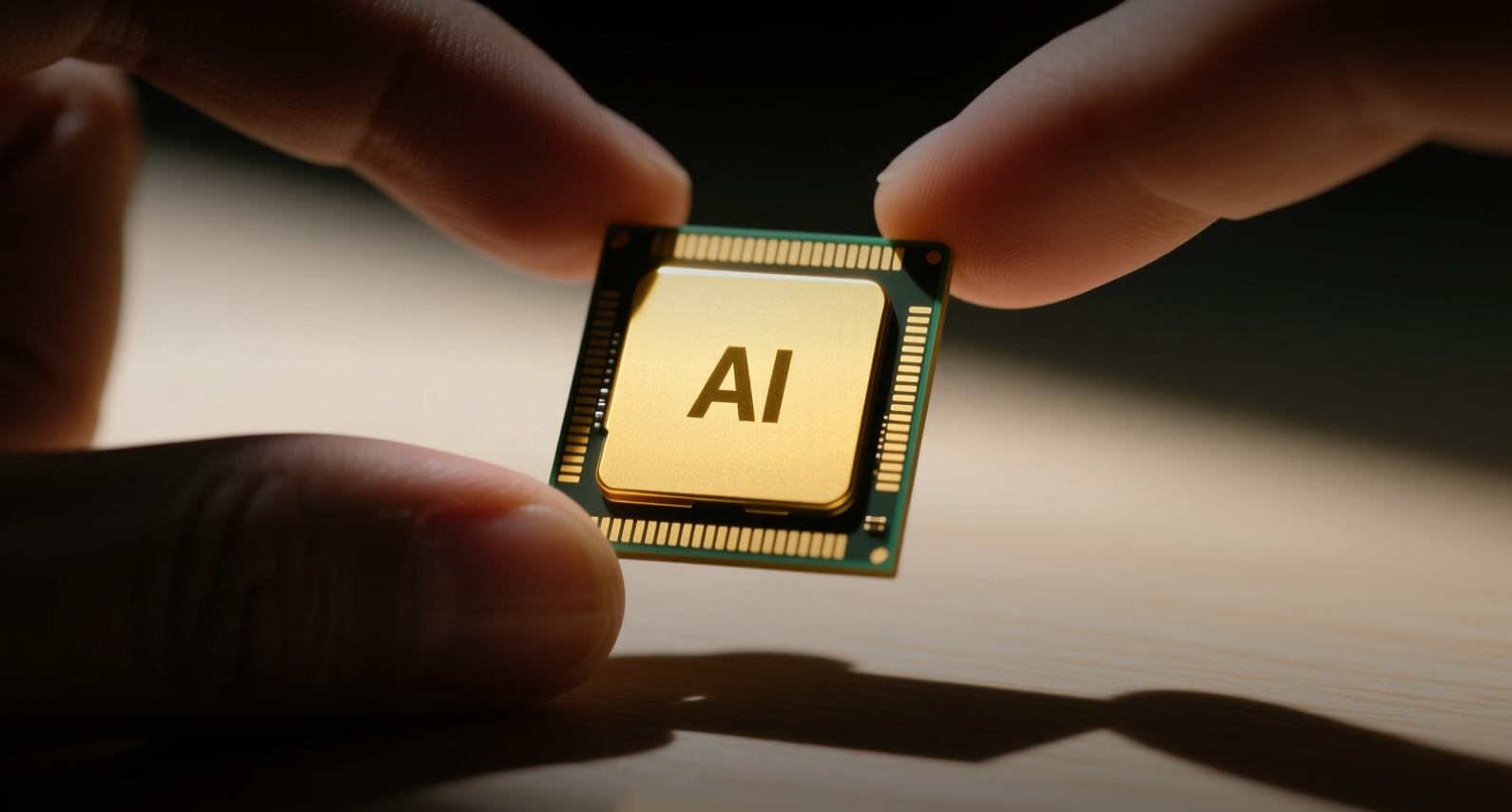
SK Hynix shares surged 8.25 percent to $153.335, pushing the memory chip maker's market capitalization past $1.12 trillion as AI-driven demand for high-bandwidth memory continues to power the semiconductor sector's rally.
The advance extended a three-session winning streak for Seoul equities, with Samsung Electronics climbing 6.7 percent and SK Square soaring 8.4 percent. The benchmark Kospi index rallied 3.68 percent to 6,579.04, exchange data showed.
SK Hynix, the world's second-largest memory chip maker, has emerged as a primary beneficiary of the AI infrastructure buildout. Its high-bandwidth memory (HBM) products — specialized DRAM stacks used in Nvidia's AI accelerators — have seen demand outpace supply as hyperscalers expand data center capacity. The stock's surge came as Asian markets traded mixed, with Japan's Nikkei rising 0.83 percent to 67,524.06 and China's Shanghai Composite adding 0.32 percent to 3,946.68, while Hong Kong's Hang Seng fell 0.83 percent to 25,440.17.
The rally separates AI-linked semiconductor names from the broader market. While Seoul's tech-heavy index surged, Australia's S&P/ASX 200 dropped 0.45 percent to 9,209.40 and US stocks closed lower overnight, with the Nasdaq Composite falling 0.6 percent. SK Hynix's $1.12 trillion valuation places it among the world's most valuable chip makers, competing directly with Samsung Electronics in the memory segment.
The memory chip industry has historically been cyclical, with prices swinging between boom and bust. AI has changed that calculus. High-bandwidth memory, which stacks DRAM dies vertically to deliver far greater bandwidth than conventional memory, has become a critical component in AI accelerators. Nvidia's latest GPU platforms rely on HBM to feed data to compute cores at speeds conventional memory cannot match.
SK Hynix has positioned itself as the dominant HBM supplier, winning early design wins with Nvidia and ramping production ahead of rivals. Samsung Electronics, the world's largest memory chip maker, has been working to close the gap but has faced yield challenges in its HBM production. TSMC, which packages HBM stacks with GPU dies using its CoWoS technology, has been expanding capacity to meet surging demand. The demand picture remains strong. Hyperscalers including Microsoft, Amazon, and Alphabet continue to pour capital into AI data center infrastructure, with each new GPU deployment requiring substantial HBM content. This structural demand shift has helped decouple memory chip pricing from the traditional commodity cycle, where oversupply typically triggered sharp price declines.
The Kospi's 3.68 percent advance to 6,579.04 marked its third consecutive session of gains, driven almost entirely by semiconductor heavyweights. SK Square, the investment arm of SK Group, soared 8.4 percent, while Samsung Electronics surged 6.7 percent. The concentrated rally in chip stocks contrasts with the mixed performance across other Asian markets.
Japan's Nikkei rose 0.83 percent to 67,524.06, with banks leading gains as a weakening yen fueled expectations for additional Bank of Japan rate hikes. Mitsubishi UFJ Financial and Sumitomo Mitsui Financial both rose around 3 percent. Advantest and Tokyo Electron, both semiconductor equipment makers, gained 0.9 percent and 2.6 percent respectively. The yen's slide against the dollar has made Japanese exporters more competitive and boosted the earnings outlook for the country's largest corporations.
China's Shanghai Composite added 0.32 percent to 3,946.68, with technology stocks pacing the gainers. Hong Kong's Hang Seng fell 0.83 percent to 25,440.17, weighed down by fading hopes for a US-Iran deal to reopen the Strait of Hormuz.
SK Hynix's surge to a $1.12 trillion market capitalization reflects the market's conviction that AI memory demand is a structural shift rather than a cyclical spike. The company's valuation now commands a significant premium to traditional memory chip peers, pricing in sustained HBM leadership. Investors should watch for Samsung's HBM yield improvements and any signs of HBM supply catching up with demand, which could compress SK Hynix's pricing power. The broader semiconductor complex, including equipment makers and foundry partners, stands to benefit from continued AI infrastructure spending.
This article is for informational purposes only and does not constitute investment advice.
