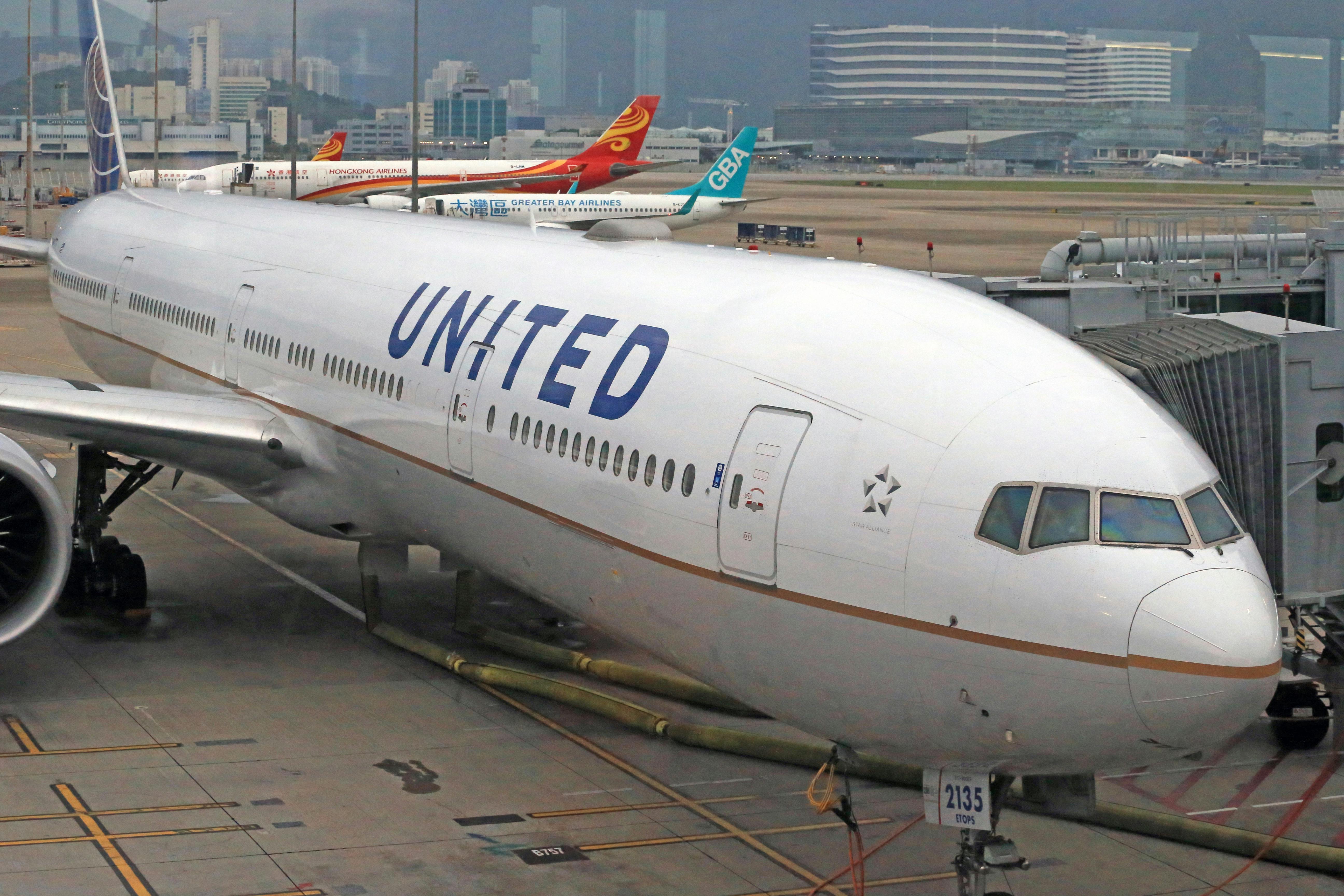
United Airlines Stock Surges on Robust Travel Demand and Strategic Gains
United Airlines Holdings Inc. (UAL) stock has demonstrated significant outperformance against the S&P 500 Index ($SPX) over the past year, propelled by a notable resurgence in travel demand and strategic operational efficiencies. This strong trajectory reflects investor confidence in the airline's ability to capitalize on improving market conditions.
Performance Details and Q2 Financials
In the last three months, UAL stock advanced 41.8%, considerably surpassing the S&P 500's 10.9% gain. Over the past 52 weeks, the airline's shares climbed an impressive 99%, drastically exceeding the S&P 500's 18% returns during the same period. While UAL rose 8.5% year-to-date, it modestly underperformed SPX's 12.8% YTD gains. The company, a large-cap entity with a market capitalization of $34.2 billion, continues to operate above its 50-day and 200-day moving averages since early May, signaling a sustained bullish trend.
For the second quarter, United Airlines reported adjusted earnings per share (EPS) of $3.87, narrowly exceeding consensus estimates. However, revenue for the quarter reached $15.2 billion, falling marginally short of the $15.4 billion forecast by analysts.
Analysis of Market Drivers
United Airlines' notable outperformance is largely attributed to a positive shift in demand observed since early July, which saw a six-point acceleration in booking demand. This inflection point is supported by expectations of reduced geopolitical and macroeconomic uncertainty in the latter half of 2025. CEO Scott Kirby highlighted this shift, stating:
"Importantly, United saw a positive shift in demand beginning in early July, and, like 2024, anticipates another inflection in industry supply in mid-August. The world is less uncertain today than it was during the first six months of 2025 and that gives us confidence about a strong finish to the year."
Further contributing to this momentum are improving booking trends and robust growth in premium cabin and loyalty revenues. Business travel demand, in particular, has shown a double-digit acceleration compared to the second quarter, indicating a return to higher-margin travel segments.
Broader Context and Industry Implications
United Airlines' strong performance stands in contrast to some of its peers; rival Delta Air Lines, Inc. (DAL), for instance, recorded a 1.7% loss year-to-date and a 26.8% uptick over the past 52 weeks, lagging behind UAL during the more recent periods. The company's competitive edge is bolstered by its extensive route network, strategic hubs, and the success of its MileagePlus loyalty program, which generates significant ancillary revenue. Premium cabin revenue increased 5.6% year-over-year, and loyalty revenue saw an 8.7% rise.
Financially, United Airlines demonstrates solid metrics, with a return on equity of 30.09% and a net margin of 5.71%. The company's debt-to-equity ratio stands at 1.56, with a current ratio of 0.70 and a quick ratio of 0.65.
Expert Commentary and Future Outlook
Wall Street analysts maintain a bullish stance on United Airlines' prospects, with a consensus "Strong Buy" rating from 22 analysts covering the stock. The mean price target is set at $114.05, suggesting a potential upside of 8.2% from current price levels.
Looking ahead, United Airlines has updated its full-year 2025 earnings guidance to a range of $9.00 to $11.00 per share, adjusted from its prior guidance of $11.50 to $13.50. Analysts, on average, forecast $10.05 per share for the current fiscal year. Key factors to monitor in the coming months include the anticipated August supply inflection in the industry, the sustainability of premium demand, and the evolving adoption of Sustainable Aviation Fuel (SAF). Potential risks for the airline sector remain, including fuel price volatility and labor costs, which could impact future profitability. The company's strategic focus on operational excellence and diversified revenue streams, as outlined in its "United Next" strategy, is expected to continue supporting its market position.
 Edgen Stock·Sep 20 2025, 19:13