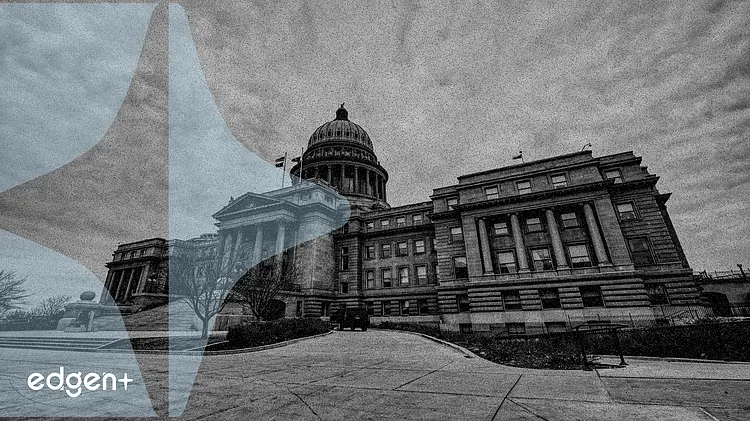
U.S. Government Enters Shutdown Amidst New Tariff Implementations
U.S. equity markets opened the week with caution as the federal government officially entered a partial shutdown at 12:01 a.m. ET, following a deadlock in Congress over a funding bill. This immediate halt in non-essential government operations coincides with the implementation of significant new tariffs on imported goods, introducing a dual layer of uncertainty into the financial landscape.
The Event in Detail: Funding Lapse and Trade Policy Shifts
The U.S. government shutdown, the first in several years, commenced after legislative efforts to secure a new fiscal year funding agreement failed. This impasse stems from a fundamental disagreement between Democrats and the Trump administration regarding healthcare spending provisions. Approximately 750,000 federal workers are estimated to be furloughed, incurring an immediate cost of approximately $400 million per day in lost compensation, as per the Congressional Budget Office (CBO). Critical economic data releases, including the monthly jobs report from the Bureau of Labor Statistics (BLS) and other indicators from the Bureau of Economic Analysis and U.S. Census Bureau, are expected to be delayed, obscuring the economic picture for investors and policymakers.
Simultaneously, new trade tariffs announced by the administration on September 25, 2025, have come into effect. These measures include a 100% tariff on branded pharmaceutical products—unless the importing company has an active U.S. manufacturing facility—and a 25% tariff on heavy-duty trucks manufactured abroad. Additional tariffs of 50% on kitchen cabinets and bathroom vanities and 30% on upholstered furniture are also now active. These tariffs, justified under Section 232 of the Trade Expansion Act of 1962 citing national security, aim to protect American manufacturers but carry the risk of increased input costs and inflationary pressures.
Analysis of Market Reaction: A Flight to Safety and Slipping Equities
The commencement of the shutdown and the imposition of new tariffs have triggered a discernible shift in market sentiment towards risk aversion. U.S. equity futures experienced declines, with S&P 500 futures slipping by 0.6% and Nasdaq 100 futures retreating by 0.7%. This initial reaction reflects investor concerns over potential disruptions to economic activity and corporate earnings.
Conversely, traditional safe-haven assets saw significant inflows. Gold surged to a new record high above $3,875 an ounce, marking a 45% year-to-date increase and continuing a multi-day climb. The U.S. dollar weakened for a fourth consecutive day, signaling broader investor apprehension regarding the stability of U.S. policy.
The healthcare sector, however, presented a nuanced picture. Shares of Pfizer (PFE) advanced by over 2% after the company reportedly secured an agreement with the Trump administration to mitigate the impact of the new pharmaceutical tariffs, highlighting the specific company-level responses to evolving trade policies.
Broader Context and Implications: Economic Drag and Data Void
The economic consequences of a prolonged shutdown are significant. Goldman Sachs projects a 0.15 percentage point reduction in GDP growth for each week the shutdown persists, while EY-Parthenon estimates a weekly cost to the U.S. economy of approximately $7 billion. This economic drag is driven by reduced pay for furloughed federal workers, delayed government procurement, and a subsequent decline in consumer demand. The threat of mass layoffs beyond temporary furloughs, as suggested by the White House, could exacerbate these economic consequences and potentially trigger localized recessions, particularly in areas heavily reliant on federal employment such as the Washington, D.C. metro area.
Historically, short government shutdowns have often had limited long-term impact on financial markets, with the S&P 500 frequently recovering and even posting positive returns a year later. However, the current confluence of a shutdown with new tariffs creates a more complex environment. The tariffs are expected to raise costs for businesses reliant on imports, potentially leading to higher inflation and impacting consumer purchasing power. This dual pressure could intensify market volatility beyond historical patterns.
Analysts are closely monitoring the situation.
"The immediate financial impact is evident in market movements," noted one strategist. "The dollar's continued weakening suggests investor apprehension, while gold's surge to over $3,875/ounce highlights a flight to safety."
The delay of critical economic data poses a significant challenge.
"This data blackout is particularly concerning given the current economic juncture," commented an economist from EY-Parthenon. "It complicates decision-making for Federal Reserve policymakers, investors, and business leaders navigating an uncertain economic environment."
Looking Ahead: Federal Reserve Dilemma and Persistent Uncertainty
The most immediate future implication revolves around the Federal Reserve's upcoming policy meeting on October 29th. The central bank relies heavily on timely economic data to inform its monetary policy decisions. With key reports, such as the jobs report, now subject to delay, the Fed's data-dependent approach could be hampered. Money markets are currently pricing in a near 90% chance of a 0.25% interest rate cut this month. However, the absence of crucial economic indicators, coupled with the potential for new tariffs to fuel inflationary pressures, could complicate this outlook. The Fed may face a dilemma, potentially leading to an "October pause" in anticipated rate adjustments or even a reconsideration of further easing if inflation risks intensify.
Investors will continue to monitor developments in Washington for any signs of a resolution to the shutdown. The duration of the funding lapse, the extent of its economic fallout, and the ultimate impact of the new tariffs on supply chains and consumer prices will be critical factors influencing market performance in the coming weeks. The combination of political instability and trade policy uncertainty is expected to foster a period of elevated market sensitivity.
 Edgen Stock·Oct 01 2025, 12:06