
Alibaba's self-developed Zhenwu M890 AI chip has entered scaled commercial sales on Alibaba Cloud, serving more than 650 external customers as quarterly AI infrastructure spending surged 75 percent to 67.68 billion yuan.
Alibaba's self-developed Zhenwu M890 AI chip has entered scaled commercial sales on Alibaba Cloud, serving more than 650 external customers as quarterly AI infrastructure spending surged 75 percent to 67.68 billion yuan.
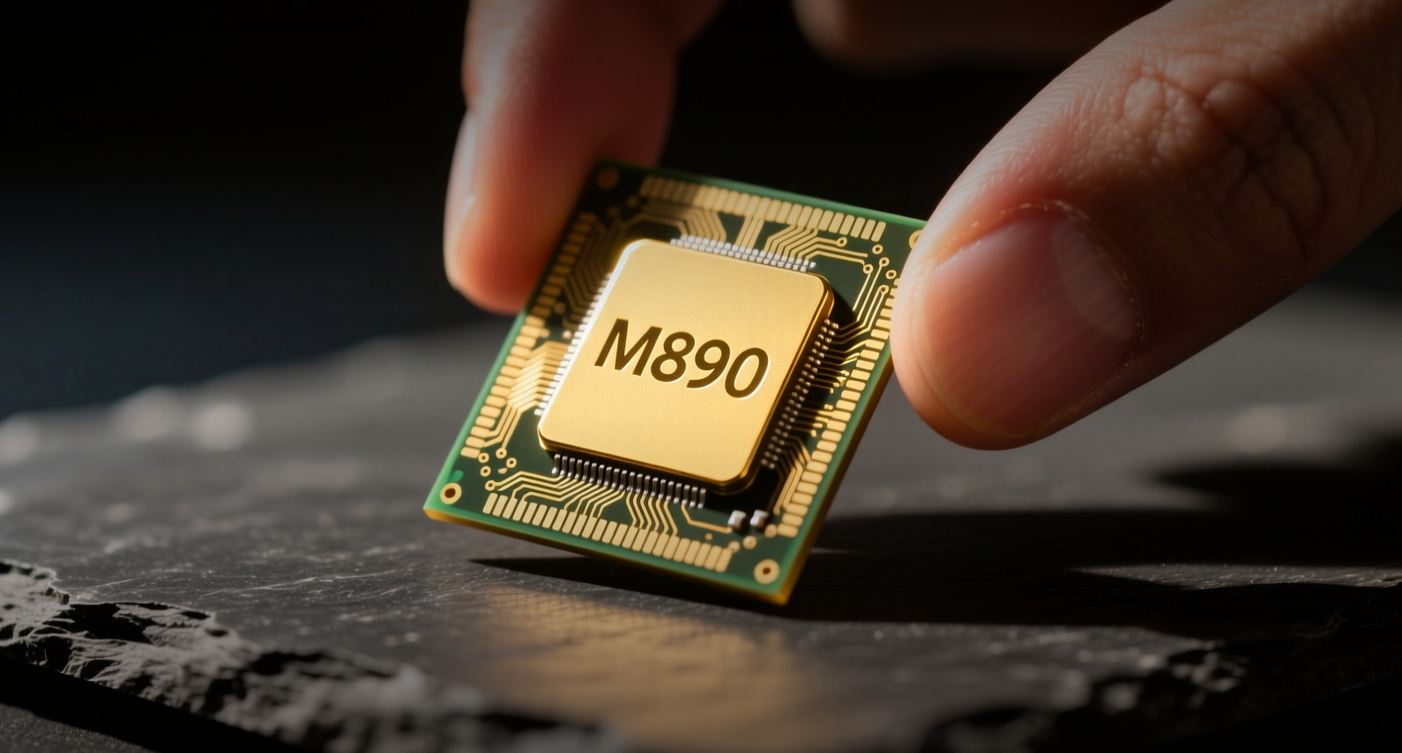
Alibaba's in-house Zhenwu M890 AI chip has entered scaled commercial sales on Alibaba Cloud, challenging Nvidia's position in China's AI compute market as quarterly AI capex surged 75 percent to 67.68 billion yuan.
"Super-node instances based on the new-generation Pingtouge chip Zhenwu M890 have been launched on Alibaba Cloud for scaled commercial sales, with continued volume ramp planned for the second half to meet strong customer demand," Eddie Wu, chief executive officer at Alibaba Group, said on the company's earnings call.
The Zhenwu M890 has been deployed across more than 20 industries including autonomous driving, internet, and financial services, serving over 650 external customers as of early August. The chip anchors T-Head Semiconductor's full-stack self-developed portfolio spanning GPU, CPU, storage, and networking silicon. Alibaba Cloud has compressed delivery cycles for large-scale AI data centers to 100 days and expects production capacity efficiency of its modular data centers to more than double this year.
The chip ramp comes as Alibaba reported Q1 FY2027 revenue of 268.95 billion yuan, up 9 percent, slightly above consensus, but non-GAAP net profit fell 38 percent to 20.71 billion yuan, missing estimates of 25.58 billion yuan. Quarterly capital expenditure hit 67.68 billion yuan, up 75 percent, driving free cash flow to a net outflow of 44.67 billion yuan. Alibaba shares fell nearly 4 percent in pre-market trading following the report.
The AI Cloud and Computing Services segment — which consolidates Cloud Intelligence Group and T-Head Semiconductor under a new four-segment structure — posted revenue of 48.44 billion yuan, up 45 percent year over year, the fastest pace in 22 quarters. Adjusted EBITA jumped 133 percent to 5.63 billion yuan, with margins rising to 12 percent. The growth rate now exceeds that of AWS, which grew 37 percent year over year in Q2 2026. Alibaba Cloud holds a 38.1 percent share of China's AI cloud market, according to Omdia's 2025 report.
The chip's commercial traction comes as China's AI semiconductor market faces export controls that limit access to Nvidia's latest H100 and Blackwell GPUs. T-Head's full-stack approach — spanning GPU, CPU, storage, and networking chips — gives Alibaba a vertically integrated alternative that does not depend on US supply chains.
Alibaba's quarterly capex of 67.68 billion yuan represents a 75 percent year-over-year increase, attributed to AI infrastructure buildout for agent-driven computing demand, procurement cycle changes, and rising chip component prices. Free cash flow swung to a net outflow of 44.67 billion yuan, wider than the 18.82 billion yuan outflow in the prior-year period. The company has committed at least 380 billion yuan (approximately $53 billion) in AI and cloud infrastructure over three years.
The AI Labs and Applications segment — housing Qwen models and the Qwen App — posted an adjusted EBITA loss of 13.86 billion yuan, widening more than threefold from 3.22 billion yuan a year earlier, driven by rising inference costs and AI capability investment. Share repurchases totaled only $162 million in the quarter, a notable contraction from prior periods, as capital allocation prioritizes computing infrastructure over shareholder returns.
Alibaba's US-listed shares, which had rebounded more than 30 percent from a late-June low of around $95, fell nearly 4 percent in pre-market trading after the earnings miss. For investors, the question is whether the Zhenwu chip's commercial ramp can convert Alibaba's massive AI infrastructure spending into sustainable returns — and whether the $53 billion three-year capex commitment translates into margin expansion or a prolonged profit drag.
This article is for informational purposes only and does not constitute investment advice.
