
Key Takeaways: American Airlines' rejection of a merger approach leaves the carrier fighting a standalone turnaround with a balance sheet deep in the red and no clear timeline.
Key Takeaways: American Airlines' rejection of a merger approach leaves the carrier fighting a standalone turnaround with a balance sheet deep in the red and no clear timeline.
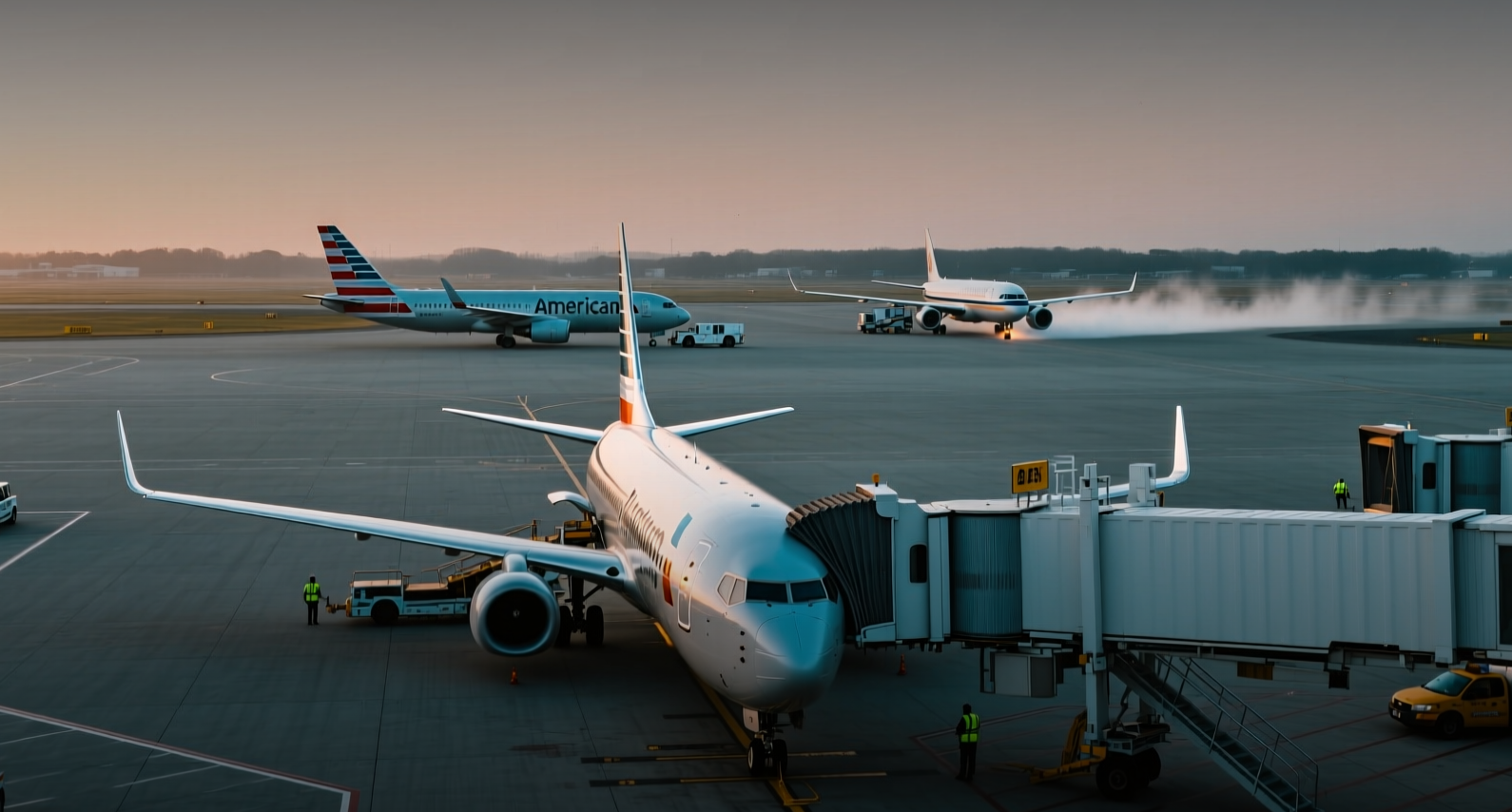
American Airlines' rejection of a merger approach leaves the carrier to fight a standalone turnaround with a balance sheet still deep in the red and no clear timeline for recovery.
American Airlines rejected a merger offer, committing to a standalone turnaround with a balance sheet deep in the red and no clear timeline, as Delta Air Lines and United Airlines extend their performance lead.
The carrier confirmed its decision to proceed independently by rejecting the approach, according to the company. Terms of the proposed transaction, including deal value and payment structure, have not been disclosed.
The rejected offer comes as American Airlines' stock has declined while Delta and United have gained, widening the valuation gap among the three largest U.S. carriers. The company's balance sheet remains heavily leveraged, with the turnaround strategy lacking a defined timeline for returning to profitability.
The standalone path leaves American Airlines exposed to competitive pressure from Delta and United, which have outperformed on operational metrics and investor returns. Without a merger partner to provide capital or scale, the carrier must execute its turnaround while servicing significant debt, a combination that could continue to weigh on the stock.
The rejected merger approach highlights the strategic crossroads facing American Airlines. The company has been working through a turnaround plan, but the timeline remains uncertain and the balance sheet is still deep in the red, according to the source material.
The competitive gap is stark. Delta and United have soared while American Airlines has sank, according to the source material. This divergence in stock performance reflects broader operational differences, with American's higher debt load and slower recovery trajectory putting it at a disadvantage.
The Debt Overhang
American Airlines' balance sheet remains a central concern. The company carries significant debt, and the balance sheet is described as "still deep in the red." This leverage constrains the carrier's ability to invest in fleet modernization, route expansion, and customer experience improvements — areas where Delta and United have made substantial progress.
The airline emerged from its 2011 bankruptcy filing through a merger with US Airways in 2013, a deal that created the world's largest carrier at the time. That consolidation helped American rebuild its network, but the current debt load suggests the balance sheet has not fully recovered from the pandemic-era downturn that hit the entire industry. The pandemic forced U.S. carriers to take on billions in new debt to survive, and American's recovery has been slower than its peers.
Competitive Divergence Widens
The performance gap between American Airlines and its two largest competitors has become a defining feature of the U.S. airline sector. Delta and United have benefited from stronger revenue diversification, more favorable cost structures, and better execution on operational reliability. American, by contrast, has struggled to match these metrics while managing its debt burden.
The rejected merger offer, had it been accepted, would have represented a significant consolidation event in the U.S. airline industry. The four largest carriers — American, Delta, United, and Southwest — have dominated the domestic market since the wave of mergers in the late 2000s and early 2010s. A combination involving American would have reshaped that competitive landscape, potentially creating a carrier with the scale to challenge Delta and United more directly.
The next several quarters will be critical for American Airlines. The company must demonstrate progress on its turnaround plan, including debt reduction and margin improvement, to close the valuation gap with its peers. If the turnaround continues to stall, the carrier could face renewed pressure from investors and potentially revisit strategic alternatives.
This article is for informational purposes only and does not constitute investment advice.
