

Key Takeaways:
- Micron's trillion-dollar market cap faces three distinct threats
- HBM pricing pressure and demand uncertainty top the risk list
- Tech earnings from Alphabet and Tesla could shift sentiment this week
Key Takeaways:
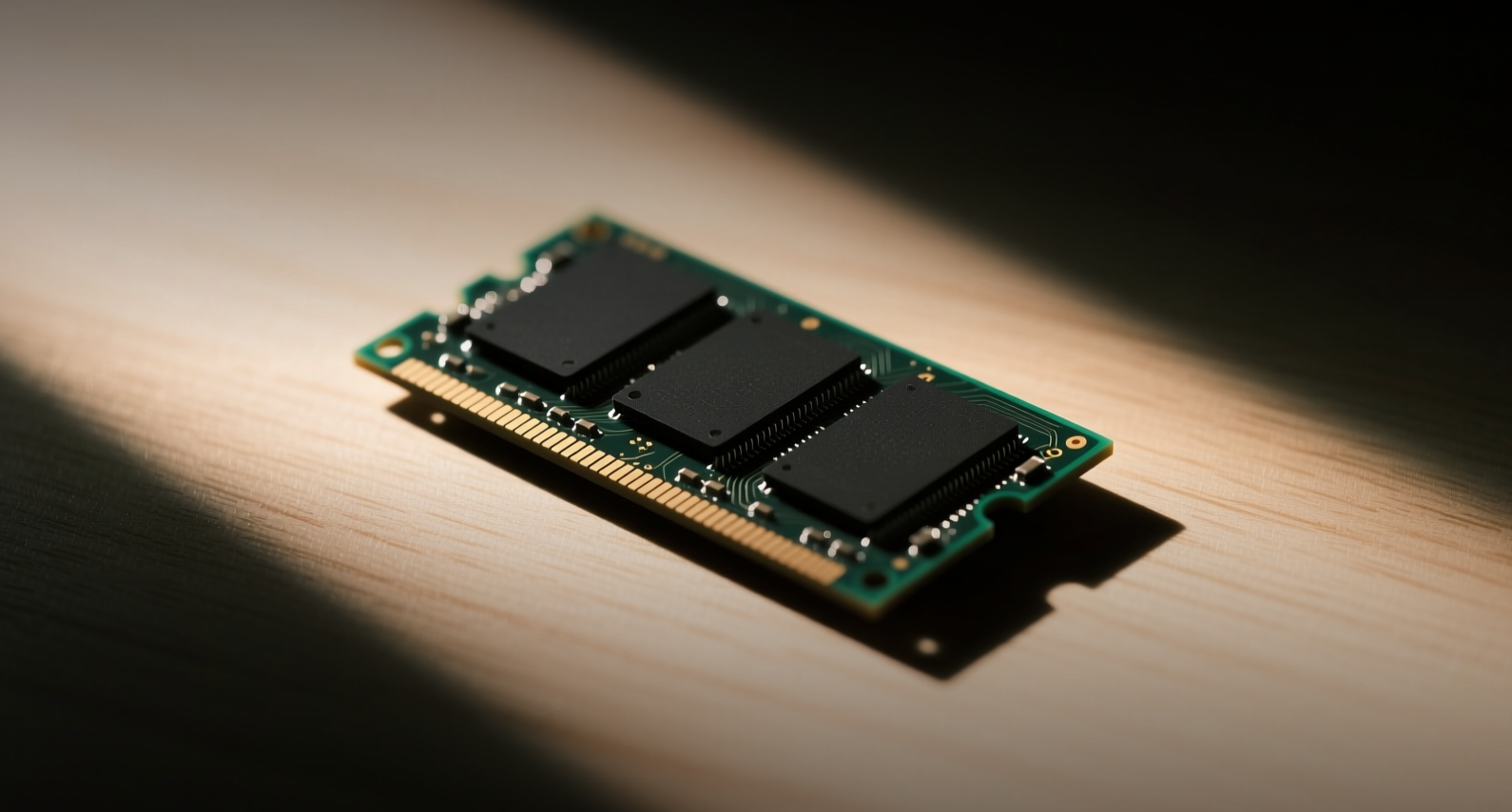
Micron Technology's trillion-dollar market capitalization faces three distinct threats as the memory-chip maker navigates a pivotal tech earnings season.
Micron Technology (NASDAQ: MU) enters a critical week with its trillion-dollar valuation under pressure from three converging risks: softening high-bandwidth memory pricing, uncertainty around non-AI memory demand, and the potential for a valuation reset as mega-cap tech earnings dominate investor attention.
"The memory cycle is showing signs of bifurcation — HBM remains tight, but the rest of the DRAM and NAND market is softening faster than expected," Rachel Kim, semiconductor supply chain analyst at Edgen, said. "Micron's premium valuation assumes HBM strength alone can carry the entire business."
The first hurdle centers on high-bandwidth memory, the specialized DRAM essential for Nvidia's GPU clusters. While HBM has been Micron's growth engine — alongside SK Hynix (KS: 000660) and Samsung Electronics (KS: 005930) — pricing dynamics are shifting. Industry checks suggest HBM3E contract prices may peak sooner than anticipated as Samsung accelerates its own HBM3E qualification with Nvidia, potentially flooding a market that has been supply-constrained. Micron's data center revenue, which accounted for more than half of total sales in the most recent quarter, is disproportionately exposed to any HBM price compression.
The second risk is the broader memory cycle. Non-AI segments — PC DRAM, mobile memory, and NAND flash for consumer SSDs — are showing signs of inventory buildup. PC shipments grew only 2% year over year in the second quarter, according to IDC, well below the replacement-cycle expectations that memory suppliers had baked into their guidance. If enterprise IT budgets rotate further toward AI infrastructure at the expense of traditional server upgrades, Micron's diversified portfolio becomes less of a hedge and more of a drag.
The third and most immediate threat is valuation. Micron trades at roughly 25 times forward earnings, a premium to its five-year average of 12 times but in line with high-growth semiconductor peers like Nvidia (NASDAQ: NVDA) at 35 times and Broadcom (NASDAQ: AVGO) at 28 times. The difference: Nvidia and Broadcom have demonstrated accelerating revenue growth and expanding margins simultaneously — a combination captured by the Rule of 40 metric. Micron's capital-intensive manufacturing model makes it harder to expand margins at the same velocity, leaving the stock vulnerable if growth decelerates even modestly.
What the tech earnings season means for Micron
This week's earnings reports from Alphabet (NASDAQ: GOOGL), Tesla (NASDAQ: TSLA), and IBM (NYSE: IBM) will serve as a proxy for enterprise AI spending appetite. Alphabet's cloud revenue growth and capital expenditure guidance are particularly important — hyperscaler CapEx directly drives HBM procurement cycles. If Google Cloud revenue growth disappoints or if management signals a pause in data center expansion, the HBM demand narrative that supports Micron's valuation loses its foundation.
Tesla's results offer a different signal. The automaker's Dojo supercomputer project and in-house AI training needs represent incremental HBM demand, but any pullback in Tesla's AI investment timeline would remove a marginal demand driver that bulls have cited as upside optionality.
For investors, the calculus is straightforward. Micron's trillion-dollar market cap implies that HBM-driven growth will not only continue but accelerate, while non-AI memory headwinds remain manageable. If this week's tech earnings reveal cracks in either assumption, the stock's premium multiple offers little protection. Micron shares have already pulled back 8% from their July peak, suggesting some investors are already hedging against the downside scenarios.
This article is for informational purposes only and does not constitute investment advice.
