
Florida's housing market is absorbing the highest mortgage rates of the year while carrying one in seven U.S. home listings.
Florida's housing market is absorbing the highest mortgage rates of the year while carrying one in seven U.S. home listings.
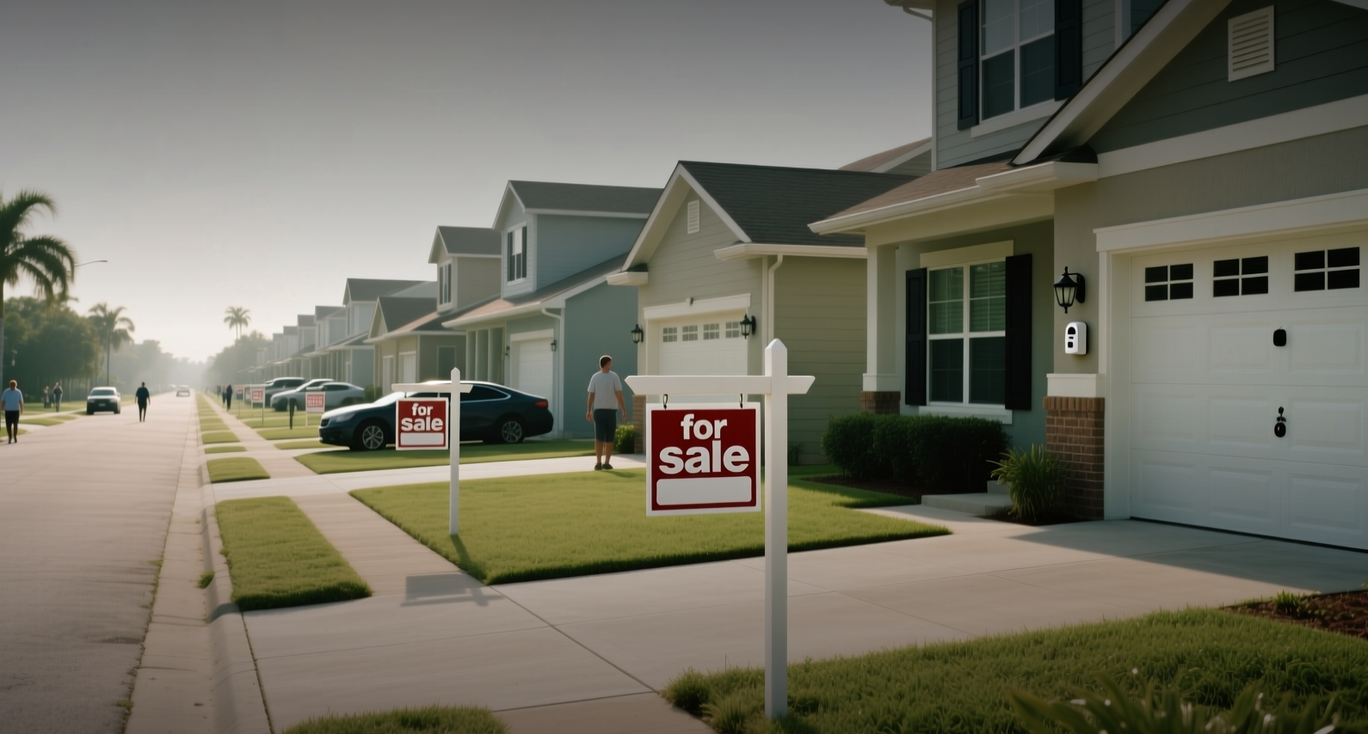
The average 30-year-fixed mortgage rate climbed to about 6.66 percent last week, the highest of the year, intensifying affordability pressure on Florida buyers as the state carries one in seven U.S. listings.
"Despite housing inventory increasing in certain markets, higher rates have added to ongoing affordability challenges for many homebuyers, which drove the decrease in purchase activity over the week," Joel Kan, vice president and deputy chief economist at the Mortgage Bankers Association, said.
Parcl Labs data shows Florida leads the nation in home listings, with one out of every seven homes for sale across the U.S. located in the state. Statewide, single-family inventory sits at about 4.5 months' supply, according to June data from Florida Realtors, while the Tampa Bay metro area holds roughly 3.8 months' supply. The median home price in Tampa Bay is about $424,900, compared with $237,000 in 2019.
The rate spike, which Kan linked to a surge in oil prices, is colliding with a market still adjusting from the pandemic-era buying frenzy. Brad O'Connor, chief economist at Florida Realtors, said closed sales may dip through year-end as buyers brace for further increases, while foreclosure filings in Florida reached 27,494 in the first half of 2026 — the highest January-to-June count since 2019, according to Attom data.
The 30-year average has since eased to 6.63 percent as of Tuesday, August 25, according to Freddie Mac. The 15-year fixed loan averaged 5.95 percent, while the 5/1 adjustable-rate mortgage stood at 6.62 percent. For would-be buyers weighing alternatives, the highest available savings account rate from partner banks is 4.15 percent APY, offered by Forbright Bank — a gap that makes the cost of waiting to buy more expensive.
Florida's inventory buildup is not unusual for the Sunshine State, O'Connor said. Steady population growth, a large retiree base and a high concentration of vacation homes have historically kept Florida's real estate market more active than most states. "We have a lot of people moving in and moving up," he said.
The current 4.5 months' supply statewide is an improvement from the pandemic peak, when newcomers were snapping up homes within hours of listing. But it's not enough to push prices back to pre-pandemic levels. The median home price in Tampa Bay has nearly doubled since 2019, rising from $237,000 to about $424,900.
Corina Lessa Silva, broker and owner of Tampa Bay Key Real Estate and president of the Suncoast Tampa Association of Realtors, said buyers who sat on the sidelines during the pandemic frenzy are returning — and they now hold more negotiating power.
"You have negotiation power," she said. "People often think the only thing to negotiate is the purchase price. But we can negotiate closing costs and incentives and other ways to make your payment come down."
Sellers face a different calculus. "If the house is properly priced, it will sell quicker, for more and sometimes get multiple offers," Lessa Silva said. "If you price too high, you may end up receiving offers that are even lower than the price you could have gotten if you had started lower to begin with."
Florida's foreclosure pipeline is expanding. The 27,494 filings recorded from January through June represent the highest first-half total since 2019, according to Attom. But O'Connor stressed the numbers remain well below the levels seen in the years following the 2008 housing crash, and most indicators point to a healthy market in transition rather than a downturn.
The broader rate environment will determine how the market evolves. The average HELOC adjustable rate stands at 7.16 percent, a new 2026 low, while the national average on a fixed-rate home equity loan is 7.35 percent. If the Federal Reserve resumes its easing cycle later this year, mortgage rates could retreat from current levels, potentially unlocking more purchase activity. If oil prices continue to climb, the opposite scenario plays out — rates push higher and closed sales soften further.
For now, O'Connor said there's no need to panic. Most signs point toward a healthy housing market, albeit one in transition.
This article is for informational purposes only and does not constitute investment advice.
