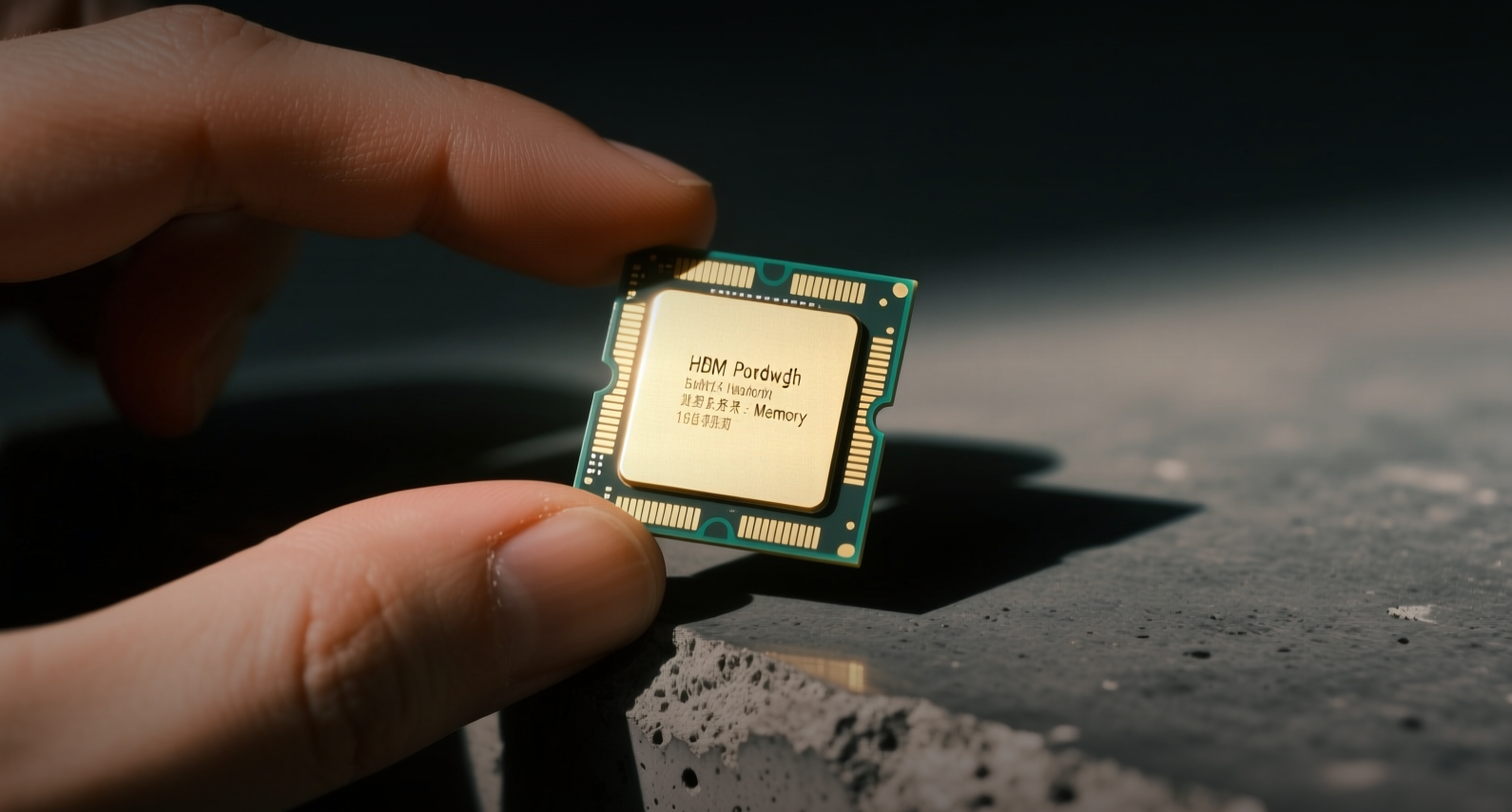
Elon Musk told public shareholders that memory, not power or GPUs, now caps his AI compute buildout — a five-word remark that hands Micron Technology the clearest demand signal yet in a memory market already sold out through 2026.
On SpaceX's (NASDAQ:SPCX) Q2 2026 earnings call held Aug. 4, Musk answered a question about the pace of compute expansion with a line memory investors have circulated since: "Limiting factor currently is memory." The statement lands directly on Micron (NASDAQ:MU), the only U.S.-based maker of high-bandwidth memory and one of just three global HBM suppliers alongside Samsung and SK Hynix.
"The memory output is increasing by around 20% per year. Now, normally that would be fantastically fast and amazing for any large, mature industry. But ask yourself, is the demand increasing by 20% a year? No, the demand is increasing by 200% a year, maybe higher," Musk said on the call. "So if you've got demand increasing much faster than supply, then Economics 101 would suggest that the price increases. It does not decrease." Those 20% and 200% figures are his characterization, not independently verified industry data.
What gives the memory line weight is what Musk dismissed alongside it. He said SpaceX's "tentative target is to actually have 20 gigawatts at the power and cooling level online by the end of next year," while conceding he expects "something close to 15 gigawatts." On GPU access from NVIDIA (NASDAQ:NVDA), he added, "Our understanding within NVIDIA is that we will receive a very small percentage of their GPUs next year." Power was named excess. Memory was named the bottleneck.
The Tesla Echo, Two Weeks Earlier
Musk made the same point on Tesla's (NASDAQ:TSLA) Q2 2026 earnings call around July 23, thanking Micron by name twice for giving Tesla a "significant" memory allocation "on reasonable terms" and calling current memory pricing "the biggest price jump in anything I've ever seen." Micron shares rose 3.1% intraday that day while Tesla stock fell 14.3% on an earnings miss.
The supply-demand math behind both calls is stark. Nearly 100 gigawatts of new AI data center capacity are expected globally within four years, against only about 15 gigawatts of new DRAM supply capacity over the next two years. DRAM contract prices have been projected to rise another 90% to 95% in early 2026 on top of already-steep increases. All three HBM producers are reportedly sold out of 2026 capacity, with meaningful new supply not expected until 2028 or later. HBM content per GPU has grown roughly 3.6 times from NVIDIA's H100 generation to Blackwell Ultra, and frontier AI model context windows have expanded roughly 230 times in three years. Conventional DRAM contract prices surged around 171.8% year over year in Q3 2025.
The Bear Case Deserves Weight
Micron closed at $971.66 on Aug. 14, up 240.65% year to date from $285.23 at the end of 2025 and up 676.79% over one year from $125.09. The stock trades around 6 times forward earnings. CEO Sanjay Mehrotra told investors Micron expects tight conditions to persist beyond calendar 2027, backed by Strategic Customer Agreements disclosed in its Q3 FY26 8-K that lock in $100 billion in cumulative revenue at floor price through 2028.
The other side of the trade is a memory market that has ended every prior boom in bust. A Motley Fool analysis published Aug. 9 cited TrendForce forecasts for Q3 2026 contract price increases of just 13% to 18% for DRAM and 10% to 15% for NAND, a sharp deceleration from the prior quarter's gains of more than 60% and more than 80% sequentially. Wall Street's fiscal 2027 EPS estimates for Micron have reportedly plateaued, rising just 1.2% over the latest month after a much larger jump three months earlier, suggesting earnings-upside momentum may be cooling.
Whether Musk's five words describe a durable rewrite of memory economics or a peak-cycle snapshot will show up in DRAM contract prices, HBM allocation contracts, and whether Micron's $100 billion floor-price backlog holds through 2028. For investors, the question is whether a stock up more than sixfold in a year at 6 times forward earnings has priced in the shortage Musk just confirmed — or whether the deceleration TrendForce projects for Q3 marks the start of the cycle's turn. Micron shares, trading near $1,006 in pre-market with a market cap above $1 trillion, leave little room for error if price growth slows and margins compress.
This article is for informational purposes only and does not constitute investment advice.