
Nvidia has moved up every layer of the AI market in three weeks, from training software to infrastructure financing.
Nvidia has moved up every layer of the AI market in three weeks, from training software to infrastructure financing.
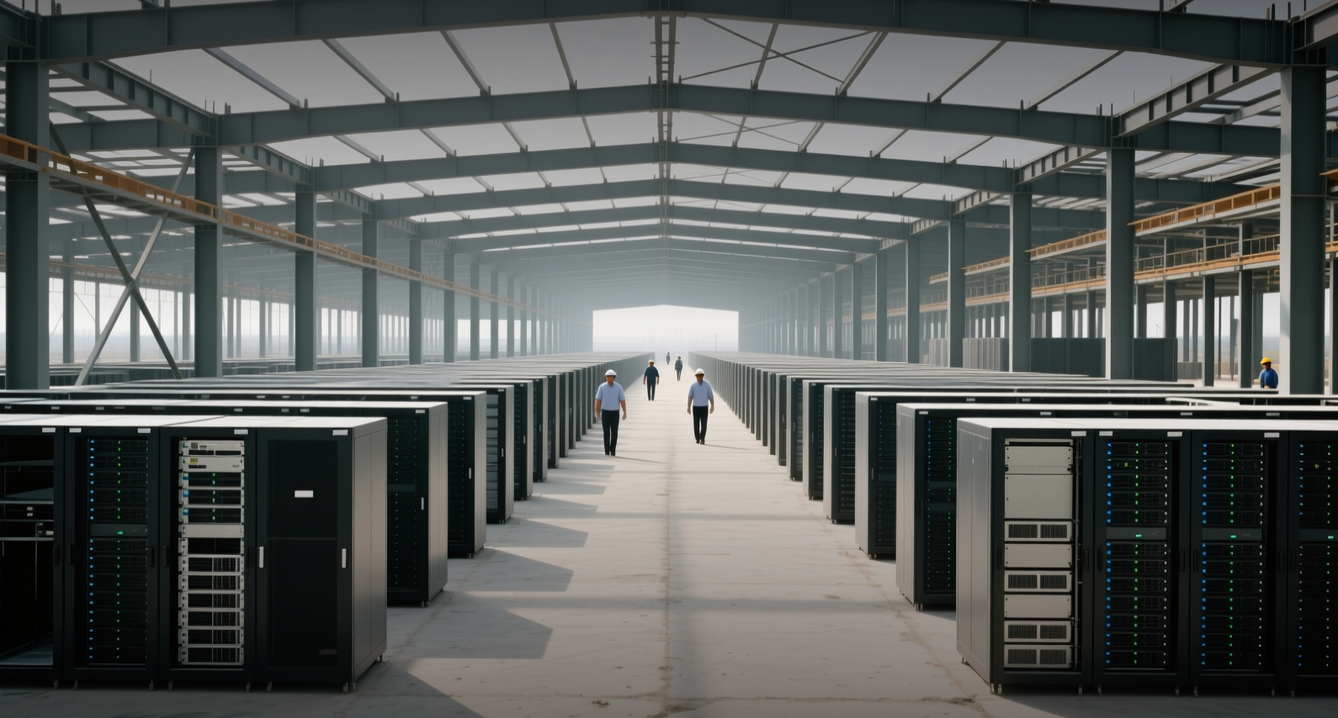
Nvidia has spent three weeks buying the software that trains AI models, hiring its builders and arranging more than $500 billion to fund the data centers that run its chips, days before it reports quarterly results.
"This makes them a kind of central banking figure in the AI space," Brian Mulberry, chief market strategist at Zacks Investment Management, which holds Nvidia shares, said. "The real risk is total AI exposure with no diversification."
On 20 August Nvidia agreed to pay Poolside $6 billion for a non-exclusive licence to Model Factory, the startup's internal model-training system, plus $1 billion in equity at a $12 billion pre-money valuation, with 109 engineers moving to work on its Nemotron open-weight models. It is separately in talks to invest in Perplexity at a valuation above $30 billion, according to The Information. On 10 August it lined up more than $500 billion in third-party capital with Apollo, BlackRock, Blackstone, Brookfield, Goldman Sachs and KKR.
Nvidia reports second-quarter fiscal 2027 results after the close on 26 August, with consensus around $91.85 billion in revenue and $2.08 per share against company guidance of $91.0 billion plus or minus 2 percent. The print will test whether the vertical-integration push and the financing backstops that fund its own customers are growth or circularity.
Several outlets described the Poolside arrangement as an acquisition, and it was not one. Nvidia paid $6 billion for a non-exclusive licence to Model Factory, the internal system Poolside used to develop its models, plus a separate $1 billion equity investment at a $12 billion pre-money valuation. More than 100 Poolside engineers — 109 by most counts — move to Nvidia to work on Nemotron, its family of open-weight models. Poolside's shareholder letter described the arrangement as neither an acquisition nor an acquihire, and the licence being non-exclusive means Poolside remains free to license the same software elsewhere. Its three founders are not joining Nvidia.
The reason Poolside took the deal is the most revealing part. The shareholder letter describes a six-week window at the end of last year in which the company needed to raise $2 billion to pay for a 40,000-chip GB300 cluster due online in January. It missed the window. A company that had raised $626 million at a $3 billion valuation from backers including Bain Capital Ventures, eBay and Nvidia itself found it could not secure the compute required to stay at the frontier — and sold its training machinery to the company that makes the compute.
The pattern is established. Nvidia paid Groq roughly $20 billion for access to its inference technology and its top engineers, after which Groq raised fresh capital and continued independently. A comparable arrangement with chip-interconnect startup Enfabrica came in around $900 million.
What Nvidia gets is a credible open-weight programme. The models are free to download and run, which is the point — the strategy mirrors CUDA, where giving away the layer above the hardware increases demand for the hardware. Nemotron sits against DeepSeek and Kimi K3 on the Chinese side and OpenAI and Anthropic on the American one. Nvidia launched its Nemotron Coalition in March with Mistral, Thinking Machines Lab and Perplexity, and an Open Secure AI Alliance in July including Palantir, IBM, CrowdStrike and SpaceX.
The least covered move is arguably the largest. On 10 August, Nvidia announced partnerships with Apollo, BlackRock, Blackstone, Brookfield, Goldman Sachs and KKR to establish compute-financing platforms intended to mobilise more than $500 billion in third-party capital for AI infrastructure. Combined with a $25 billion bond issue of its own and revenue-sharing arrangements offered to AI companies, the company now touches demand at four points: it makes the chips, it supplies the models that run on them, it holds equity in businesses that consume them, and it helps assemble the capital that pays for them.
The critique writes itself, and sceptics have been making it for months: a supplier that invests in its own customers can manufacture the appearance of demand. Michael Burry, who has held and expanded bearish positions on the company through this year, expects strong second-quarter results while maintaining that the announced revenue is entirely circular. He has rolled part of his December 2026 puts into June 2027 contracts with strikes in the low-$100 range.
The counter-argument is that the demand is real regardless of who financed it. Hyperscaler capital expenditure for the second quarter of 2026 reached approximately $166 billion across the major buyers, up 87 percent year on year, with Meta alone moving from $19.8 billion to $31.1 billion in a single quarter. That spending is documented in company filings rather than announcements.
A more precise version of the concern appears in Nvidia's own disclosures. In the first quarter of fiscal 2027, three direct customers accounted for 21 percent, 17 percent and 16 percent of total revenue — more than half the business concentrated in three buyers. Nvidia states in its filings that revenue concentration among a limited number of customers may continue.
Morgan Stanley, which initiated credit coverage of Nvidia on 24 August with a neutral view, forecasts roughly $200 billion of all-in credit exposure by the end of calendar 2028, including about $170 billion of adjustments and contingent obligations tied to residual-value support, lease guarantees and revenue-sharing structures. Even against that broader measure, the metrics hold up: leverage of around 0.4 times and free cash flow after shareholder returns exceeding 100 percent of debt. The bank said spread compensation has improved after recent widening but recommends patience, flagging more than $1 trillion of guided GPU and XPU-related financing as the key overhang.
A company can be simultaneously the best-positioned business in its industry and the one with the most to lose from a demand correction it helped finance. Nvidia shares have risen 11.8 percent this year and briefly ceded the title of world's most valuable company to Apple last month. The figures that matter on Wednesday are the October-quarter outlook, the pace of early Vera Rubin deployments and the gross-margin trajectory — and whether the customer concentration disclosed in the quarterly filing moves in either direction. Nothing in the past three weeks resolves which description fits.
This article is for informational purposes only and does not constitute investment advice.
