
China's three ministries on Friday required pre-sold homes topped out and pushed new land deals toward cash sales, tightening rules after a four-year slump.
China's three ministries on Friday required pre-sold homes topped out and pushed new land deals toward cash sales, tightening rules after a four-year slump.
China's three ministries on Friday required pre-sold homes topped out and pushed new land deals toward cash sales, tightening rules after a four-year slump.
China's housing ministry and two other agencies on Friday required pre-sold apartments to be structurally topped out and steered new land deals toward cash sales, tightening rules after a four-year property slump.
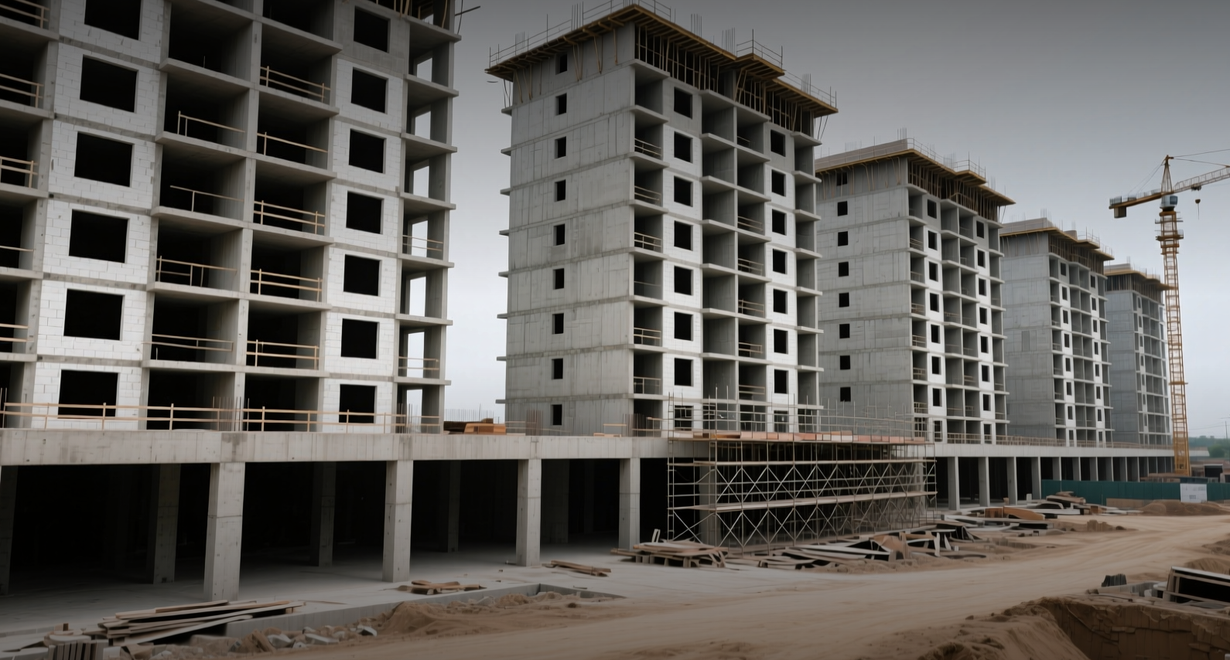
"Presale projects must have individual buildings topped out, and local governments should promote the sale of completed commercial housing units," the notice said, according to state news agency Xinhua.
The notice, jointly issued by the Ministry of Housing and Urban-Rural Development, the Ministry of Natural Resources and the National Financial Regulatory Administration, requires all purchaser funds — down payments and mortgage loans — to be deposited into supervised accounts held at each project's main bank. Funds are released only after a project passes completion inspection and utilities are ready. New land transfers and projects without construction permits must prioritize cash sales, while projects that already hold construction permits are encouraged to follow. Cash-sale projects operate under a deposit system, with buyers paying a small deposit held in a supervised account until the home is ready for handover.
The overhaul is the most direct attempt yet to dismantle China's pre-sale model, which has underpinned the world's largest housing market for three decades but left thousands of buyers holding contracts on stalled towers since developer Evergrande defaulted in 2021. For developers, the topping-out requirement delays revenue recognition and extends capital lock-up, squeezing cash flow at a time when property investment is still contracting and home prices continue to fall.
The topping-out rule forces developers to fund construction largely from their own balance sheets before any pre-sale revenue flows in. The notice requires developers to buy land with their own funds, though it allows installment payments with terms set by local governments. A new "main bank" system pairs each project with a single lender that can assemble a syndicate for development loans, with financing matched to the construction cycle. The notice also lets developers raise money through equity and bond issuance, a concession aimed at offsetting the tighter pre-sale conditions.
The funding squeeze lands hardest on smaller builders, many of which relied on pre-sale deposits to finance construction. Country Garden, once China's largest developer by sales, and a wave of peers have already defaulted on offshore debt since the crisis began, and the new rules raise the bar for any developer seeking to restart stalled projects. State-backed builders with access to cheaper financing are better positioned to absorb the capital strain and stand to gain market share as the sector consolidates.
Shifting new land deals toward cash sales — where buyers pay only after a home is finished — eliminates delivery risk by design but raises the capital burden on developers, who must carry construction costs without pre-sale proceeds. The notice pairs the shift with "delivery with certificate," requiring ownership certificates to be issued at the same time keys are handed over, a reform local governments have piloted in recent years. The policy takes effect immediately.
The reform is likely to accelerate consolidation in a sector where smaller developers already struggle to fund construction. Banks exposed to property loans face a longer period of elevated credit risk as developers absorb the cost of the transition, even as the main-bank system aims to keep financing flowing to viable projects. The last time Beijing tightened pre-sale conditions this directly was in the early 2000s, when it briefly required completed construction before sales — a policy it later relaxed as developers lobbied against the capital strain. Whether the current push sticks will depend on how quickly local governments translate the notice into binding rules and whether land sales, which fund a large share of local budgets, can absorb the shift.
This article is for informational purposes only and does not constitute investment advice.
