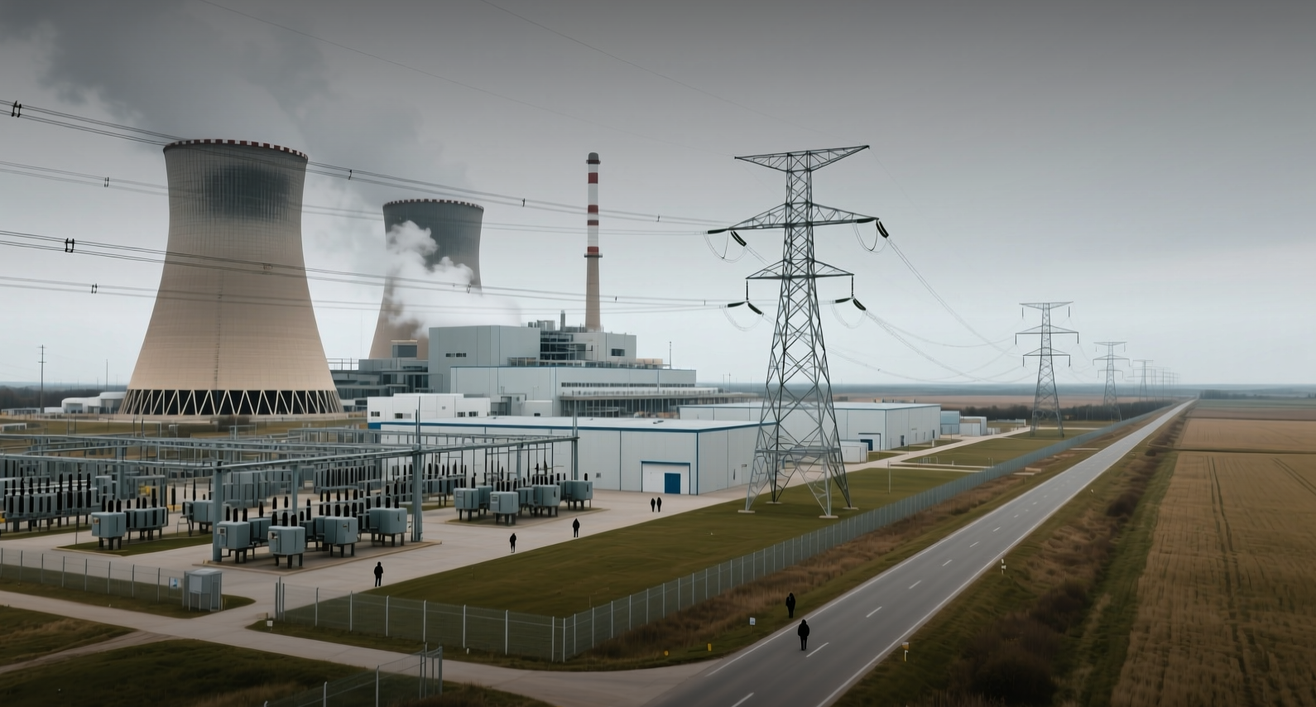
Hyperscalers are publicly promoting nuclear-powered data centers as local opposition to their electricity consumption hardens, a shift that has put uranium at the center of the AI power trade. Uranium spot was quoted at $82.50 per pound on Sept. 10, according to UxC data, holding above the $80 level that has capped the market for most of the past two years.
The demand case rests on reactor fuel, not electricity contracts. The World Nuclear Association estimates reactor demand at about 68,920 metric tons of uranium in 2025, rising to just over 150,000 tU by 2040 in its reference scenario, with an upper case above 204,000 tU. The International Energy Agency expects data-center electricity consumption to double from 485 terawatt-hours to roughly 950 TWh by 2030, after a 17% increase in 2025.
"The fuel isn't spent. It still retains 98% of the energy density it had," U.S. Deputy Energy Secretary James Danly said at a Sept. 8 press conference in Palo, Iowa, arguing spent fuel should be treated as an asset rather than a storage liability.
The clearest physical evidence of the link sits in eastern Iowa. NextEra Energy plans to restart the 615-megawatt Duane Arnold plant by the first quarter of 2029 with the help of a $1.9 billion U.S. Department of Energy loan, and about 93% of its output will serve Google's cloud and AI infrastructure under a 25-year agreement signed last year. Central Iowa Power Cooperative will buy the remaining output on the same terms. NextEra has said repairing and operating the plant for 25 years will generate $9.1 billion in economic activity in Iowa and about 400 permanent jobs, with construction supporting roughly 1,650 positions.
Restarts compete with new mines for the same pounds
Duane Arnold's 615 MW is a single-reactor restart, but the fuel math scales quickly. A reactor of that size consumes roughly 100 to 150 metric tons of uranium annually once refueled, meaning the U.S. restart pipeline alone represents a recurring demand stream that did not exist when the plant shut after a 2020 derecho damaged its cooling towers.
Uranium at $82.50 per pound sits well above the roughly $40 to $50 per pound range that prevailed between 2016 and 2020, when utilities covered requirements from secondary supply and inventories. It remains below the $106 per pound spike reached in early 2024, when production cuts at Kazatomprom and Cameco's Cigar Lake disruption tightened the market. That gap matters for miners: Uranium Energy Corp. began new in-situ recovery production at Burke Hollow in South Texas in April 2026 and reported 32,195 pounds of uranium concentrate from its Christensen Ranch operation in Wyoming for the third quarter of fiscal 2026, while IsoEnergy holds 48.6 million pounds of indicated resource at 34.5% U3O8 at its Hurricane deposit in Saskatchewan's Athabasca Basin.
The constraint is not geology. It is permitting and local consent. Beyond Nuclear filed a petition on Aug. 19 challenging the Iowa Utilities Commission's June decision to grant NextEra a certificate of public convenience, use and necessity, arguing the restart will generate an estimated 14 metric tons of high-level radioactive waste annually on top of 688 metric tons of spent fuel already stored on site. The group also contends the project will not benefit Iowa consumers because Google can resell power outside the state. A growing number of Iowa cities and counties are adopting moratoriums to slow data-center construction, the same local resistance that is pushing hyperscalers toward nuclear in the first place.
What $82.50 means for the next contract cycle
For uranium producers, the level that matters is not the spot print but the term price utilities pay for multi-year supply. Spot strength driven by data-center headlines does little for miners unless it pulls term contracts higher, and utilities typically cover requirements three to five years ahead. The WNA's 2040 scenarios imply a gap between current mine supply and reference-case demand that only closes with new production from projects like UEC's Ludeman in the Powder River Basin and IsoEnergy's DISA Uranium venture, which closed on Aug. 19 with $105 million in financing and a focus on restarting conventional Utah mines.
The next demand signal is the IEA's updated data-center electricity forecast, expected alongside its annual nuclear market report. Until term pricing confirms the spot move, uranium at $82.50 reflects a narrative about AI power demand more than a physical shortage of pounds.
This article is for informational purposes only and does not constitute investment advice.