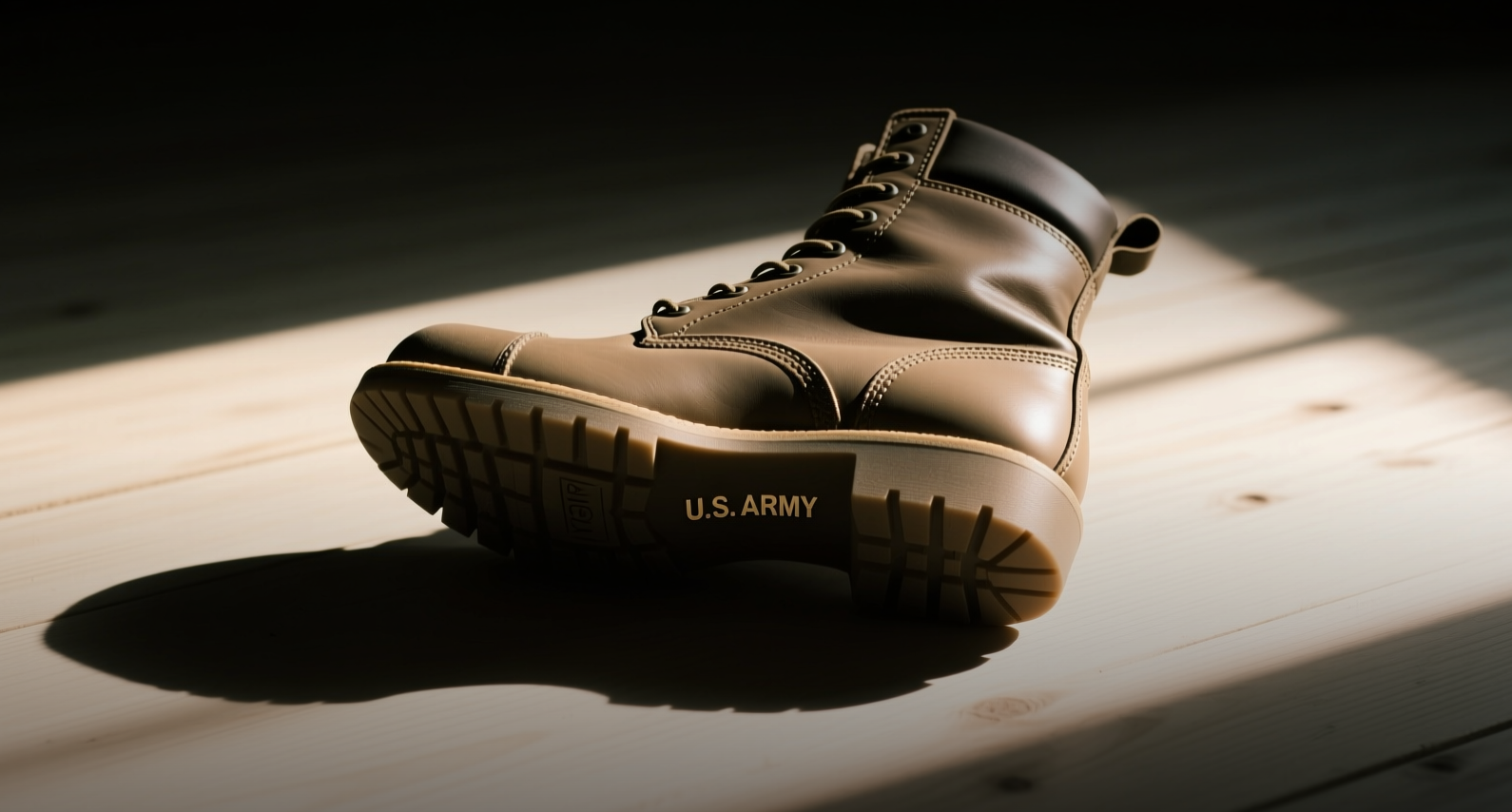
A US Navy diver 80 feet underwater in Subic Bay, Philippines, pulled a leather boot from the mud of a sunken Japanese liner — the strongest evidence yet that the Pentagon may finally bring home about 250 American POWs who died when US aircraft sank the ship in December 1944.
"The shoe, later found to have 'U.S. Army' written on the sole, was one of the strongest signs yet that Defense Department researchers are closing in on a goal that has escaped them for more than eight decades," said Mike Cherney, a Wall Street Journal reporter covering the mission.
The Oryoku Maru, a 436-foot Japanese liner requisitioned for the war effort, was transporting 1,619 Allied prisoners — mostly Americans who had survived the Bataan Death March — when US aircraft attacked on Dec. 14 and Dec. 15, 1944. The ship carried 1,000 merchant sailors, 700 civilians and 100 crew alongside the POWs, according to the Defense POW/MIA Accounting Agency. Historians say US commanders did not know the ship held American prisoners. Some 225 POWs died during the attacks, with an additional 55 drowning or being shot by the Japanese as they swam to shore.
The mission at the Oryoku Maru, whose crumpled frame lies about 500 feet off the Philippine coast, is among the most complex ever attempted by the Defense POW/MIA Accounting Agency, the Pentagon arm tasked with finding missing US servicemembers. About 80,000 US servicemembers remain missing, most from World War II, and fewer than 4,000 have been accounted for since 1973. The agency typically searches for single individuals or small crews, not the remains of hundreds of men inside a largely flattened wreck.
The hellship's final voyage
On Dec. 13, 1944, Japanese forces loaded POWs onto the Oryoku Maru in Manila, rushing to move prisoners to labor camps before American forces retook the islands. The prisoners were crammed into cargo holds — 600 enlisted men in the forward hold alone — with temperatures inside reaching an estimated 120 degrees Fahrenheit. The ship had recently carried horses, and its ventilation system, turned on for the animals, was switched off for the prisoners. Buckets used as latrines overflowed.
"'Hell' is almost too small a word to describe what went on there," said John McManus, a historian at Missouri University of Science and Technology who has studied Japanese prisoner transports. Survivors described POWs drinking their own urine and attacking comrades in desperation.
US aircraft pounded the ship with rockets and bombs over two days. In 1946, Navy divers used explosives to break open the wreck but recovered only two disintegrating skull fragments. They recommended the wreck be designated a cemetery, like many other sunken World War II-era ships.
Decades of searching
The turning point came around the early 2010s when historians with the POW agency began combing archives, passenger rosters and survivor accounts. In 2016, a team canvassed the area around Subic Bay, interviewing local fishermen and divers. Researchers eventually located schematics of the ship and conducted intensive underwater surveys, creating seven main 3-D models that confirmed the wreck was the Oryoku Maru and that a recovery operation was feasible.
During a more than two-month expedition ending in early May, a team of US Navy and Coast Guard divers aboard the USNS Salvor tried to enter the forward cargo hold. Divers used torches burning at thousands of degrees Fahrenheit to slice through steel and hydraulic tools to pry away metal. Their primary tool was a dredge — a vacuum-like system that sucked sediment from inside the wreck into baskets lifted by crane to a barge, where researchers sifted through contents by hand.
Key finds included a second boot with "USA" on the sole and a name carved into the leather upper, a metal identification bracelet, broken glasses, an IV needle with a bottle topper, and a brass item with writing. When researchers found possible bone material, they treated it like a forensic crime scene — storing it in water to prevent disintegration, marking its exact location, and placing it in a locked case for lab analysis.
Families await closure
For Christopher Schurtz, a history professor whose grandfather Maj. Paul Schurtz died on the Oryoku Maru at age 43, the mission offers the best hope yet to close a wound that has afflicted his family for three generations. Paul Schurtz, a postal worker and choir director from Deming, New Mexico, left behind a 5-year-old son and a pregnant wife when his National Guard unit deployed to the Philippines in 1941. He earned a Bronze Star for approaching Japanese forces after the US surrender to ensure hostilities had ended, saving his men.
"I can't believe that after all this time, that this would be something that would even be possible," Christopher said. "And I wish my dad was around to see it, cause it meant everything."
Lori Zielinski's grandfather, Capt. Fred Rose, a California firefighter and Army reservist awarded the Silver Star for his actions during the defense of Corregidor, is also among those unaccounted for. His wife never remarried. Zielinski found a photo of her grandfather for the first time in 2019.
A forensic review of possible bone material with the Philippines was scheduled for July, though no results have been disclosed. The researchers plan to return in fiscal 2027.
This article is for informational purposes only and does not constitute investment advice.