Three of China's most prominent investors are publicly backing AI stocks after a brutal July selloff erased hundreds of billions in market value.
China's top private equity figures are rallying behind artificial intelligence stocks after a July selloff erased more than $500 billion from global chipmakers, signaling conviction that the AI infrastructure buildout remains in its early stages.
"I believe it's not over — whoever stops will face dimensional reduction strikes," Ge Weidong, founder of Chaos Investment and one of China's most followed private investors, said in a social media post. "Silicon Valley and China's top AI talent understand this best."
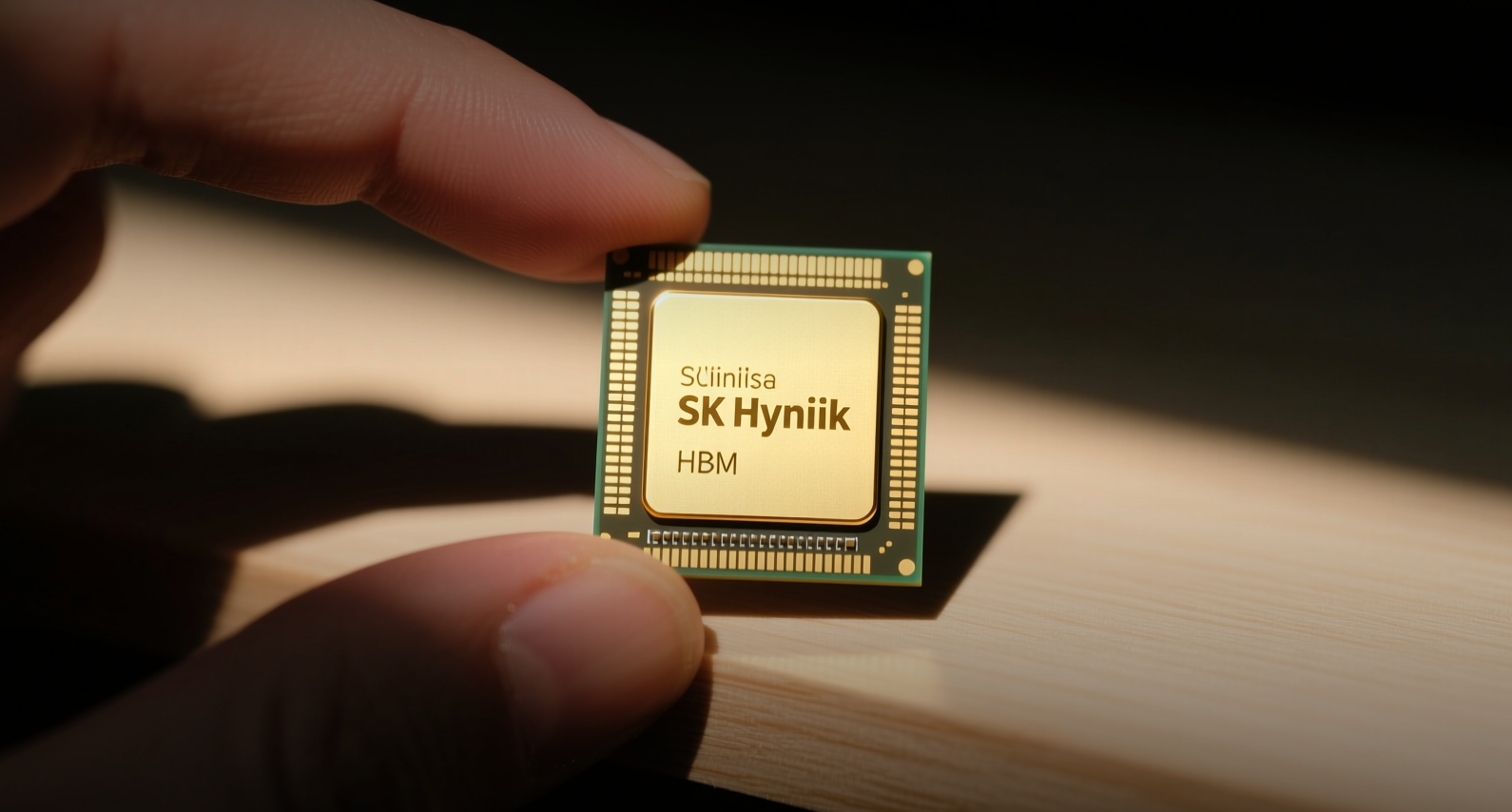
Dan Bin, founder of Oriental Harbor Investment, identified SK Hynix Inc. as a milestone AI cyclical stock, noting that the memory maker's structural shift toward long-term AI supply contracts is reducing its traditional earnings volatility. An analyst initiating coverage on SK Hynix with a Strong Buy rating set a $258 price target, implying 67% upside from the stock's current $154 level.
The coordinated bullish signals from China's investment elite come as the VanEck Semiconductor ETF (SMH) approaches a key support level near $520, down roughly 15% from its July peak. For investors, the question is whether this correction represents a buying opportunity or the start of a deeper drawdown as hyperscaler capital expenditure faces renewed scrutiny.
The July selloff was triggered by multiple shocks. China's Kimi K3 model release raised concerns about intensifying competition, while deleveraging in Korea's KOSPI index amplified the downturn in memory stocks. The Philadelphia Semiconductor Index fell nearly 10% in the second half of July alone.
Yet China's private equity managers are largely holding their positions. A Shanghai-based firm told investors it trimmed positions in early July due to liquidity concerns but maintained its core technology allocation. "We still believe technology is the only sector that can lead the market out of this," the firm said.
Zhu Jigang, investment director at Xitai Investment, said AI is likely to remain the market's primary focus, but opportunities will broaden from concentrated AI hardware plays into domestic computing, advanced packaging, infrastructure and new materials. Chongyang Investment added that companies with verified earnings, competitive moats and sustainable growth will continue to deliver value, while theme-driven names face valuation pressure.
Yuansheng Asset, which described the early-July correction as exceeding its expectations, said it remains convinced AI represents the most important transformation of human economic behavior. The firm said it will add to tech positions once market concerns about AI development timelines are resolved.
SK Hynix emerges as a bellwether
SK Hynix has become a proxy for the AI memory trade. The company's high-bandwidth memory (HBM) products are essential for Nvidia Corp.'s AI accelerators, and long-term supply agreements with hyperscalers are shifting its revenue profile away from the boom-bust cycles that historically defined the memory industry. The analyst initiation with a $258 target reflects this structural re-rating thesis.
The risk that remains
Google parent Alphabet Inc. raised capital expenditure aggressively in its most recent quarter while posting its first negative free cash flow since 2004, intensifying debate about AI return on investment timelines. Advanced Micro Devices Inc.'s AI event also failed to lift shares, as major product ramps are back-loaded to late 2026 and 2027. These events suggest the market is demanding proof of AI monetization sooner than many companies can deliver.
This article is for informational purposes only and does not constitute investment advice.