Le boom de l'intelligence artificielle alimente une flambée de la demande de capitaux qui pousse les coûts d'emprunt à long terme à des sommets de 17 ans, amenant les traders sur les marchés à terme à intégrer la possibilité croissante d'une hausse des taux d'intérêt de la Réserve fédérale avant la fin de l'année.
« L'augmentation de la productivité, combinée à d'importants besoins de dépenses en capital, pointe vers un taux d'intérêt réel neutre plus élevé », ont écrit Christian Keller et Akash Utsav de Barclays dans l'étude annuelle Equity-Gilt de la firme.
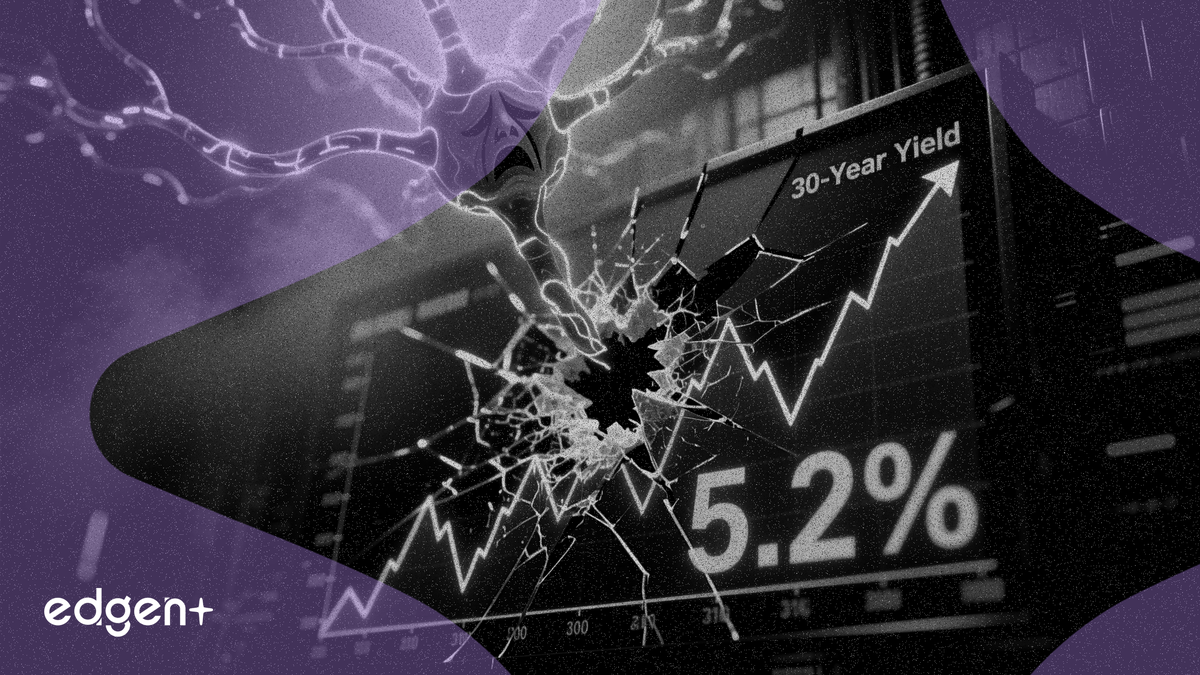
Le conflit entre la croissance tirée par l'IA et le resserrement de la politique monétaire a propulsé le rendement du Trésor à 30 ans (^TYX) à 5,2 % pour la première fois depuis juillet 2007, tandis que le rendement de référence à 10 ans (^TNX) a grimpé à 4,68 %. La pression sur les taux a contribué à une tonalité d'aversion au risque sur les actions, l'indice Nasdaq Composite à forte composante technologique perdant 0,8 % lors des récentes séances.
Le repricing du marché représente un défi pour la Fed, qui maintient son taux directeur à un sommet de 23 ans de 5,25-5,50 % depuis juillet 2023. Alors que les décideurs estiment que la politique est restrictive, une vague d'émissions obligataires liées à l'IA pour financer des dépenses estimées à 7,6 billions de dollars pourrait soutenir les pressions inflationnistes, forçant un pivot restrictif (hawkish) que les marchés n'avaient pas anticipé il y a encore quelques mois.
Le nouveau moteur inflationniste
Un consensus croissant parmi les sociétés d'investissement est que l'ampleur même des dépenses en capital liées à l'IA crée un changement structurel dans la relation entre l'épargne et l'investissement. Goldman Sachs estime que les dépenses d'infrastructure en IA pourraient atteindre 7,6 billions de dollars au cours des cinq prochaines années. Cette immense demande de capitaux, manifeste dans l'envolée des ventes d'obligations convertibles liées à l'IA, entre directement en concurrence avec les emprunts d'État et pousse les rendements à la hausse.
« Les marchés ne devraient pas supposer un retour au monde des taux réels très bas des années 2010 en se basant sur le boom actuel de l'IA », a déclaré l'Institut de la finance internationale dans un rapport récent, arguant que des rendements attendus plus élevés augmenteront l'investissement par rapport à l'épargne.
Cette nouvelle dynamique aide à expliquer pourquoi les indices boursiers centrés sur l'IA et les rendements obligataires à long terme augmentent en parallèle, un phénomène qui a déconcerté certains investisseurs. Le boom de l'investissement est encore compliqué par la hausse des prix de l'énergie, stimulée par les blocus dans le détroit d'Ormuz, qui ont porté les contrats à terme sur le pétrole Brent à près de 111 dollars le baril et ajouté aux préoccupations inflationnistes immédiates.
La part décroissante du travail
Une variable clé des perspectives à long terme est la manière dont les gains de productivité de l'IA sont distribués. Les économistes sont divisés sur la question de savoir si l'IA augmentera les emplois existants ou les remplacera, une question ayant des implications significatives pour la part du travail dans le PIB, qui est en déclin à long terme.
Dario Perkins, économiste chez TS Lombard, a soutenu que la part des salaires dans le revenu est étroitement corrélée au R-star, le taux d'intérêt neutre. Il soutient que pour que les rendements obligataires restent structurellement plus élevés, la part des salaires doit se redresser. « Soit la part des salaires doit se redresser, soit tous ces discours sur un nouveau régime de rendements obligataires structurellement plus élevés sont probablement erronés », a-t-il écrit.
Cependant, une analyse de Barclays suggère que la combinaison de l'IA et de la robotique humanoïde élargira la gamme d'emplois susceptibles d'être automatisés, exerçant une pression supplémentaire à la baisse sur la part du revenu des travailleurs. Cela pourrait peser sur la demande globale, agissant comme un frein potentiel à l'envolée des rendements. Pourtant, les économistes de Barclays estiment qu'une impulsion inflationniste plus immédiate proviendra des besoins massifs en électricité et en matières premières du déploiement de l'IA, attisant l'inflation par les matières premières plutôt que par les salaires.
Pour l'heure, les investisseurs parient que le boom a encore de la marge, avec seulement 4 % des gestionnaires d'actifs mondiaux s'attendant à un « atterrissage brutal » de l'économie selon un récent sondage de Bank of America. Plus de 60 % des personnes interrogées s'attendent à ce que le rendement du Trésor à 30 ans dépasse 6 % d'ici un an, suggérant que les marchés obligataires se préparent à un monde où l'IA est une force inflationniste, et non déflationniste.
Cet article est à titre informatif uniquement et ne constitue pas un conseil en investissement.