The AI infrastructure boom is creating a hidden inflation crisis for the world’s largest technology companies, with memory costs set to quadruple as a share of spending.

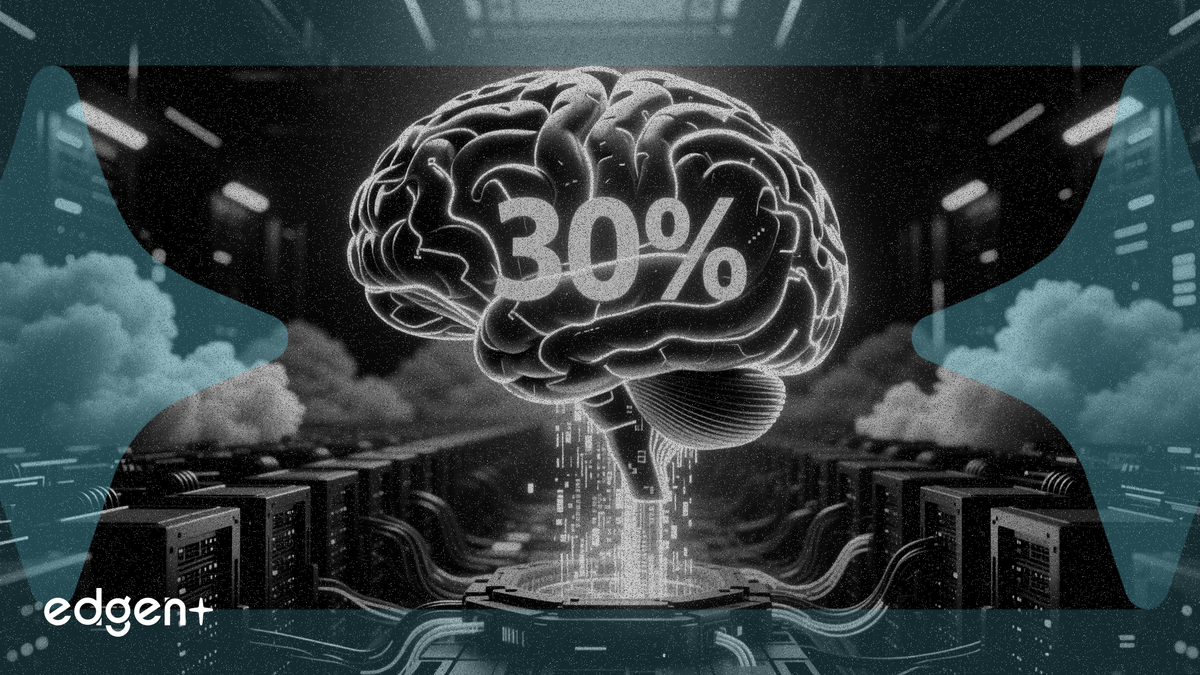
Beyond the well-documented "Nvidia tax," a new "memory tax" is set to consume 30 percent of hyperscale cloud capital expenditures by 2026, up from just 8 percent in 2024, according to research from SemiAnalysis. The trend threatens the profit models for AI leaders like Microsoft and Meta while channeling historic profits to a handful of memory suppliers.
"Almost all of the value is accumulating at the chip layer, which is both unprecedented and unsustainable," James Covello, Head of Global Equity Research at Goldman Sachs, said. "The prosperity of chip companies comes at the expense of all companies higher up the value chain."
The cost pressure is already visible in forward guidance. Microsoft now expects higher component prices to increase its annual capital spending by $25 billion, pushing its total to $190 billion. Meta recently raised its capex forecast by $10 billion, citing memory chip costs as a primary driver. This follows a more than 90 percent quarter-over-quarter increase in DRAM average selling prices for Samsung and record 72 percent operating margins for memory-maker SK Hynix in its latest quarter.
This dynamic creates a major headwind for cloud providers like Amazon, Google, and Microsoft, while driving a historic bull market for a concentrated trio of memory suppliers: SK Hynix, Samsung, and U.S.-based Micron Technology (MU). The combined market value of these three companies has already surpassed $2.8 trillion as they capitalize on structural shortages of high-bandwidth memory (HBM), a key component in AI accelerators.
For the past two years, the primary cost driver in AI infrastructure has been the GPU, with Nvidia’s market dominance allowing it to command gross margins above 75 percent—a phenomenon known as the "Nvidia tax." Now, a second cost crisis is emerging from memory. Mainstream AI accelerators require large amounts of HBM, a specialized and silicon-intensive type of DRAM (dynamic random-access memory) that provides fast data access.
According to SemiAnalysis, the market is structurally undersupplied for HBM, and DRAM prices are projected to more than double by 2026. The research firm also noted a dynamic often missed by the market: Nvidia receives "very, very priority" pricing on DRAM, far below what its hyperscale customers pay. This arrangement masks the true severity of the supply crunch for the rest of the market.
The memory market is a functional oligopoly controlled by South Korea’s SK Hynix and Samsung Electronics, alongside Idaho-based Micron Technology. These firms are the primary beneficiaries of the memory tax. SK Hynix recently stated that customers are "prioritizing securing volume over price negotiations."
Micron is a key player, with its HBM solutions seeing strong adoption by hyperscalers. The company’s leadership in DRAM technology and its roadmap for next-generation HBM4 position it to capture a significant share of the expanding market. For its current fiscal year, analysts expect Micron’s revenue and earnings to grow by more than 100 percent each, according to Zacks Investment Research, which gives the stock a #1 "Strong Buy" rating. The AI boom is also lifting other infrastructure players like Seagate Technology (STX), which is benefiting from demand for mass-capacity storage to support AI models.
Faced with spiraling costs from external suppliers, the largest cloud providers are accelerating efforts to develop their own custom chips. Google’s Tensor Processing Units (TPUs), Amazon’s Trainium chips, and Microsoft’s Maia accelerators all represent strategic efforts to reduce dependency on Nvidia and gain control over their hardware stack. Amazon estimates its Trainium chips could save it billions in annual procurement costs.
However, this path offers no short-term relief. Building a competitive semiconductor is a multi-year, multi-billion-dollar effort. Furthermore, the manufacturing of these chips still relies on third-party foundries like Taiwan Semiconductor Manufacturing Co., which themselves are running at full capacity. With semiconductor fabrication plants taking years to build, a significant increase in supply is not imminent.
The consequences of the AI hardware boom are beginning to ripple through the broader economy. With memory manufacturers prioritizing high-margin data center orders, supply for consumer electronics has tightened. This forces makers of smartphones, PCs, and game consoles to choose between raising prices, reducing specifications, or absorbing lower profits. Nintendo has already announced a price increase for its upcoming Switch 2 console, and global smartphone sales are projected to decline this year.
Economists are also taking note of the inflationary pressure. "The immense demand for semiconductors, memory capacity, and other AI infrastructure components appears to be passing through to consumer prices," Tiffany Wilding, an economist at PIMCO, said, citing recent personal consumption inflation data. If the Federal Reserve is unable to cut interest rates as a result, the high cost of pursuing artificial intelligence will be paid by everyone.
This article is for informational purposes only and does not constitute investment advice.