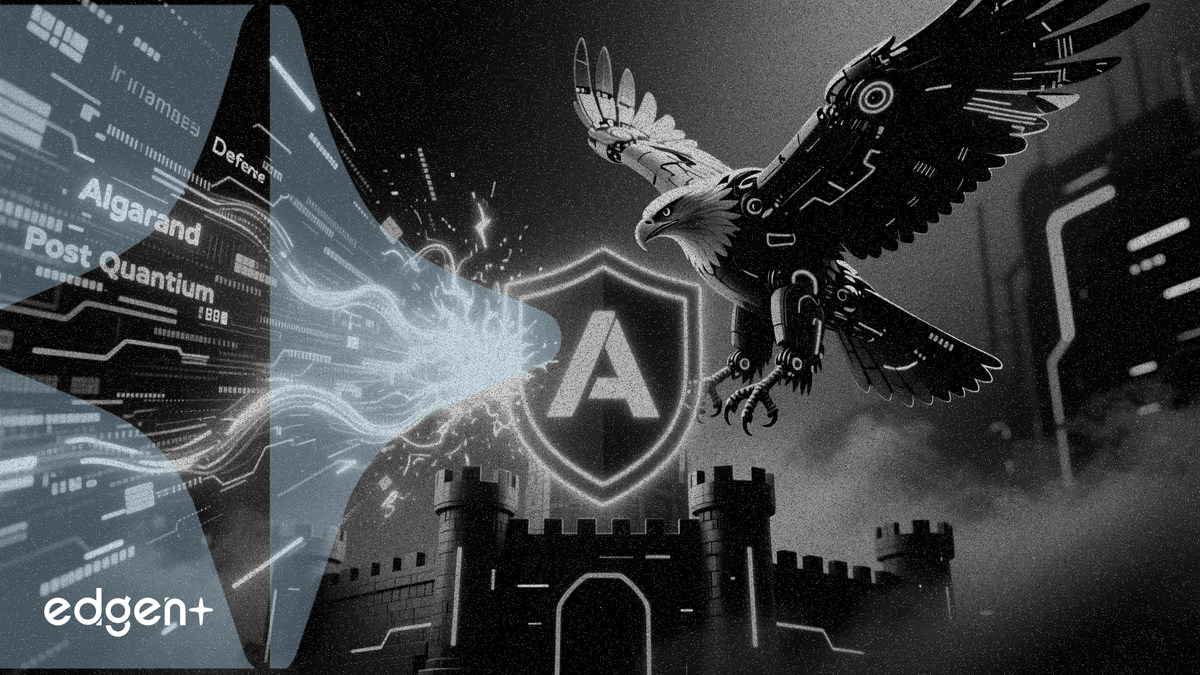
(Bloomberg) -- Algorand has integrated lattice-based Falcon signatures into its blockchain as of May 3, 2026, a move designed to provide robust security against the emerging threat of quantum computing. The upgrade makes Algorand one of the first major blockchains to be quantum-resistant from the ground up.
The network’s proactive approach to post-quantum cryptography was guided by contributions from Chris Peikert, a leading researcher in the field. "Algorand isn’t just secure for today… It’s being built to remain secure in a post-quantum world," a recent report from The Web3 Alert noted, highlighting the network's forward-looking design which has gained recognition from Google and Coinbase.
At the core of the issue is elliptic curve cryptography (ECC), the standard used by most blockchains to secure wallets and transactions. Quantum computers running Shor’s algorithm could theoretically break ECC, allowing attackers to derive private keys from public keys. Algorand’s Falcon signatures, a type of lattice-based cryptography, are specifically designed to be immune to such attacks.
This technical shift puts Algorand in a strong position as the industry awakens to the quantum threat. While other major networks like Ethereum and Solana have roadmaps for quantum resistance, they will likely require complex and potentially disruptive hard forks and wallet migrations. Solana co-founder Anatoly Yakovenko recently warned that Ethereum’s Layer 2 solutions are not quantum-safe, creating a "harvest now, decrypt later" risk where attackers could store transaction data today to decrypt with future quantum computers.
A Proactive Stance in a Vulnerable Industry
The majority of the blockchain industry faces a significant challenge in upgrading its cryptographic standards. The process is not trivial, involving coordinated updates across a decentralized network of validators, developers, and users. For many, this will mean migrating billions of dollars in assets from vulnerable wallets to new, quantum-resistant addresses—a process fraught with technical and operational risks.
Algorand’s integration of Falcon signatures at the protocol level bypasses these future hurdles. New accounts and transactions on the network are automatically protected by the quantum-resistant scheme, with no action required from users. This built-in security is a key differentiator in a market where long-term asset safety is becoming a primary concern for institutional and retail investors alike.
The conversation around post-quantum security is rapidly evolving. Yakovenko has also raised concerns that artificial intelligence could potentially find vulnerabilities in the new generation of post-quantum cryptographic schemes, suggesting the need for multi-signature wallet support as an additional safeguard. While Algorand has taken a significant first step, the entire industry faces a shared challenge in navigating the complex transition to a quantum-secure future. Other projects, including Cardano and Ripple, are also actively researching and developing their own solutions, with Ripple committing to make the XRP Ledger quantum-proof by 2028.
This article is for informational purposes only and does not constitute investment advice.