


Amazon's in-house silicon operation has quietly become one of the largest custom AI chip businesses in the world, crossing a $25 billion annual run rate that most investors have yet to price in.
Amazon's in-house silicon operation has quietly become one of the largest custom AI chip businesses in the world, crossing a $25 billion annual run rate that most investors have yet to price in.
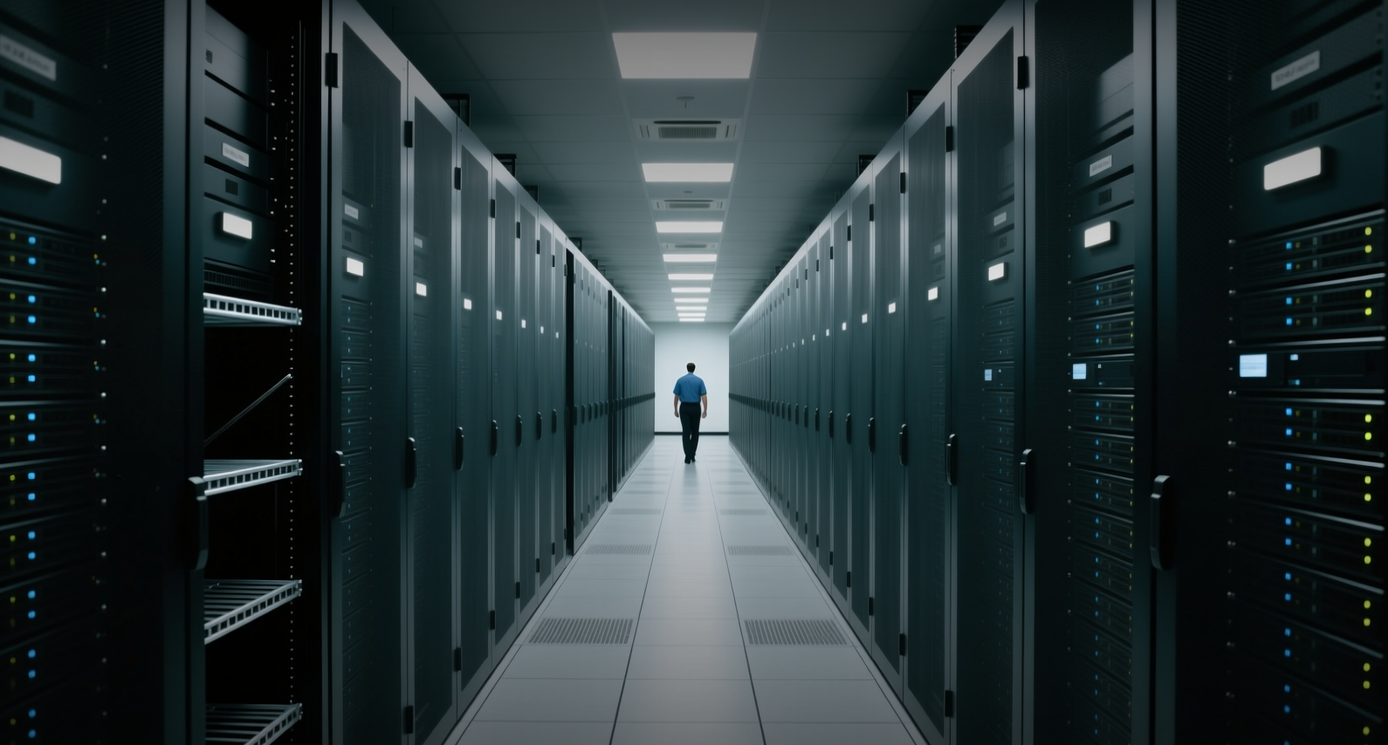
Amazon's custom AI chip business has crossed a $25 billion annual revenue run rate, growing at triple-digit speed as Trainium and Inferentia processors carve into Nvidia's data center dominance.
"Amazon has literally built one of the largest chip businesses in the world in the last couple of years, and barely anyone has even noticed," Shawn O'Malley, co-host of The Investor's Podcast, said.
The silicon operation expanded from roughly $10 billion in annualized revenue in under a year. Trainium2 is fully subscribed with 1.4 million chips deployed, powering the majority of inference workloads on Amazon Bedrock. Project Rainier, the world's largest operational AI compute cluster, runs more than 500,000 Trainium2 chips training Anthropic's Claude models. OpenAI has committed to roughly 2 gigawatts of Trainium capacity beginning in 2027.
The milestone reframes Amazon's position in the AI arms race. AWS revenue hit $42.2 billion in Q2, up 37 percent year-over-year — the fastest growth in 18 quarters — with a $496 billion backlog growing at triple digits. CEO Andy Jassy has said AWS could become "a trillion-dollar annual revenue business for us in time."
Amazon management said in its most recent shareholder letter that Trainium2 offers about 30 percent better price-performance than comparable GPUs. The company's custom silicon strategy mirrors Alphabet's tensor processing unit (TPU) playbook — purpose-built chips that deliver comparable results to Nvidia's general-purpose accelerators at a lower cost point.
Trainium3, which became available at the start of 2026, sold out within months. Trainium4, slated for a 2027 or 2028 launch, already has a large portion of capacity reserved. On the CPU side, Graviton processors are used by 98 percent of the top 1,000 EC2 customers.
The competitive stakes are significant. Nvidia's data center revenue reached $75.25 billion in the most recent quarter, up 92 percent year-over-year, with gross margins at 75 percent. But hyperscalers are increasingly looking to displace GPU spending with in-house silicon. Alphabet's TPU business has proven the model works, and Amazon's $25 billion run rate suggests the strategy is scaling.
The expansion comes at a price. Amazon spent $54.2 billion on capital expenditures in Q2 alone and is guiding to roughly $200 billion for fiscal 2026. Free cash flow flipped to negative $7.6 billion on a trailing-twelve-month basis, even as operating cash flow remained healthy.
That spending is the tax Amazon pays for retrofitting a general-purpose cloud into an AI factory — exactly the friction specialized neoclouds like CoreWeave exploit with bare-metal, pure-Nvidia clusters delivering 40 to 60 percent cheaper compute for frontier training workloads.
AWS operating margin expanded to 39.4 percent, up 650 basis points year-over-year, and the segment now accounts for more than 60 percent of Amazon's total operating income. The cloud division is running at a $169 billion annualized revenue rate — a figure Jassy noted would rank among the top 25 US companies by revenue if AWS were standalone.
Amazon shares have gained about 14 percent over the past year, trailing Alphabet's 71 percent advance. The stock trades at roughly 17 times price to operating cash flow after adjusting for the $17 billion Anthropic stake markup, according to estimates cited by The Investor's Podcast. If the market fully prices in the chip business's trajectory — some analysts suggest the run rate could reach $50 billion if Amazon sold silicon externally — the current valuation may understate the opportunity.
This article is for informational purposes only and does not constitute investment advice.
