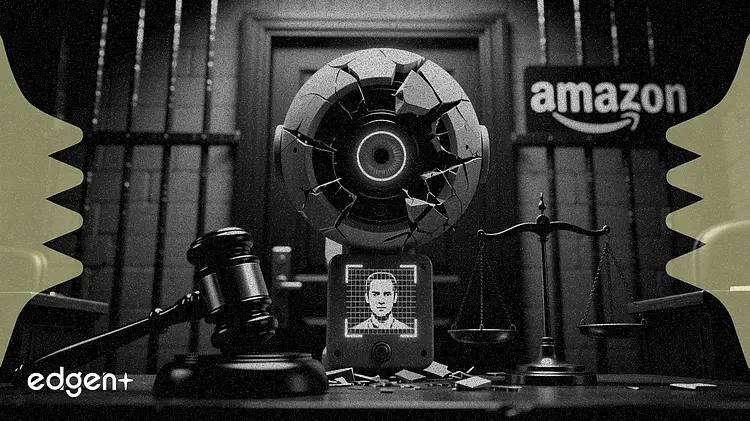
Amazon faces a class-action lawsuit over its Ring doorbell cameras' facial recognition feature, which the complaint says collected and stored images of passersby without their knowledge or consent.
Amazon was sued Monday by Virginia resident Charles Sigwalt, who is seeking class-action status in federal court in Seattle over a Ring feature called "Familiar Faces." The optional setting uses artificial intelligence to identify and remember individuals so that when they return to a home or business, notifications can include specific names. Sigwalt alleges the feature captured his image at friends' and family members' homes without his permission.
"Those affected did not consent to have their privacy rights violated at the entrance way," the suit states. "Millions of other Americans passed by a Ring security camera and unknowingly had their facial recognition information collected." The complaint seeks at least $5 million in damages for the proposed class. Amazon declined to comment on the litigation.
The lawsuit highlights a core asymmetry in how the feature operates: the Ring device owner consents to the surveillance, but visitors, delivery drivers, and neighbors have their biometric data captured with no practical way to opt out. Amazon has withheld the Familiar Faces feature in Illinois and Texas, two states with stringent biometric privacy laws, suggesting the company was aware of the legal risks, according to the complaint.
A Pattern of Privacy Controversies
The case is the latest in a string of privacy disputes involving Ring since Amazon acquired the company for $1 billion in 2018. In February, Ring faced backlash over a Super Bowl advertisement promoting a service that uses its neighborhood camera network to help find lost dogs. Privacy advocates warned the same technology could enable broad neighborhood-level surveillance. Following the criticism, Ring ended an unrelated partnership with Flock Safety, which deploys license plate readers and cameras for law enforcement use.
In 2023, the U.S. Federal Trade Commission reached a $5.8 million settlement with Ring over allegations that included a former employee spying on female customers through cameras inside their homes. The FTC said Ring employees had unrestricted access to customers' sensitive video data, allowing them and contractors to view and download it. Amazon denied any wrongdoing as part of that settlement.
Democratic Senator Ed Markey of Massachusetts alleged in 2022 that Ring violated privacy through its law enforcement partnerships, which allowed police access to some user footage without proper consent.
What the Lawsuit Means for Amazon
The lawsuit targets a core growth area for Amazon's smart home business at a time when regulatory scrutiny of Big Tech data practices is intensifying. Ring has become one of the most widely recognized smart doorbell brands in the U.S., with millions of devices installed at homes nationwide. A ruling against Amazon could force changes to how the Familiar Faces feature operates — or its removal from the market entirely — and set a precedent for how facial recognition data collected by consumer devices must be handled.
The case also carries reputational risk for Amazon as lawmakers and regulators increasingly focus on biometric data collection. The company's decision to withhold Familiar Faces in Illinois and Texas, where the Biometric Information Privacy Act and a similar Texas law impose strict consent requirements, indicates the feature's legal vulnerability. If the court certifies the class, the potential damages could extend well beyond the $5 million minimum, given the number of individuals who may have been recorded by Ring cameras across the country.
This article is for informational purposes only and does not constitute investment advice.