


Dans un changement majeur pour l'industrie des semi-conducteurs de 580 milliards de dollars, Apple diversifie sa fabrication de puces, relocalisant une partie de sa production sur le sol américain avec Intel.
Dans un changement majeur pour l'industrie des semi-conducteurs de 580 milliards de dollars, Apple diversifie sa fabrication de puces, relocalisant une partie de sa production sur le sol américain avec Intel.
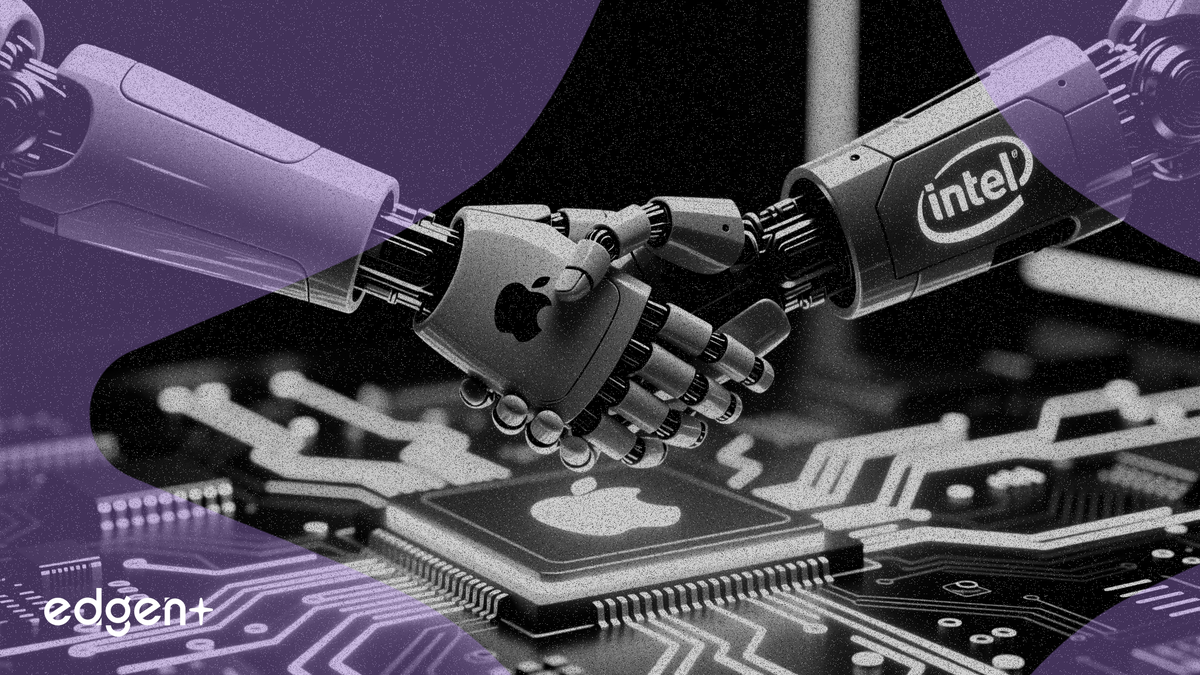
Apple a conclu un accord préliminaire avec son rival de longue date Intel pour fabriquer des puces personnalisées pour ses appareils, un contrat historique visant à réduire sa concentration de production auprès du taïwanais TSMC après plus d'un an de négociations.
Bien que les entreprises n'aient pas fait de commentaires, des sources proches des discussions intensives d'un an ont déclaré qu'un accord formel avait été finalisé au cours des derniers mois, selon un rapport du Wall Street Journal.
L'accord ferait d'Apple un client clé pour l'activité de fonderie revitalisée d'Intel, bien que les détails sur les puces que Intel produira ou les conditions financières n'aient pas été divulgués. Pour Apple, cette initiative fait suite à des discussions de diversification préliminaires avec Samsung et répond aux risques géopolitiques croissants associés à sa forte dépendance envers TSMC, qui produit actuellement la quasi-totalité de son silicium personnalisé pour iPhones, iPads et Macs.
Ce partenariat est une validation significative de la stratégie de fonderie de plusieurs milliards de dollars d'Intel sous la direction du PDG Pat Gelsinger, sécurisant potentiellement un client à gros volume et bousculant le marché de la fonderie. Pour Apple, cela marque un pivot stratégique vers la relocalisation d'une plus grande partie de sa chaîne d'approvisionnement, ce qui pourrait avoir un impact sur les coûts de production et la logistique de ses produits les plus rentables.
Décrocher Apple comme client de fonderie est une victoire monumentale pour Intel. L'entreprise s'efforce de revitaliser agressivement sa branche de fabrication de puces, Intel Foundry Services, pour concurrencer les leaders du secteur TSMC et Samsung. Sécuriser une partie de l'activité d'Apple, l'acheteur de puces le plus exigeant et au volume le plus élevé au monde, apporte une immense crédibilité et une base de demande stable pour les processus de fabrication avancés d'Intel.
Cette initiative est au cœur du plan de redressement du PDG Pat Gelsinger, qui vise à reconquérir le leadership historique d'Intel dans la technologie des puces. L'entreprise investit des milliards dans de nouvelles usines aux États-Unis et en Europe. Cet accord fait suite à d'autres initiatives stratégiques, notamment un partenariat pour construire des processeurs pour le projet de puce IA Terafab d'Elon Musk, signalant l'ambition sérieuse d'Intel de devenir un acteur majeur de l'industrie mondiale de la fonderie.
Pour Apple, l'accord avec Intel est une étape cruciale dans la diversification de sa chaîne d'approvisionnement et l'atténuation des risques géopolitiques. La profonde dépendance de l'entreprise envers TSMC, située à Taïwan, est une préoccupation croissante pour les investisseurs dans un contexte de tensions croissantes dans la région. En déplaçant une partie de la production vers Intel, qui possède une empreinte manufacturière importante aux États-Unis, Apple peut garantir une plus grande résilience de sa chaîne d'approvisionnement.
Le géant de la technologie aurait également eu des discussions préliminaires avec Samsung sur la production de ses puces avancées dans une nouvelle usine au Texas. Bien que TSMC restera probablement le partenaire principal d'Apple dans un avenir prévisible en raison de son échelle et de sa technologie de pointe, ces négociations parallèles montrent une stratégie claire de culture de multiples partenaires de fabrication haut de gamme.
Le succès de l'accord sera un facteur clé pour les investisseurs surveillant les deux sociétés. Pour Intel (INTC), cela pourrait signaler un redressement réussi, justifiant ses investissements massifs. Pour Apple (AAPL), cela représente une réduction stratégique des risques de sa chaîne d'approvisionnement, bien que le marché surveillera de près tout impact potentiel sur les performances ou le coût des puces par rapport à celles produites par TSMC.
Cet article est à titre informatif uniquement et ne constitue pas un conseil en investissement.
