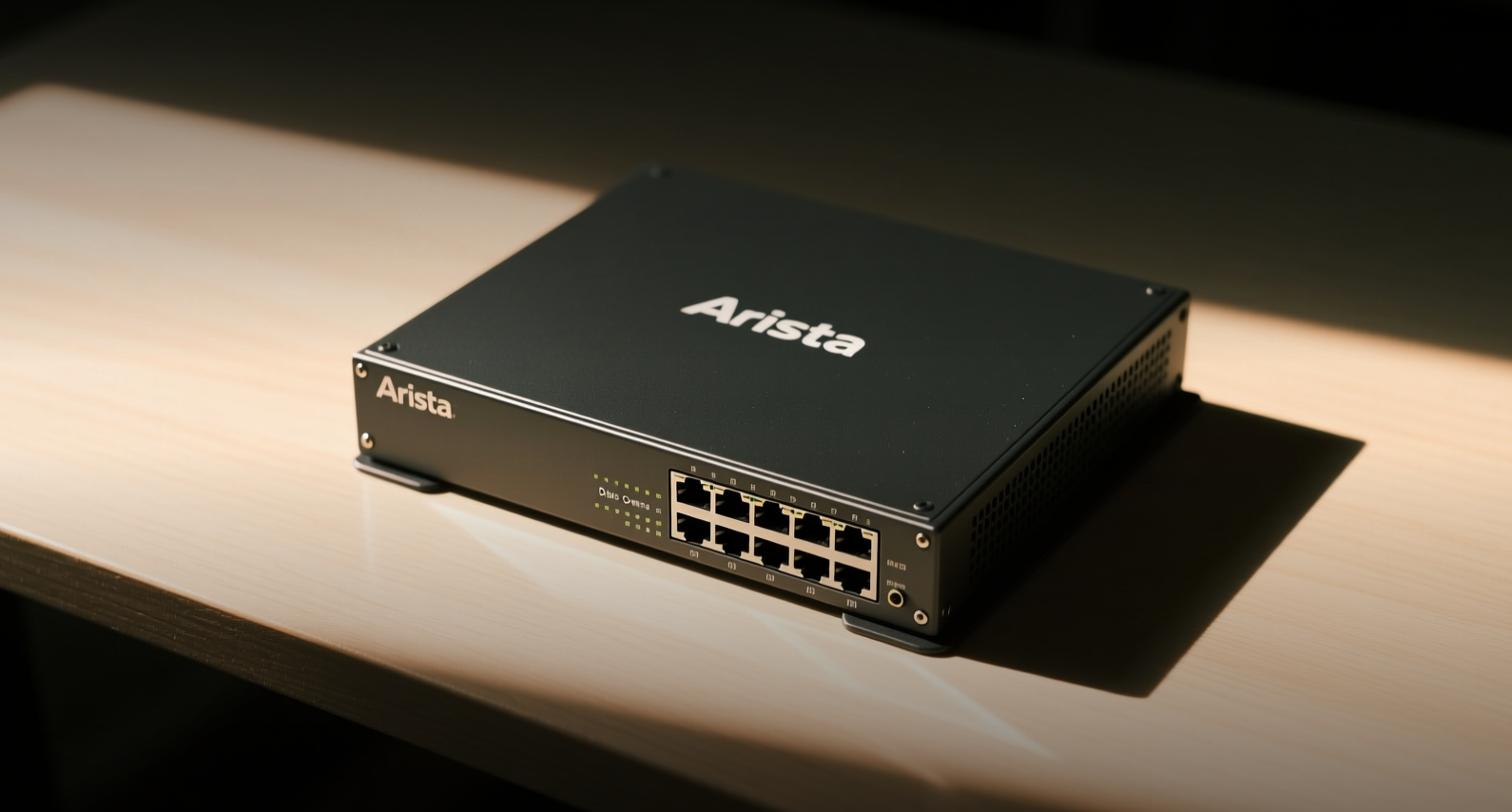
Arista Networks Inc. is riding the AI infrastructure wave, with its data center networking sales tied to artificial intelligence workloads doubling as the stock approaches a record high.
The networking equipment maker, whose switches and routers form the backbone of hyperscale data centers, has seen its shares surge 3,218% since 2015, according to company disclosures. The latest leg of that rally comes as cloud providers and large enterprises accelerate spending on AI training and inference infrastructure, a buildout that requires high-bandwidth, low-latency networking gear that Arista specializes in.
"Arista's AI networking revenue is doubling as hyperscalers deploy clusters that require 400-gigabit and 800-gigabit switching fabrics," Mike Santos, an analyst covering data center infrastructure, said. "The company is capturing share in a market that Cisco and Juniper once dominated."
The Santa Clara, California-based company has emerged as a primary beneficiary of the AI capex cycle, competing directly with Cisco Systems Inc. and Juniper Networks Inc. for data center switching contracts. Unlike traditional enterprise networking, AI workloads demand non-blocking fabric architectures that can handle distributed training across thousands of graphics processing units — a technical requirement that plays to Arista's Extensible Operating System (EOS) platform.
Arista's gains reflect a broader shift in the $30 billion data center networking market. Hyperscalers including Amazon Web Services, Microsoft Azure and Google Cloud are projected to spend more than $200 billion combined on AI infrastructure in 2026, according to industry estimates, with networking equipment accounting for roughly 15% to 20% of total data center build costs. Arista's remaining performance obligations — a key forward-looking metric — have grown as customers lock in multiyear supply agreements.
The stock's 3,218% return since 2015 has outpaced every major networking peer, though the pace of gains has raised valuation questions. Arista trades at approximately 35 times forward earnings, a premium to Cisco's 15 times and Juniper's 18 times, reflecting the market's expectation that AI-driven demand will sustain above-industry growth rates. The company's next quarterly report, expected in late July, will provide the clearest signal on whether AI networking momentum is accelerating or plateauing.
This article is for informational purposes only and does not constitute investment advice.