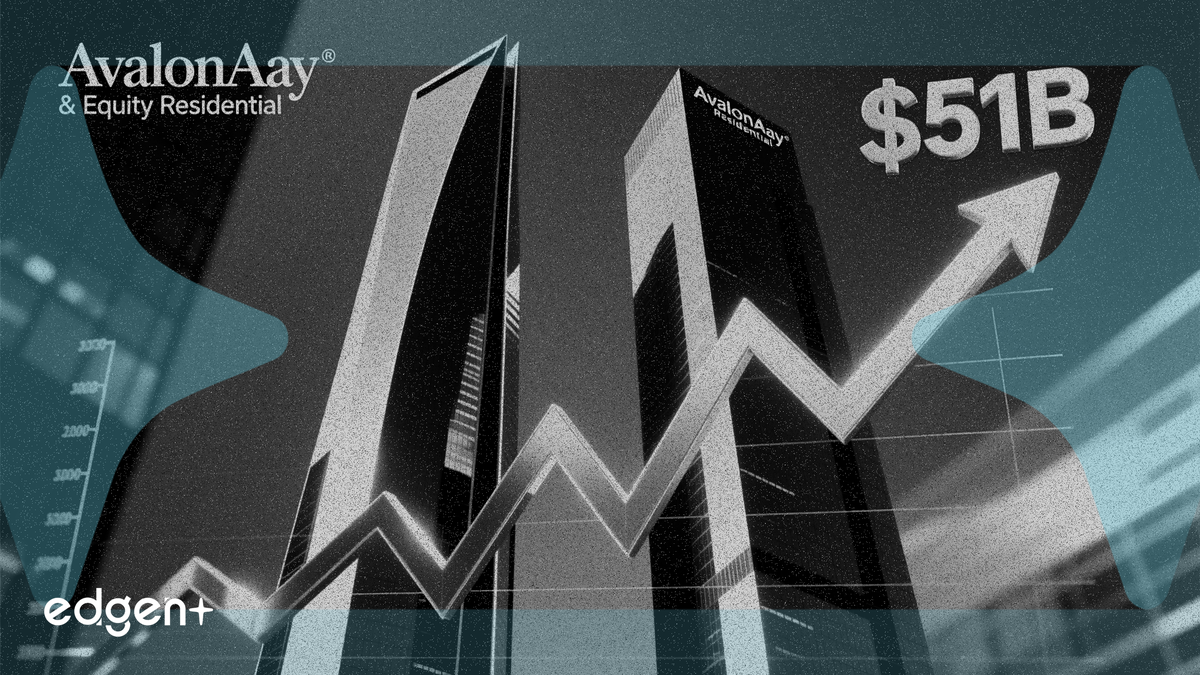
Deux des plus grands propriétaires d'appartements aux États-Unis, AvalonBay Communities (AVB) et Equity Residential (EQR), sont proches d'une fusion qui créerait une puissance immobilière multifamiliale avec une valeur de marché combinée de près de 51 milliards de dollars, selon des sources proches du dossier. L'accord, s'il est finalisé, représenterait l'une des consolidations les plus importantes dans le secteur des fonds d'investissement immobilier (REIT) depuis des années.
« Je pense que les agents doivent vraiment comprendre qu'il ne s'agit pas du même leadership de courtage avec la même vision qu'il y a deux ou trois ans », a déclaré Amit Kulkarni, co-fondateur de la société de conseil immobilier Alloy Advisors, à propos de la tendance générale à la consolidation. « Tout a changé à 180 degrés pour ces dirigeants. »
La fusion prospective combinerait AvalonBay, dont la capitalisation boursière est d'environ 26 milliards de dollars, et Equity Residential, valorisée à 24,8 milliards de dollars. Une annonce sur la transaction entièrement en actions pourrait intervenir dès cette semaine, bien que les sources, qui ont demandé à rester anonymes, aient averti qu'aucune décision finale n'a été prise et que les discussions pourraient encore échouer.
Une fusion réussie créerait un acteur dominant sur le marché américain de l'appartement, accordant potentiellement à la nouvelle entité un plus grand pouvoir de fixation des prix et des gains d'efficacité opérationnelle. Cette initiative pourrait également déclencher d'autres activités de fusion et acquisition au sein du secteur des REIT, les concurrents cherchant à augmenter leur taille, mais elle fera presque certainement l'objet d'un examen antitrust approfondi de la part des régulateurs.
L'effet d'entraînement de la consolidation
Le rapprochement potentiel entre AvalonBay et Equity Residential est le dernier d'une vague de fusions et acquisitions dans l'ensemble de l'industrie immobilière. Bien que l'accent soit mis en grande partie sur les finances de l'entreprise, l'impact sur les agents et le modèle de courtage plus large fait l'objet d'un débat intense. Certains analystes pensent que les activités quotidiennes des agents resteront largement inchangées, en s'appuyant sur des précédents historiques.
« Historiquement, de grands capitaux institutionnels sont entrés dans notre industrie et se sont collectivement fait battre, et peu de choses ont changé au quotidien pour les agents », a déclaré Steve Murray, co-fondateur de RealTrends Consulting, notant que les vagues de consolidation précédentes dans les années 1970 et 1980 ont finalement vu de grands acteurs institutionnels quitter le secteur.
Un nouveau paysage de courtage ?
D'autres experts soutiennent que l'environnement actuel est fondamentalement différent. Ils soutiennent que les pressions exercées par les poursuites judiciaires sur les commissions obligent les dirigeants de courtage à réévaluer leurs modèles commerciaux. Les dirigeants réalisent qu'ils assument la quasi-totalité du risque juridique tandis que les agents perçoivent la majorité des revenus, une dynamique qui pourrait être insoutenable.
Selon le co-fondateur d'Alloy Advisors, Russ Cofano, cela pourrait sonner le glas des partages de commissions élevés qui ont longtemps été la norme de l'industrie. « La raison pour laquelle la course vers le bas avec les partages a fonctionné si longtemps du point de vue du courtage est qu'ils avaient accès à tout l'inventaire, mais cela est en train de changer », a déclaré Cofano. Alors que les agences de courtage pourraient fournir davantage de prospects et de services internes, elles exigeront probablement une part plus importante de la commission et imposeront une adhésion plus stricte aux technologies et aux politiques de l'entreprise.
Cet article est uniquement à titre informatif et ne constitue pas un conseil en investissement.