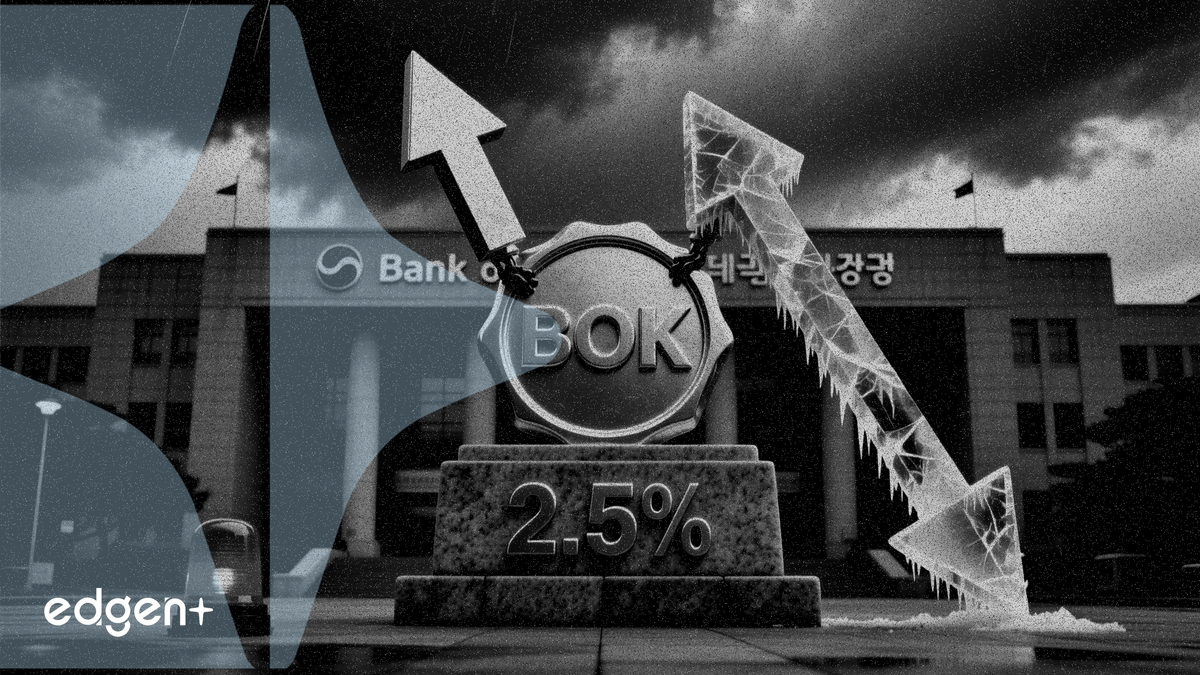
La Banque de Corée a maintenu son taux directeur à 2,50 % pour la huitième réunion consécutive, mais a signalé de futures hausses après avoir relevé ses prévisions de croissance et d'inflation.
La Banque de Corée a maintenu jeudi son taux de prise en pension à sept jours à 2,50 % pour la huitième réunion consécutive, tandis que le gouverneur Shin Hyun-song a indiqué que la banque centrale devrait relever ses taux à l'avenir après avoir relevé ses prévisions de croissance et d'inflation pour 2026.
« Il est nécessaire de relever les taux d'intérêt à un moment approprié dans le futur », a déclaré Shin, qui a pris ses fonctions en avril et présidait sa première réunion de fixation des taux. Deux des sept membres du conseil de politique monétaire ont voté contre, en faveur d'une hausse immédiate.
La BOK a relevé ses prévisions de croissance du produit intérieur brut pour 2026 à 2,6 %, contre 2,0 %, et a relevé ses perspectives d'inflation à 2,7 %, contre 2,2 %. L'inflation sous-jacente, qui exclut les prix volatils des denrées alimentaires et de l'énergie, est désormais attendue à 2,4 % cette année, contre 2,1 % précédemment. L'inflation des prix à la consommation a accéléré à 2,6 % en avril, son plus haut niveau depuis 21 mois, contre 2,2 % en mars, alimentée par la hausse des prix du pétrole alors que les tensions au Moyen-Orient persistent.
Ce virage hawkish intervient alors que l'économie sud-coréenne, dépendante du commerce, profite d'un boom des exportations tiré par les semi-conducteurs — les exportations ont bondi de 48 % en avril après une hausse révisée de 50 % en mars — tandis que les petites entreprises et les ménages à faibles revenus continuent de souffrir. Le taux directeur de la BOK se situe désormais 1,25 point de pourcentage en dessous de la limite supérieure de la fourchette cible de la Réserve fédérale, un écart que les analystes estiment alimenter la demande de dollars et exercer une pression sur le won.
Les prévisions révisées de la banque centrale marquent une nette amélioration par rapport à ses perspectives de février. Les prévisions de croissance du PIB pour 2027 ont également été relevées à 2,1 %, contre 1,8 %, tandis que l'inflation pour l'année prochaine est attendue à 2,3 %, contre 2,0 % auparavant. « La révision à la hausse simultanée des prévisions de croissance et d'inflation pourrait naturellement accroître la probabilité d'une hausse du taux directeur », a déclaré Kim Yu-mi, analyste chez Kiwoom Securities.
La BOK avait réduit ses taux de 100 points de base cumulés, passant de 3,5 % à partir d'octobre 2024, avant de les maintenir stables depuis juillet 2025. La décision de maintenir le statu quo pendant huit réunions consécutives reflète le souhait de la banque centrale de surveiller si les effets inflationnistes secondaires dus à la flambée des prix du pétrole — prolongée par les retombées de la guerre en Iran — continuent de se répercuter sur les prix à la consommation.
L'écart de taux se creuse à 125 points de base
L'écart entre les taux directeurs coréens et américains est devenu une préoccupation majeure pour les décideurs politiques. Avec la fourchette cible de la Fed à 3,75 % - 4,0 %, le taux de 2,50 % de la BOK crée un différentiel de 125 points de base qui, selon les analystes, encourage les sorties de capitaux et affaiblit le won. Le gouverneur Shin a mis en garde contre des mesures décisives en cas de flambée des taux de change, selon des déclarations antérieures.
La croissance du PIB réel du premier trimestre, de 1,7 % en glissement trimestriel, a été plus forte que prévu, renforçant les arguments en faveur d'un resserrement. L'économie est restée résiliente malgré les risques géopolitiques liés au conflit au Moyen-Orient, les expéditions de semi-conducteurs ayant bondi grâce à la demande soutenue des entreprises technologiques mondiales qui construisent des infrastructures d'intelligence artificielle.
L'inflation devrait encore augmenter dans les mois à venir, la hausse des prix de l'énergie se répercutant sur les prix des denrées alimentaires et autres biens de consommation, a déclaré Gareth Leather, économiste chez Capital Economics. Il prévoit que l'inflation atteindra un pic à 3,4 % en août avant de refluer. L'économiste de Citigroup, Jin-Wook Kim, s'attend à ce que la BOK procède à quatre hausses de taux — en juillet et octobre 2026, puis en janvier et avril 2027.
Vingt-quatre des vingt-cinq économistes interrogés par le Wall Street Journal avaient prévu un statu quo lors de la réunion de mai. La plupart s'attendent désormais à ce que la banque centrale adopte une position plus hawkish dans les mois à venir, beaucoup prévoyant une hausse des taux au troisième trimestre, peut-être dès juillet.
Cet article est fourni à titre d'information uniquement et ne constitue pas un conseil en investissement.