

The Bank of Japan's expected rate hike to 1% this month could trigger an unwind of the yen carry trade that has quietly supported global risk assets, including Bitcoin.
The Bank of Japan's expected rate hike to 1% this month could trigger an unwind of the yen carry trade that has quietly supported global risk assets, including Bitcoin.
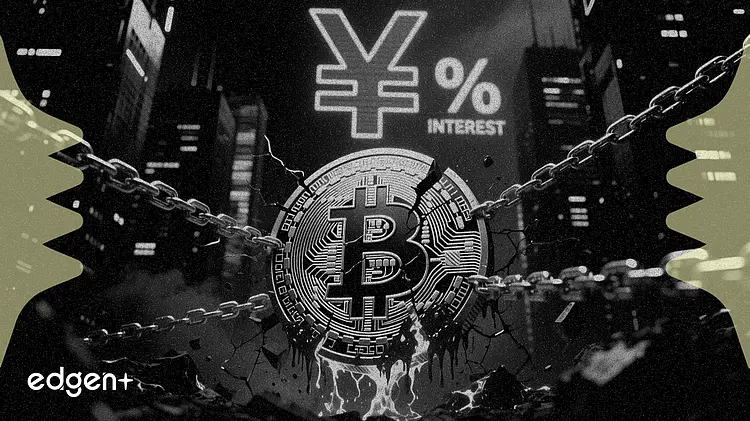
Bitcoin faces a new macro headwind as the Bank of Japan prepares to raise its benchmark rate to 1% at its June 15-16 meeting, the highest level in nearly three decades, according to people familiar with the matter.
"A BoJ hike to 1% would mark a significant tightening of global liquidity conditions, particularly for strategies that have borrowed cheap yen to fund risk-on positions," said Nina Volkov, macro analyst at Edgen. "The carry trade unwind is the transmission mechanism that matters most for crypto."
The BoJ is expected to increase the policy rate by a quarter percentage point from 0.75%, with officials also seeing scope for additional increases later this year citing still-low real interest rates and persistent upside risks to inflation, Bloomberg reported. The central bank is also considering pausing the tapering of its government bond purchasing program starting in April 2027, according to Nikkei.
The yen carry trade — where investors borrow yen at near-zero rates to invest in higher-yielding assets abroad — has been a significant source of global risk appetite. A BoJ rate hike could trigger repatriation flows as the interest rate differential between Japan and other major economies narrows, potentially reducing liquidity available for speculative assets including cryptocurrencies.
The BoJ's tightening comes as central banks globally grapple with renewed inflation pressures. The European Central Bank is expected to deliver its first rate increase in two and a half years this week, taking its deposit rate to 2.25%, as the Iran war energy shock pushes eurozone inflation to 3.2%, according to ING economist Carsten Brzeski. The US Federal Reserve and Bank of England have so far held rates steady as they assess the conflict's fallout.
For Bitcoin, the risk operates through two channels. A stronger yen from reduced rate differentials could trigger margin calls on carry-trade-funded positions, forcing liquidations across risk assets. Japanese institutional investors — among the largest pools of global capital — may also repatriate funds as domestic yields become more attractive, reducing offshore allocations to digital assets.
While precise data on yen-funded crypto positions is opaque, the mechanism is well documented. Crypto derivatives markets have seen elevated open interest in recent months, with funding rates suggesting leveraged long positioning. A sudden unwind could amplify downside moves, similar to the cascade seen during the March 2020 liquidity crisis when Bitcoin fell more than 50% in 48 hours as all risk assets sold off simultaneously.
The BoJ decision also coincides with a period of reduced crypto market liquidity. Trading volumes have declined from peaks earlier in the year, making prices more sensitive to large flows. Bitcoin's next major support sits near $90,000, with resistance at $105,000, based on technical levels tracked by CoinGecko.
This article is for informational purposes only and does not constitute investment advice.
