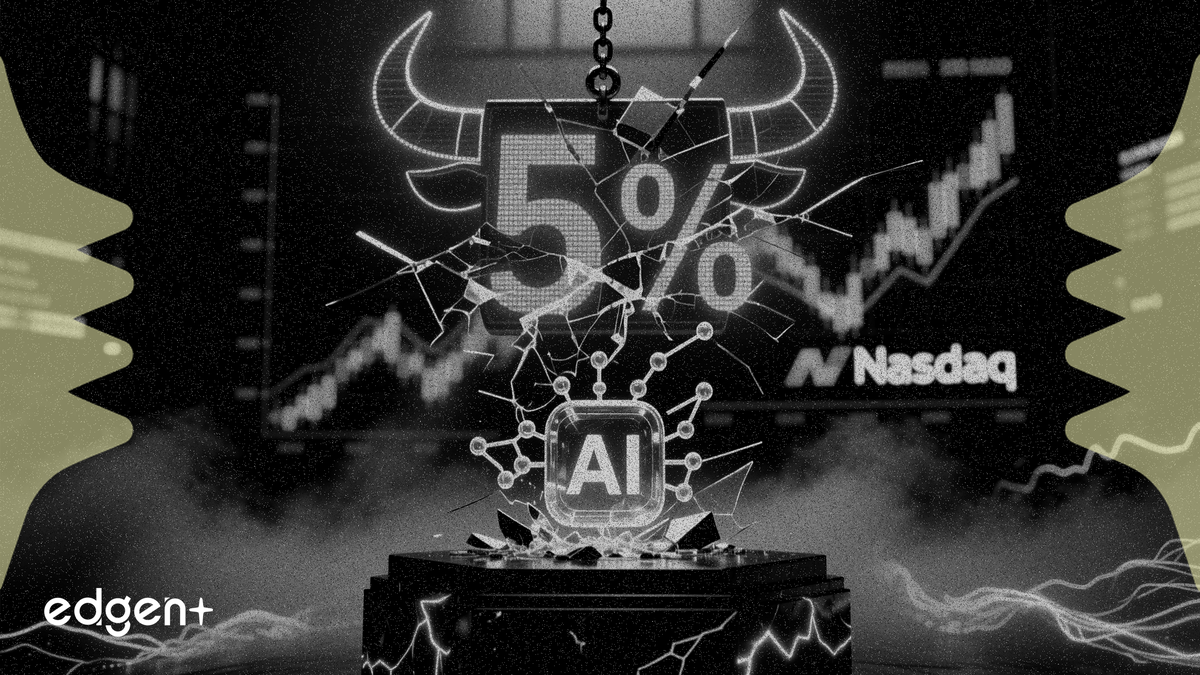
Rising bond yields are emerging as the primary hedge against a potential AI bubble, with the 30-year Treasury approaching 5%.

Rising bond yields are emerging as the primary hedge against a potential AI bubble, with the 30-year Treasury approaching 5%.
The S&P 500 faces a growing challenge from rising bond yields as the 30-year Treasury approaches 5%, threatening high-growth AI valuations that have driven much of the index's recent gains.
"Higher bond yields can make long-term growth stories harder to price," said Michael Hartnett, chief investment strategist at Bank of America. "This creates a tougher setting for SpaceX, OpenAI, and other companies tied to future earnings."
The 30-year Treasury yield is moving back toward 5%, while US headline CPI rose 3.8% in April, near the 4% level BofA tracks as a difficult point for equities. BofA data shows that when CPI first crossed 4% in earlier periods, the S&P 500 lost about 4% over the next three months and nearly 7% over the following six months. Hartnett estimates that SpaceX and OpenAI IPOs could push US market concentration from about 40% toward 48% of total market value, a level above the dot-com bubble.
SpaceX could begin trading as early as June 11 under the ticker SPCX at a valuation near $1.75 trillion, which would make it the largest stock market debut on record. At this valuation, SpaceX would trade near 100 times sales, compared with Nvidia's price-to-sales ratio of about 24. The company lost nearly $5 billion last year, according to Reuters.
Hartnett's estimate places SpaceX and OpenAI at the center of a wider concern about AI-linked market leadership. Today's market already relies heavily on a small group of large technology companies. Adding two more mega-valued names could deepen this concentration to about 48% of total market value, above the dot-com bubble, the Nifty Fifty period, Japan's 1980s boom, and the Roaring Twenties. However, it would remain below the railroad boom of the 1880s.
University of Florida professor Jay Ritter said companies with very high price-to-sales ratios often carry strong growth stories, but risk remains. "Stuff could go wrong," he said.
A Reuters review of the 50 largest IPOs by valuation over the past five years found that about three out of four trailed the S&P 500. Investors who bought each IPO at the offer price gained an average of 27% through May 21, while the S&P 500 rose 53% over the same periods. Retail investors often face a harder setup, as many cannot buy at the IPO price and instead enter after first-day jumps.
Some AI-linked listings performed well. Astera Labs has gained more than 700% since its 2024 IPO, while Arm Holdings has risen about 400% since 2023. However, other major listings struggled, including Rivian, Didi Global and Figma.
The SpaceX and OpenAI IPO debate now sits at the center of three market questions: valuation, inflation, and concentration. A strong debut could extend AI enthusiasm, but the broader rate and inflation backdrop may decide how investors price the next stage of the AI trade.
This article is for informational purposes only and does not constitute investment advice.