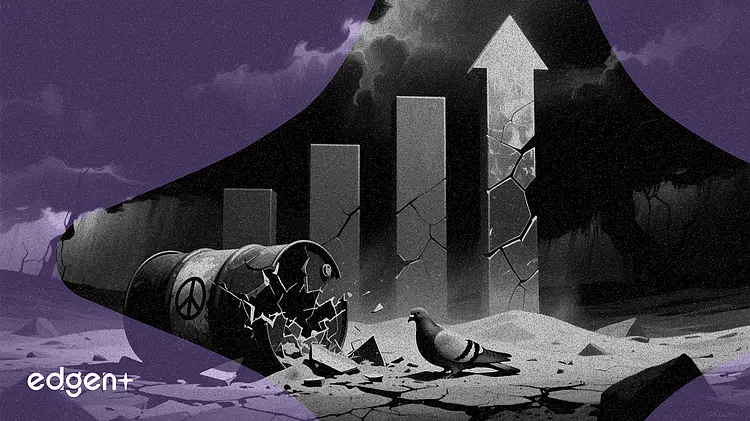
De nouvelles frappes américaines contre l'Iran ont poussé les rendements obligataires à la hausse sur 4 grands marchés, le pétrole dépassant les 93 $.
L'incertitude entourant un accord de paix entre les États-Unis et l'Iran a poussé les rendements des obligations d'État à la hausse sur quatre grands marchés lundi, le rendement du Bund allemand à 10 ans augmentant de 4,6 points de base à 2,974 %, tandis que le Brent grimpait de 2,1 % à 93,02 $ le baril.
« Le pétrole est de retour sur la liste des inquiétudes, alors que les espoirs d'une percée plus nette entre les États-Unis et l'Iran se heurtent à de nouvelles incertitudes », a déclaré Matt Britzman, analyste actions senior chez Hargreaves Lansdown.
Les mouvements se sont étendus sur l'ensemble de la courbe des Treasuries, le rendement à deux ans augmentant de 1,9 point de base à 4,032 % et le rendement à 10 ans de 1,6 point de base à 4,468 %, selon les données de Tradeweb. Les rendements des gilts britanniques ont gagné 3 points de base à 4,837 %, tandis que le rendement du JGB japonais à 10 ans a grimpé de 2,5 points de base à 2,680 %. Le Brent avait plus tôt bondi d'environ 3 % mardi après que les États-Unis ont coulé deux bateaux appartenant au Corps des Gardiens de la révolution islamique d'Iran qui posaient des mines dans le détroit d'Ormuz, suivis par l'Iran tirant des missiles sol-air contre des avions de guerre américains.
L'impasse menace de maintenir les prix du pétrole à des niveaux élevés, ravivant les anticipations d'inflation et forçant les banques centrales à maintenir ou à durcir leur politique monétaire. Les marchés évaluent désormais à environ 50 % la probabilité que la Réserve fédérale doive augmenter ses taux d'ici la fin de l'année, tandis que la membre du directoire de la Banque centrale européenne, Isabel Schnabel, a déclaré à Reuters que la BCE devrait relever ses taux en juin. « Compte tenu de l'ampleur et de la persistance du choc actuel, regarder ailleurs n'est plus une option », a déclaré Schnabel.
Le détroit d'Ormuz gère environ 21 % du commerce pétrolier mondial, faisant de toute perturbation du transport maritime dans cette voie d'eau une menace directe pour l'approvisionnement énergétique et les prix. Le secrétaire américain à la Défense, Pete Hegseth, a déclaré samedi que les États-Unis étaient prêts à reprendre les frappes contre l'Iran si aucun accord ne pouvait être trouvé, tandis que le président Donald Trump a déclaré dans une interview à Fox News que les États-Unis étaient « proches d'un très bon accord » mais a suggéré un éventuel retour aux combats comme alternative. Le président du Parlement iranien, Mohammad Ghalibaf, a rétorqué dimanche qu'il n'y aurait pas d'accord à moins que les droits de l'Iran ne soient garantis.
Les prix du pétrole et le calcul de l'inflation
L'impulsion inflationniste provenant de la hausse des prix du brut remodèle les attentes en matière de taux dans les marchés développés. Le gouverneur de la Fed, Christopher Waller, a déclaré vendredi qu'il soutenait la suppression du « biais d'assouplissement » de la déclaration de politique de la Fed, précisant qu'« une baisse des taux n'est pas plus probable à l'avenir qu'une hausse des taux ». Krishna Guha d'Evercore a déclaré que les remarques de Waller « confirment le virage hawkish à la Fed ».
Au Japon, le vice-gouverneur de la Banque du Japon, Ryozo Himino, a déclaré que la banque centrale restait déterminée à procéder à de nouvelles hausses de taux, bien que le calendrier et le rythme dépendent de l'impact économique du conflit au Moyen-Orient. Le rendement du JGB à 10 ans à 2,680 % reste proche des niveaux qui ont historiquement incité la BOJ à mener des opérations d'achat d'urgence d'obligations. Les rendements des gilts britanniques, bien qu'en hausse sur la journée, restent bien en dessous des sommets de plus de 5,1 % atteints à la mi-mai, ce qui suggère que certains investisseurs s'attendent encore à une résolution.
Répercussions sur l'ensemble des actifs
Les marchés actions ont montré des réactions mitigées. Les contrats à terme sur le S&P 500 ont augmenté de 0,3 % et ceux sur le Nasdaq de 0,5 %, soutenus par la demande continue liée à l'IA pour les valeurs semi-conductrices, le Nikkei japonais grimpant de 1,1 % à des sommets historiques. Les actions européennes ont légèrement baissé, les contrats à terme sur l'Euro Stoxx 50 cédant 0,1 %, les secteurs de l'automobile et de la technologie étant en baisse. Le dollar s'est renforcé face au yen à 159,45, les traders se méfiant d'une intervention japonaise si la paire franchissait le seuil des 160,00. L'or a reculé de 0,3 % à 4 523 $ l'once, ne trouvant que peu de demande refuge malgré l'incertitude géopolitique.
Michael Feroli de JPMorgan a déclaré que « la phase de risque aigu pour l'économie mondiale devrait être terminée si les pétroliers peuvent recommencer à circuler », bien qu'il ait prévenu que les prix du pétrole resteront probablement élevés pendant la reconstitution des stocks et la réparation des infrastructures d'approvisionnement.
Cet article est fourni à titre informatif uniquement et ne constitue pas un conseil en investissement.