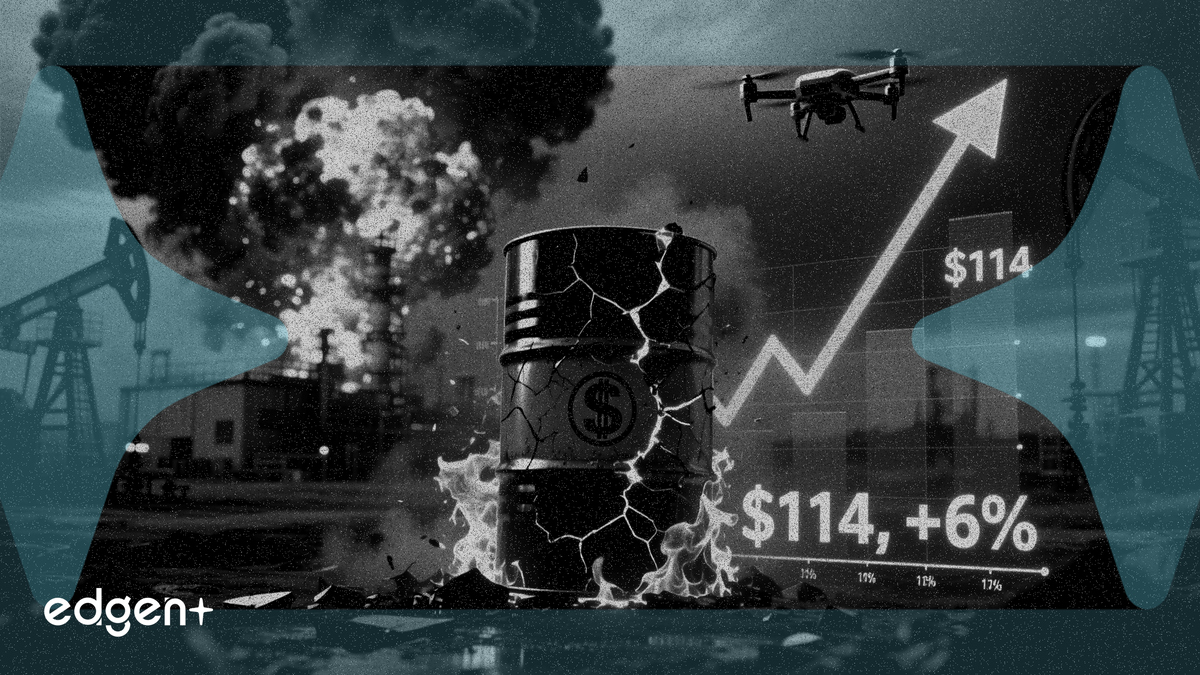
Oil prices surged on Monday, May 4, after Iran launched a significant missile and drone attack against the United Arab Emirates, targeting critical oil infrastructure and escalating a weeks-long standoff over the Strait of Hormuz.
“The path for prices remains skewed to the upside as long as flows through the strait remain restricted,” Giovanni Staunovo, an analyst at UBS, said in a note.
The attack sent international benchmark Brent crude futures soaring nearly 6% to settle at $114.44 per barrel, while U.S. West Texas Intermediate crude futures gained over 4% to close at $106.42. The flight to safety also saw leading cryptocurrencies like Bitcoin and Ethereum extend gains while broader stock markets declined, according to market data from May 4, 2026.
The conflict poses a direct threat to a significant portion of the world’s energy supply. The Strait of Hormuz is a critical chokepoint through which roughly 20% of global oil and liquefied natural gas typically passes. Iran has blockaded the sea lane for weeks, creating what officials have called the largest oil supply disruption in history. The UAE’s defense ministry reported that its air defenses engaged 12 ballistic missiles, three cruise missiles, and four drones launched from Iran. A drone strike ignited a fire at the UAE's major oil hub in Fujairah, and the UAE accused Iran of targeting a vessel affiliated with its state oil company, ADNOC, calling the attacks "acts of piracy."
US Launches ‘Project Freedom’ to Secure Strait
In response, the United States has initiated a military operation, dubbed “Project Freedom,” to ensure freedom of navigation through the vital waterway. President Donald Trump announced the mission would guide civilian ships, with U.S. Central Command confirming support from destroyers, aircraft, and unmanned platforms.
However, officials indicated the operation is currently limited in scope. The U.S. Navy will advise ships on avoiding threats and stands ready to intervene if attacked, rather than providing full-fledged naval escorts. U.S. forces have already destroyed six small Iranian boats attempting to interfere with shipping, and two U.S.-flagged merchant vessels have successfully transited the strait, according to CENTCOM. Iran’s military warned it would attack any U.S. warship approaching the strait.
Oil Majors Warn of Protracted Disruption
Energy industry leaders warned that the market has not yet absorbed the full impact of the crisis. Chevron CEO Mike Wirth told CNBC that fuel shortages are a growing concern and that normalizing oil exports through the strait could take months, citing the need for time-consuming mine-clearing operations.
Exxon Mobil CEO Darren Woods echoed the sentiment, telling investors that higher oil prices are likely. “It’s obvious to most that if you look at the unprecedented disruption in the world supply of oil and natural gas, the market hasn’t seen the full impact of that yet,” Woods said. “There’s more to come if the strait remains closed.”
This article is for informational purposes only and does not constitute investment advice.