
Renewed US tariff threats and a widening yield gap have pushed the Canadian dollar to a six-week low, with USD/CAD climbing above 1.38.
Renewed US tariff threats and a widening yield gap have pushed the Canadian dollar to a six-week low, with USD/CAD climbing above 1.38.
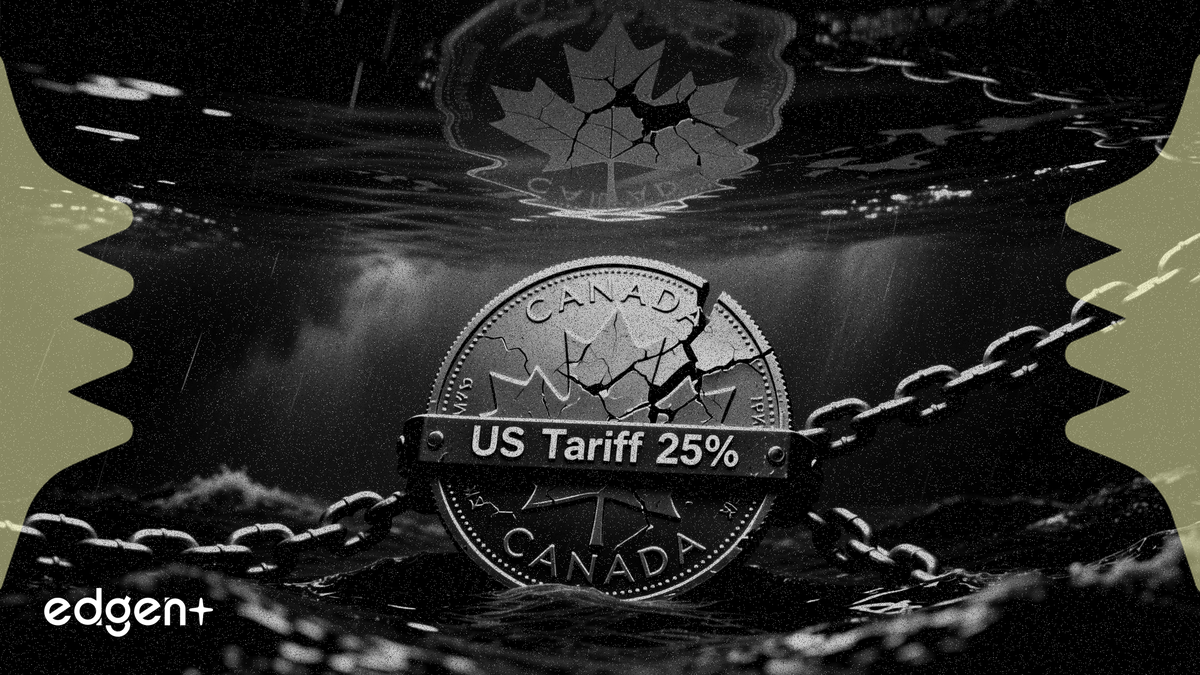
The Canadian dollar slid to a six-week low as the US proposed tariffs of at least 10% on 16 economies including Canada, reviving trade-war fears that have weighed on the loonie.
"The CAD is trading on the back foot as softer oil momentum collides with a resilient greenback and a widening growth gap," said Tony Valente, senior FX dealer at AscendantFX.
USD/CAD traded at 1.3838 per US dollar Tuesday, near the 1.3869 six-week low touched last week. The pair has gained more than 0.6% over three sessions. Canada's economy contracted at an annualized 0.1% rate in the first quarter after a downwardly revised 1% decline in the prior period, data showed Friday.
The CUSMA trade pact, which shields much of Canada's exports from US tariffs, faces a mandatory review by July 1. Canada has proposed a 16-year renewal while seeking parallel talks on sectoral tariffs, but the new US proposal threatens to escalate tensions before negotiations begin.
The US administration's latest proposal targets 16 economies with tariffs of at least 10%, with Canada included alongside the European Union and Britain. China and Japan face a higher rate of 12.5%. Products compliant with the USMCA trade agreement would be exempt, according to the proposal, which requires hearings in the coming weeks before taking effect.
The dollar index traded above 99.5 Tuesday and approached the 100 level, reflecting renewed safe-haven demand. The US currency has benefited from both geopolitical uncertainty in the Middle East and the latest trade tensions.
Yield Differential Widens to 100 Basis Points
The yield advantage favoring US bonds has reinforced dollar demand. US 10-year Treasuries yielded about 4.5% Tuesday, compared with roughly 3.5% for Canadian government bonds of similar maturity — a 100-basis-point spread that has drawn capital flows into dollar-denominated assets. Canada's 10-year yield touched 3.394% earlier this week, its lowest since April 8.
The Bank of Canada is expected to leave its benchmark rate at 2.25% for a fifth consecutive meeting next week, swap market data showed. The US Federal Reserve's higher rate stance has widened the policy gap between the two central banks, adding to headwinds for the loonie.
CUSMA Review Looms as July 1 Deadline Approaches
The United States-Mexico-Canada Agreement is set for a mandatory review by July 1. Ottawa sent a letter to Washington and Mexico City outlining recommendations for a 16-year renewal while seeking parallel talks on sectoral tariffs. A meeting between Canadian and US trade negotiators is scheduled later Tuesday.
Oil, one of Canada's major exports, rose 1.5% to $93.55 a barrel Tuesday but remained near the lower end of its recent range, offering limited support to the loonie. The currency has historically drawn strength from higher crude prices given Canada's status as a major oil producer.
The Canadian dollar's trajectory in the coming weeks will depend on the outcome of trade negotiations and whether the US proposal advances. If the 10% tariff is implemented on non-USMCA-compliant Canadian goods, analysts expect further depreciation in the loonie, potentially pushing USD/CAD above the 1.39215 resistance level. If a negotiated resolution emerges before the July 1 review, the currency could recover some of its recent losses.
This article is for informational purposes only and does not constitute investment advice.
