
CATL's sodium-ion batteries can now operate at minus 20 to minus 30 degrees Celsius, removing the technology's biggest barrier to mass adoption.
CATL's sodium-ion batteries can now operate at minus 20 to minus 30 degrees Celsius, removing the technology's biggest barrier to mass adoption.
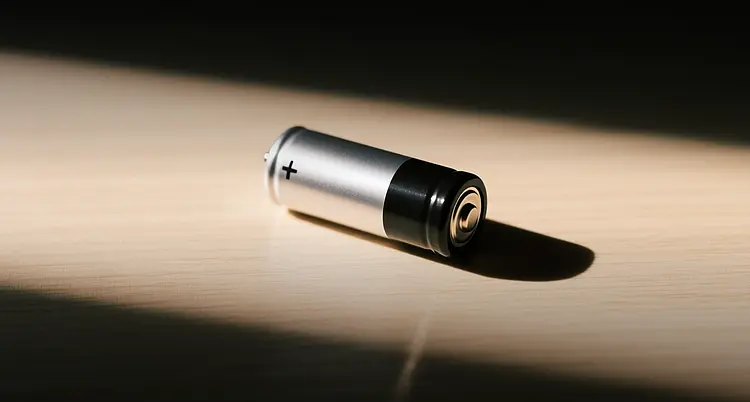
CATL's sodium-ion batteries can now operate at minus 20 to minus 30 degrees Celsius, removing the technology's biggest barrier to mass adoption.
CATL expects 10,000 to 20,000 electric vehicles to carry its sodium-ion batteries this year, as the world's largest battery maker commercializes a chemistry that is 1,000 times more abundant than lithium and performs in extreme cold.
"We came up with a novel design which can perform at that kind of extreme condition," Ni Jun, chief manufacturing officer at CATL, said in a Bloomberg Television interview at the World Economic Forum in Dalian on Wednesday.
The sodium-ion cells operate at temperatures as low as minus 20 to minus 30 degrees Celsius, a threshold that has historically limited sodium adoption in cold-climate markets. CATL has invested nearly 1.2 billion euros over the past decade in sodium-ion research and development, deploying more than 300 R&D professionals and accumulating more than 1,600 patent families and over 200 globally granted patents.
The advance matters because sodium — more than 1,000 times more abundant than lithium and widely distributed across continents — offers a path to diversify battery supply chains away from lithium's concentrated production and volatile pricing. CATL's push into sodium comes as AI-driven power demand surges and renewable energy penetration rises, creating what the company calls a "twin foundation" of lithium and sodium for future energy storage.
Alongside its EV battery push, CATL this week launched the TENER Sodium Energy Storage System, the world's first field-validated sodium-ion BESS. The system delivers more than 30 MWh of rated capacity on a modular architecture, with each module weighing about 42 tonnes. Only 34 units are required for a 1 GWh site.
The system supports flexible storage durations of one, two, four, six and eight hours, with energy and power blocks decoupled for configuration flexibility. CATL designed a dedicated bidirectional voltage regulation system that improves round-trip efficiency by nearly 2%, and a liquid-cooling system that cuts auxiliary power consumption from the industry average of 2% to 1%.
CATL will begin delivering TENER Sodium systems in China this September, with cumulative shipments expected to reach 1 GWh by the end of 2026. Global deliveries start in June 2027. In April, CATL and HyperStrong signed what the companies called the world's largest sodium-ion commercial contract — a three-year, 60 GWh energy storage order.
CATL has built manufacturing capacity to deliver tens of thousands of tonnes of anode and cathode materials annually. The company has invested 5 billion yuan to expand sodium-ion production lines at its Fuding base, adding 40 GWh of annual capacity, while its Jining base in Shandong has planned 160 GWh of sodium-ion production capacity.
Production costs for the sodium-ion cathode material NFPP are expected to decline further as the technology matures, the company said. The TENER system is compatible with LFP systems and shares the same physical footprint, allowing customers to switch between sodium-ion and lithium-ion technologies without redesigning projects or repeating certification processes.
CATL's sodium roadmap challenges the lithium supply chain's pricing power while opening new markets in cold-climate regions where lithium-ion performance degrades. BYD and LG Energy Solution, which have also invested in sodium technology, face pressure to match CATL's commercial timeline. CATL shares traded 2.5% higher in Hong Kong on Wednesday, extending gains as the market priced in the sodium roadmap.
This article is for informational purposes only and does not constitute investment advice.
