
Premier Li Qiang’s tour of two key technology hubs signals a national push to accelerate the large-scale application of intelligent robots across China's manufacturing sector.
Premier Li Qiang’s tour of two key technology hubs signals a national push to accelerate the large-scale application of intelligent robots across China's manufacturing sector.
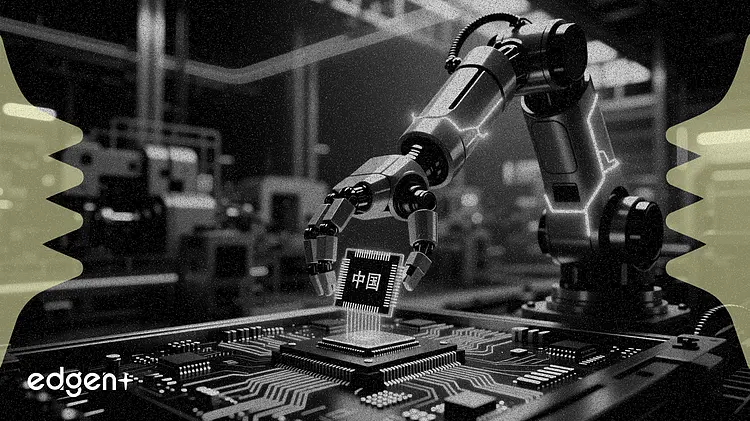
Chinese Premier Li Qiang on May 18 visited two Beijing technology firms, signaling a high-level policy push to accelerate the deep integration of artificial intelligence with advanced manufacturing and support the large-scale application of intelligent robots. The move reinforces China's national strategy to upgrade its industrial base and assert technological self-reliance.
"The vitality of technology lies in its application," Li Qiang said during the tour, according to state media outlet Xinhua. He stressed the need to leverage China's vast market size and complete industrial chains to create more opportunities for advanced technology, urging government departments and state-owned enterprises to take the lead in opening up new use cases.
The premier’s visits to the Beijing Humanoid Robot Innovation Center and Xiaomi Automobile Technology put a spotlight on the country's "AI+" action plan. This initiative aims to deeply embed AI into the manufacturing process, from research and development to production and quality control, driving what Beijing calls "new quality productive forces."
This direct government endorsement is a powerful signal for investors, likely to drive significant capital into China's AI, robotics, and smart manufacturing sectors. The policy aims to create a virtuous cycle where increased investment leads to higher-quality production, which in turn attracts more talent and stabilizes employment, according to a recent report from the National Bureau of Statistics showing a 7.4 percent year-on-year growth in high-tech industrial investment in the first quarter.
The focus on AI-powered manufacturing is a core component of China's strategy for the 15th Five-Year Plan (2026-30), which prioritizes a high-quality economic development trajectory. The ambition extends beyond the factory floor, with China promoting its AI capabilities across various sectors. At the recent Cannes Film Festival, for instance, the "China Night" event heavily featured the country's progress in AI-Generated Content (AIGC), including animated films and documentaries, framing it as a key part of its cultural export strategy.
This broad-based approach, from industrial robots at Xiaomi to AI-generated art, is designed to build a comprehensive domestic ecosystem. It aims to reduce reliance on foreign technology and establish Chinese companies like Huawei and Xiaomi as global leaders not just in hardware, but in the intelligent systems that power them.
China's state-led robotics and AI push is unfolding amid an intensifying technological rivalry with the United States. While Beijing champions its top-down industrial policy, Washington has accused China of "industrial-scale" theft of intellectual property to train its own AI models—a process known as "distillation." A recent White House memo alleged that Chinese entities were deliberately targeting leading U.S. systems, such as Anthropic's Claude chatbot, to acquire advanced capabilities at a fraction of the cost.
The conflict also extends to the hardware layer, with the U.S. imposing strict export controls on high-end semiconductors essential for training AI models. Federal prosecutors have pursued international smuggling rings accused of diverting billions of dollars worth of restricted chips from companies like Nvidia to China. This backdrop of geopolitical tension presents a significant risk for China's AI ambitions, as access to cutting-edge hardware remains a critical bottleneck.
The government's new policy push is designed to accelerate domestic solutions and overcome these challenges. For investors, the premier's visit provides a clear directive on Beijing's priorities, but the path forward is complicated by the ongoing tech rivalry. While state support de-risks domestic investment in the short term, the long-term success of firms like Xiaomi and the next wave of robotic startups will depend on their ability to navigate a global landscape defined by supply chain vulnerabilities and geopolitical friction.
This article is for informational purposes only and does not constitute investment advice.
