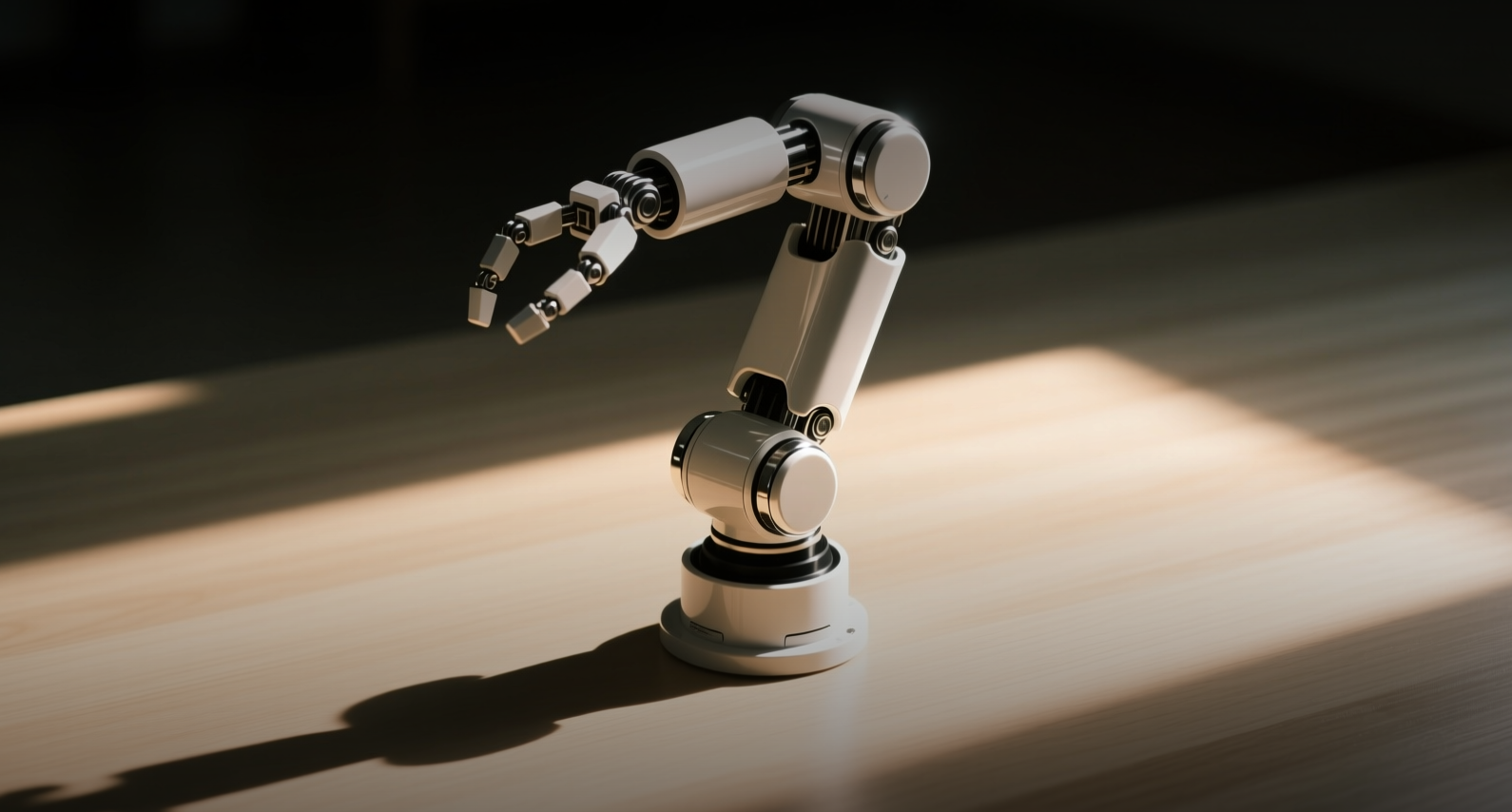
Beijing is making advanced manufacturing the centerpiece of its next five-year industrial strategy, with state-directed investment set to continue through 2030.
China's Ministry of Industry and Information Technology will issue a new wave of "15th Five-Year" industrial plans centered on advanced manufacturing, Chief Engineer Wang Weiming said Friday, as Beijing pushes self-reliance in technology and industry.
"We will accelerate the construction of a modern industrial system with advanced manufacturing as the backbone," Wang said at a State Council press briefing in Beijing. The plans cover industry-specific and thematic initiatives across the industrial and information technology sectors.
The push builds on existing momentum. In Zhejiang, a bellwether province for digital transformation, the digital economy now accounts for more than 50 percent of GDP, with core digital industries surpassing 1 trillion yuan ($138 billion) in value added, according to provincial data. At LONGi Green Energy's Zhejiang base, factory automation rates have exceeded 90 percent, cutting delivery cycles by more than 80 percent and generating over 62 million yuan in annual revenue. Across the province, nearly 100,000 people have participated in AI-powered training programs, and 4,000 community workshops have employed 136,000 women.
The policy framework matters for global investors because China's five-year plans direct capital allocation across credit, fiscal spending and industrial subsidies. The previous 14th Five-Year period (2021-2025) saw China's manufacturing value-added grow to roughly 30 percent of global output, according to World Bank data. The 15th iteration confirms Beijing will maintain industrial support even as the property-driven growth model fades.
The MIIT announcement comes as China navigates a complex external environment. "Supply is strong but demand is relatively weak, and structural contradictions remain prominent," Wang acknowledged. Still, he said the country's complete industrial system and resilience give it a structural advantage, and the fundamentals for stable industrial growth remain intact.
Self-Reliance Push Intensifies
China's industrial policy has increasingly focused on technological self-sufficiency. The US under President Trump loosened controls on Nvidia's H200 AI chip exports to China late last year, but Beijing responded by banning orders of the chip, preferring domestic alternatives even if they are less advanced, according to a report in The Atlantic. Chinese AI firms including DeepSeek and Z.ai have emerged as competitive players despite restricted access to cutting-edge hardware.
The 15th Five-Year plan period, running from 2026 through 2030, will likely channel state investment into semiconductor fabrication, AI infrastructure, electric vehicle supply chains and advanced materials. The previous plan cycle saw China boost R&D spending to 2.6 percent of GDP, with industrial robot installations reaching 290,000 units annually — more than the rest of the world combined, according to International Federation of Robotics data.
Investor Implications
For global investors, the key question is whether state-directed industrial policy can sustain productivity gains as demographic headwinds intensify. China's working-age population has shrunk by more than 15 million since 2021, and the property sector — historically a major driver of industrial demand — remains in contraction. The 15th Five-Year plan's success will hinge on whether advanced manufacturing can absorb the labor and capital being released from traditional sectors. CSI 300-listed industrial companies and Hong Kong-listed manufacturing names could benefit from policy tailwinds, while commodity demand may shift toward high-tech inputs such as rare earths and battery materials.
The offshore yuan traded near 7.25 per dollar Friday, little changed on the day, as markets digested the policy signals. The CSI 300 index has gained 4.2 percent year-to-date, with industrial stocks outperforming the broader market on expectations of continued government support.
This article is for informational purposes only and does not constitute investment advice.