
China added 303 EFLOPS of intelligent computing capacity in three months, pushing its total to 2,185 EFLOPS as Beijing pursues a national computing grid.
China added 303 EFLOPS of intelligent computing capacity in three months, pushing its total to 2,185 EFLOPS as Beijing pursues a national computing grid.
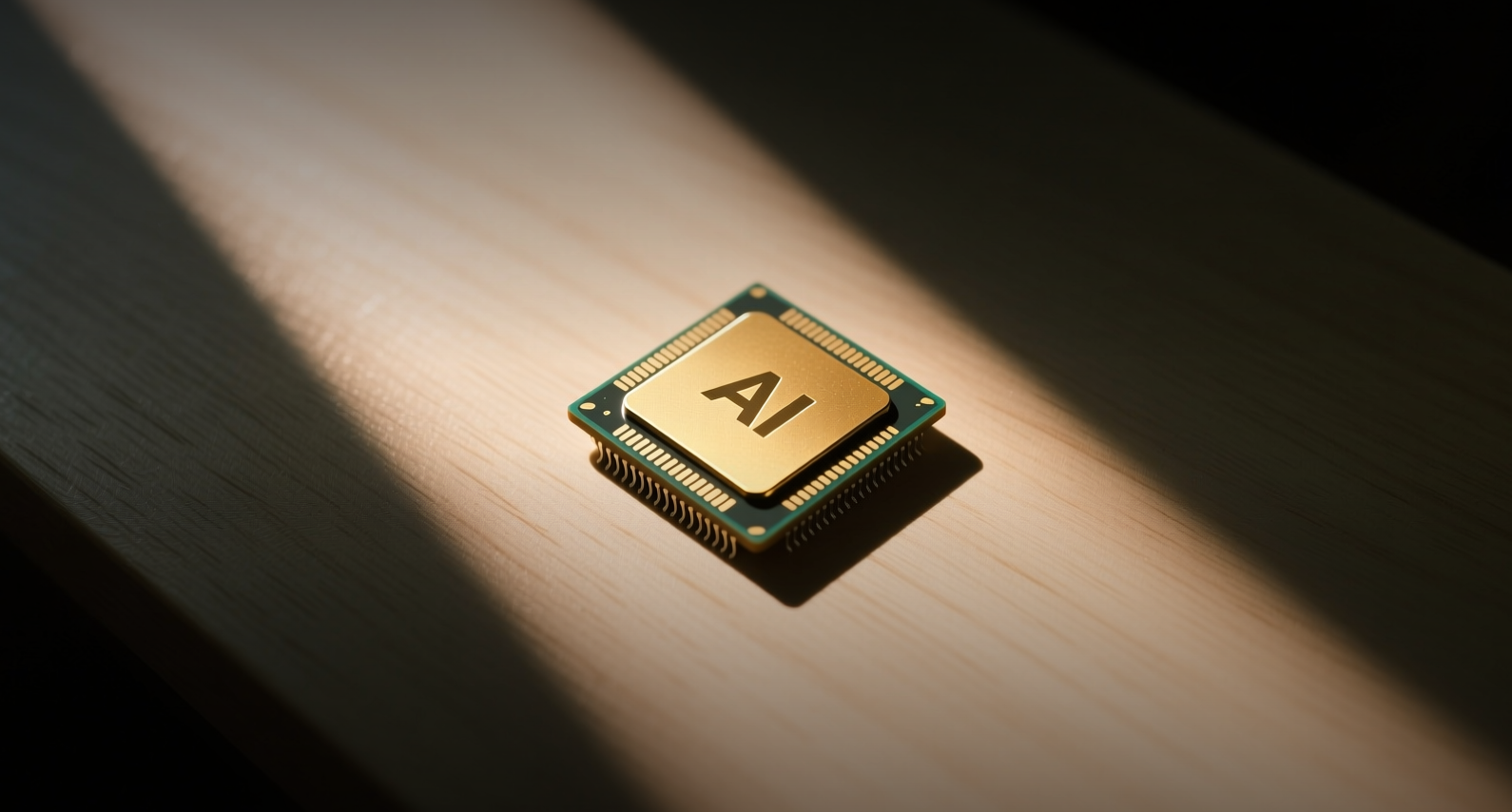
China's intelligent computing capacity surged to 2,185 EFLOPS by end of June, up 16 percent from March, as the government builds a unified national grid to rival US hyperscaler dominance.
"Over 70 computing power corridors have been built around national hub nodes in the past two years, with network performance between hubs improving by 10 percent," Xie Cun, director of the Information and Communication Administration Bureau at the Ministry of Industry and Information Technology, said at a State Council press conference.
The 2,185 EFLOPS figure — equivalent to 2.2 quintillion calculations per second — represents a 303 EFLOPS increase from the 1,882 EFLOPS recorded at end of March, according to National Data Administration data cited by state media. China's computing facilities are running at a 71.4 percent overall rack rate, Xie said.
The buildout positions China to challenge the US-led cloud oligopoly of Amazon, Microsoft and Google, which together control roughly two-thirds of global cloud infrastructure spending. Beijing's three-stage roadmap aims to make computing power as accessible as electricity within one to two decades, Gao Wen, director of Peng Cheng Laboratory and an academician at the Chinese Academy of Engineering, said at the World AI Conference in Shanghai this month.
Domestic Supply Chain Takes Center Stage
The expansion relies increasingly on homegrown technology. State-backed server manufacturer Sugon recently completed the Sugon 8000, China's first fully domestically developed AI computing cluster operating at a 100,000-accelerator scale. The platform uses Chinese-made AI processors, high-speed interconnects and system software, reducing dependence on Nvidia and other foreign suppliers.
The push for self-reliance comes as Beijing restricts domestic firms from buying Nvidia's H200 chips, even after Washington loosened export controls late last year. Chinese officials have limited H200 supply, preferring local alternatives even if they lag on performance, according to a report in The Atlantic.
The Long Road to a Computing Utility
Gao outlined a three-phase timeline for the national grid. The first stage — pooling computing resources into a unified, real-time database — is about 70 percent complete. The second phase, expected to take five years, will coordinate computing tasks among selected participants within companies and between cooperating firms. The final phase, allowing seamless task movement across providers without users knowing where processing occurs, could take one to two decades.
Beyond terrestrial infrastructure, China is investing in quantum computing and orbital data centers. Pan Jianwei, a leading quantum physicist at the Chinese Academy of Sciences, said general-purpose quantum computers remain 10 to 15 years away but could eventually transform materials science and pharmaceutical research. The Star Nexus satellite constellation, targeting 1,000 spacecraft, aims to use outer space for superior heat dissipation and lower power costs.
For investors, the buildout signals sustained demand for domestic semiconductor and data center equipment makers. China's 14.45 million standard server racks and 70-plus computing corridors represent a multiyear CapEx cycle that benefits local suppliers including Sugon, Huawei's chip design unit and emerging AI processor startups. The question is whether domestic chips can close the performance gap with Nvidia before the grid's final phase begins.
This article is for informational purposes only and does not constitute investment advice.
