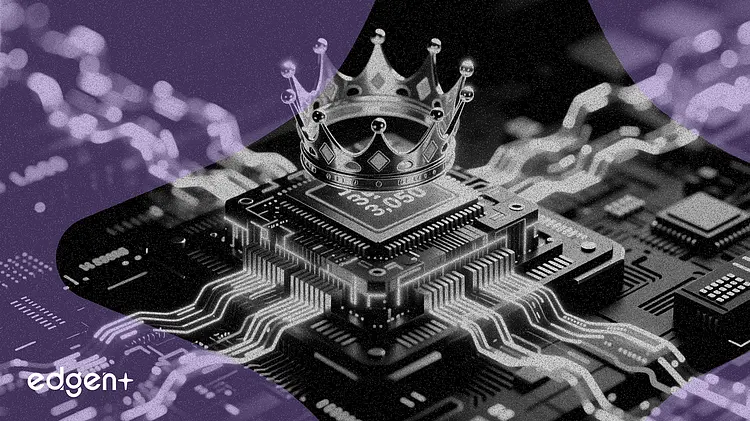
Un nouvel ordinateur quantique photonique chinois manipule plus de 3 000 particules, marquant une nouvelle étape dans la course mondiale à la construction de machines quantiques commercialement viables.
Selon une étude publiée dans la revue Nature le 13 mai, une équipe de recherche chinoise a mis au point un nouveau prototype d'ordinateur quantique, « Jiuzhang IV », capable de manipuler et de détecter 3 050 photons. Les performances de la machine sur une tâche spécifique connue sous le nom d'échantillonnage de bosons gaussiens représentent un bond en avant significatif, créant une nouvelle référence dans la compétition en cours avec des entreprises quantiques cotées en bourse comme IonQ (NYSE : IONQ) et D-Wave Quantum (NYSE : QBTS).
La recherche a été menée par Pan Jianwei de l'Université de science et technologie de Chine, une figure de proue des efforts quantiques du pays. L'équipe affirme que la puissance de traitement du prototype pour ce problème d'échantillonnage spécialisé est bien supérieure à celle des superordinateurs traditionnels les plus rapides au monde.
L'échantillonnage de bosons gaussiens est un problème de calcul complexe qui consiste à calculer la probabilité de distribution d'innombrables particules se déplaçant à travers des chemins complexes. Bien qu'il ne s'agisse pas d'un ordinateur quantique universel, la compétence de Jiuzhang IV dans cette tâche démontre un haut degré de contrôle sur les qubits photoniques, l'une des nombreuses technologies concurrentes du secteur.
Cette percée intensifie la course à enjeux élevés pour la « suprématie quantique », le point auquel un ordinateur quantique peut effectuer un calcul qu'aucun ordinateur conventionnel ne peut raisonnablement achever. Ce développement pourrait stimuler l'investissement et la concurrence dans le secteur, affectant potentiellement les actions des entreprises impliquées dans la recherche quantique, la photonique et le matériel informatique de pointe.
La course à la suprématie quantique
L'effort mondial pour construire un ordinateur quantique tolérant aux pannes a engendré une variété d'approches technologiques. La série Jiuzhang utilise l'informatique quantique photonique, qui repose sur des particules de lumière. Cela contraste avec les méthodes utilisées par ses concurrents nord-américains. D-Wave, par exemple, se concentre sur les systèmes de recuit quantique, qui sont bien adaptés aux problèmes d'optimisation, parallèlement à une poussée vers les systèmes à portes. IonQ, de son côté, utilise une architecture de qubits à ions piégés.
Chaque méthode présente des avantages et des défis distincts. Les systèmes photoniques peuvent fonctionner à température ambiante, mais l'augmentation du nombre de photons a été un obstacle majeur. La capacité de 3 050 photons de Jiuzhang IV marque une avance substantielle. En revanche, les systèmes à portes, privilégiés par IonQ et d'autres, sont considérés comme plus polyvalents pour un plus large éventail de problèmes, mais ont historiquement été confrontés à des taux d'erreur plus élevés et à des problèmes de scalabilité.
Guide de l'investisseur pour un secteur volatil
Pour les investisseurs, le secteur de l'informatique quantique reste une frontière à haut risque et à haute récompense. Les actions du secteur, notamment D-Wave, IonQ et Quantum Computing Inc. (NASDAQ : QUBT), ont connu une croissance explosive et une volatilité importante. Alors que l'action de D-Wave est en baisse de près de 23 % cette année, elle a été multipliée par plus de 20 depuis octobre 2024, selon un rapport de marché. L'ensemble du secteur a été sujet à de fortes hausses et à des ventes massives, souvent dictées par des jalons de recherche et des rapports de résultats montrant des réservations en hausse mais des revenus irréguliers.
Les valorisations sont élevées ; D-Wave affiche une capitalisation boursière de 8 milliards de dollars bien qu'elle prévoie que l'« utilité quantique » initiale — le point de viabilité commerciale — ne sera peut-être pas atteinte avant 2032. Le chemin vers la rentabilité est long et incertain, et des mouvements boursiers de plus de 20 % en une seule journée ne sont pas rares. La dernière percée de la Chine rappelle une fois de plus l'intensité de la compétition mondiale et le long chemin à parcourir avant qu'une seule entreprise ou technologie n'atteigne une domination claire du marché.
Cet article est à titre informatif uniquement et ne constitue pas un conseil en investissement.