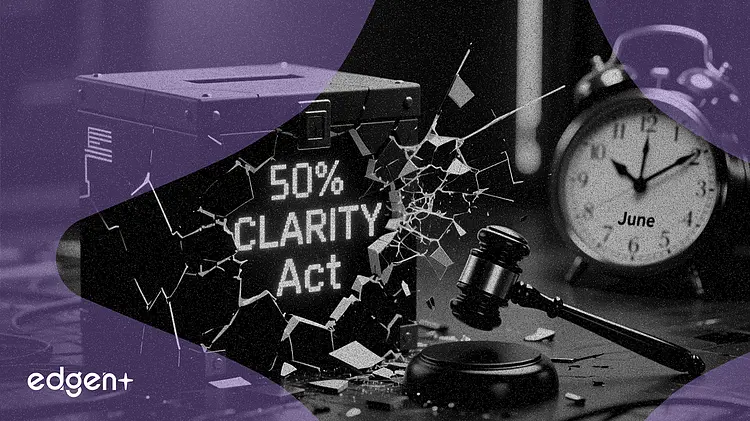
Dijital Varlık Piyasası Netlik Yasası'nın (CLARITY Act) 2027'den önce yasalaşma olasılığı, tahmin piyasası Kalshi'de bir hafta önceki %75 seviyesinden %50'ye geriledi. Sıkışan Senato takvimi ve getiri sağlayan stablecoin'ler konusundaki derinleşen anlaşmazlıklar, kripto piyasa yapısı yasa tasarısının genel kurul oylamasına giden yolunu tehdit ediyor.
Solana Politika Enstitüsü Başkanı Kristin Smith, "Haziran ayı, CLARITY Yasası'nın Senato genel kurul oylamasına ulaşması için ya hep ya hiç ayı. Pencere dar ve takvim yoğun," dedi.
Yasa tasarısı, bu ayın başlarında Senato Bankacılık Komitesi'nden 15-9 gibi iki partili bir oyla geçti. Bu dönüm noktası, aylar süren stablecoin getiri hükümleri müzakerelerinin ardından geldi. Senatörler Thom Tillis ve Angela Alsobrooks, yalnızca ödeme stablecoin'lerini tutmak için ödenen faizi yasaklarken, belirli koşullar altında belirli işlem bazlı ödül programlarına izin verecek bir uzlaşma hazırladı. Bankacılık grupları, bu tür ürünlerin geleneksel mevduatlarla doğrudan rekabet edebileceğini savunarak daha sıkı kısıtlamalar için baskı yapmaya devam ediyor. JPMorgan Chase CFO'su Jeremy Barnum, USDC gibi stablecoin'lerin sahiplerine getiri sağlamasına izin verilmesi konusunda alenen endişelerini dile getirdi.
Bu mevzuat, ABD'de dijital varlık ihraççıları için denetimli bir yol tanımlamaya yönelik en kapsamlı federal girişimi temsil ediyor ve Temmuz 2025'te yasalaşan GENIUS Yasası ile birlikte çalışıyor. Galaxy Digital Araştırma Başkanı Alex Thorn, tasarının hâlâ yeterli Senato genel kurul desteğini sağlama, Temsilciler Meclisi versiyonuyla farklılıkları giderme ve başkanlık imzasını alma gibi usuli engellerle karşı karşıya olduğunu belirtti.
Coinbase Baş Hukuk Sorumlusu Paul Grewal ve Baş Politika Sorumlusu Faryar Shirzad, CLARITY Yasası'nı ortaklaşa onaylayarak özel olarak ihraç edilen ödeme stablecoin'lerinin koordineli bir kamu savunmasını üstlendi. Aynı zamanda Kongre'ye, SEC'in kripto düzenlemesini icra yoluyla sürdürme yetkisini kısıtlayacak yasal bir çerçeve oluşturma çağrısında bulundular. Bu hamle, Coinbase'in ajansla geniş bir dijital varlık sınıfının Howey Testi kapsamında menkul kıymet olarak nitelendirilip nitelendirilmeyeceği konusundaki hukuki süreçlerinin devam ettiği bir dönemde geliyor.
Mevzuatı takip eden hukuk analistlerine göre, ödeme stablecoin'lerini SEC'in yargı yetkisinin dışında açıkça bırakan yasal bir çerçeve, federal yasa gereği stablecoin araçlarının yatırım sözleşmesi olmadığını tesis ederek ajansın daha geniş icra teorisinin delil temelini maddi olarak zayıflatacaktır.
Stablecoin Getiri Bölünmesi
Getiri sağlayan stablecoin'lerin muamelesi ana engel olmaya devam ediyor. Tartışma, ödül programlarında esneklik arayan kripto şirketlerini, bu tür ürünlerin geleneksel bankacılık modellerini bozabileceğini savunan bankalarla karşı karşıya getiriyor. Son Senato taslağı, yalnızca stablecoin tutmak için ödenen getiriyi yasaklarken işlem bazlı ödüllere izin veren Tillis-Alsobrooks uzlaşmasını yansıtıyor.
Kongre'deki en önde gelen dijital varlık savunucularından Senatör Cynthia Lummis, yasanın geçmesi için baskı yapmaya devam ediyor. Destekçiler, iki partili komite oylamasını sürekli yasama ilgisinin kanıtı olarak göstererek, tahmin piyasalarındaki yeniden fiyatlamaya rağmen ivmenin bozulmadığını savunuyor.
Mevcut Senato aşamasındaki haliyle CLARITY Yasası, dijital varlıkların düzenlenmesi için federal bir çerçeve oluşturacak ve SEC ile Emtia Vadeli İşlemler Ticaret Komisyonu'nun (CFTC) ilgili rollerini netleştirecek. Kalshi'deki yatırımcılar, geçme olasılıklarındaki keskin yeniden fiyatlamanın birincil faktörleri olarak yoğun Senato takvimini, getiri sağlayan stablecoin'ler konusundaki çözülmemiş anlaşmazlıkları ve bankacılık çıkarlarının devam eden direnişini gösterdi.
Bu makale yalnızca bilgilendirme amaçlıdır ve yatırım tavsiyesi niteliği taşımaz.