

The May CPI report due Wednesday could determine whether Bitcoin holds $60,000 or breaks lower as inflation expectations hit a three-year high.
The May CPI report due Wednesday could determine whether Bitcoin holds $60,000 or breaks lower as inflation expectations hit a three-year high.
The May CPI report due Wednesday could determine whether Bitcoin holds $60,000 or breaks lower as inflation expectations hit a three-year high.
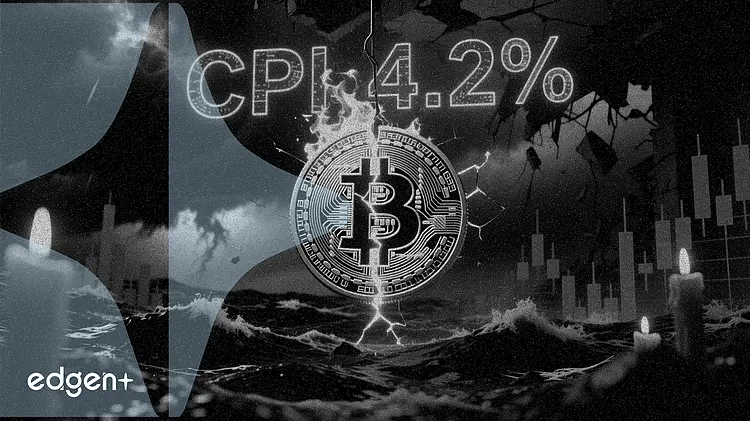
Economists expect the consumer price index to show annual inflation accelerated to 4.2% in May, the highest since March 2023, raising the stakes for Bitcoin as tighter monetary policy threatens risk assets.
"It's not just an oil story, it's a money supply story, and it's increasingly an AI story," said Liz Ann Sonders, chief investment strategist at Charles Schwab. "So this is a broader inflation problem than just energy."
The CPI report at 8:30 a.m. ET Wednesday is expected to show a 0.5% monthly gain, following April's 3.8% annual reading. Core inflation, excluding food and energy, is projected at 2.9% year-over-year. Bond markets are already pricing in the risk: 10-year Treasury yields surged to 4.55% on Friday after a stronger-than-expected jobs report, while two-year yields hit 4.18%, the highest since February 2025. Traders are now betting the Federal Reserve's next move will be a rate hike by December.
For Bitcoin, the stakes are unusually high. The largest cryptocurrency finished last week around $60,000 after briefly dipping below that level Friday, more than 50% below its record high. A CPI print above 4.2% would strengthen the case for Fed tightening, potentially triggering a risk-off move that pushes Bitcoin below the psychologically important $60,000 threshold. A cooler reading could spark a relief rally, though persistent supply disruptions from the Strait of Hormuz — which handles 20% of the world's oil — suggest inflation pressures will not fade quickly.
The April CPI already showed the conflict with Iran pushing prices higher, with gas prices up more than 28% year-over-year. The Producer Price Index rose 6% annually in April, while the Personal Consumption Expenditures price index — the Fed's preferred gauge — hit 3.8%. Core inflation at 2.8% in April suggested the energy shock was spilling into other segments of the economy, a trend economists expect to continue in the May data.
Bitcoin has traded increasingly in sync with traditional risk assets as macro factors — interest rates, inflation, and dollar strength — have overtaken crypto-native narratives. The CME's Bitcoin futures open interest has declined alongside the spot price, and funding rates have turned negative on several major exchanges, pointing to bearish positioning. A decisive break below $60,000 could open the door to the $52,000 support level, while a hold and rebound above $62,000 would suggest the market has already priced in the worst of the inflation data.
This article is for informational purposes only and does not constitute investment advice.
