

Key Takeaways:
- D-Wave Quantum signed a $100M LOI under the CHIPS and Science Act
- Funding targets a 100,000-qubit annealing and 10,000-qubit gate-model system
- An error-aware quantum simulator is planned for release in September
Key Takeaways:
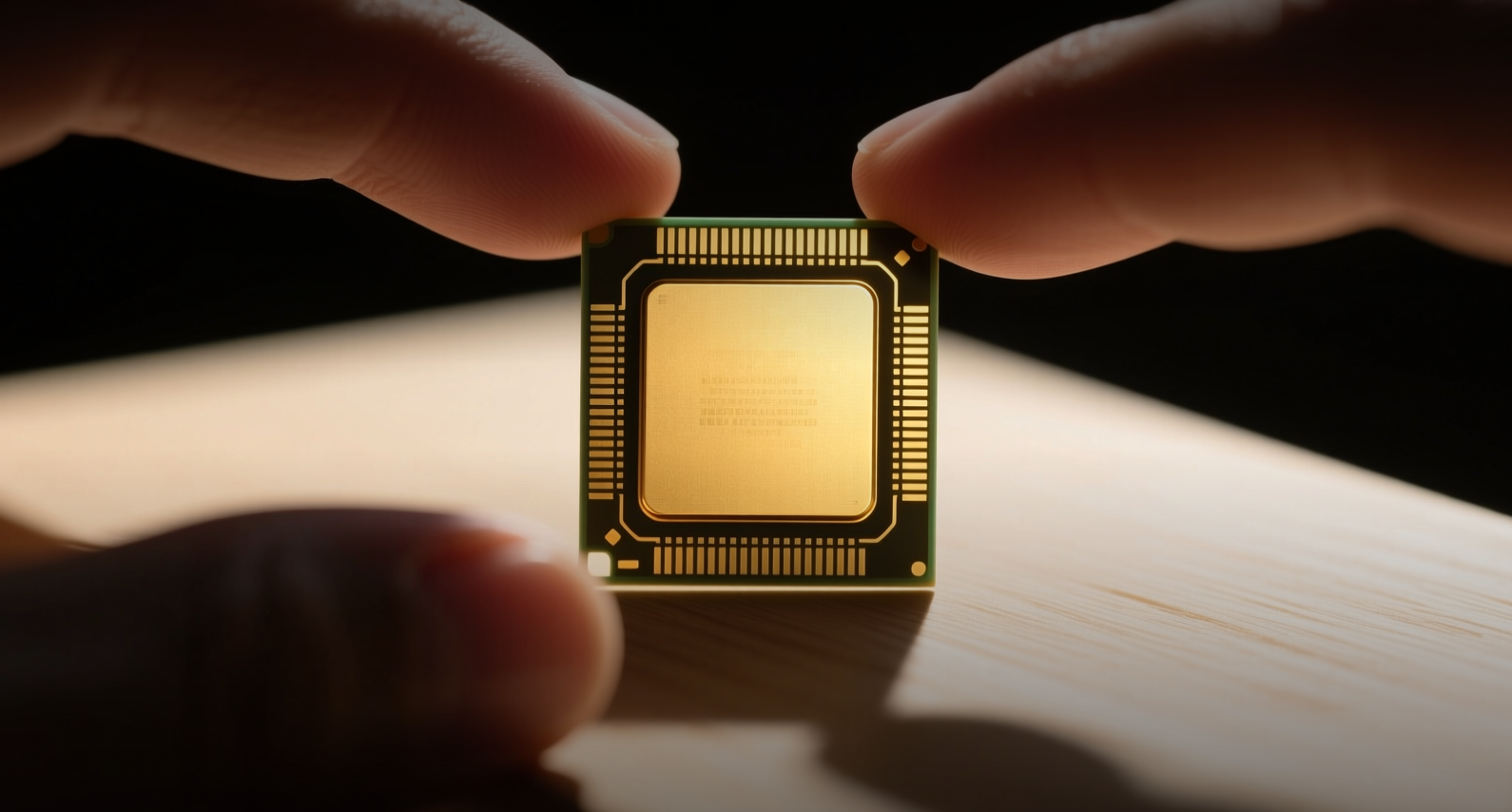
The U.S. Commerce Department's proposed $100 million investment in D-Wave Quantum marks the first direct federal backing of a pure-play quantum computing company under the CHIPS Act.
D-Wave Quantum's $100 million CHIPS Act letter of intent gives the company government backing to build a 100,000-qubit annealing system and a 10,000-qubit gate-model computer, targeting commercial quantum workloads in optimization and artificial intelligence.
"Federal support at this scale confirms our dual-platform approach to quantum computing," D-Wave Chief Executive Alan Baratz said. "It accelerates our roadmap by years."
The funding would support D-Wave's research and development facility in Boca Raton, Florida, and its centers in New Haven, Connecticut, and Burnaby, British Columbia. The company plans to deliver a 100,000-qubit annealing system and a 10,000-qubit gate-model system capable of 100 logical qubits by 2032. D-Wave also plans to release an error-aware quantum simulator in September, designed to model real-world noise and reliability for developers.
D-Wave shares trade at 132.67 times forward two-year sales, reflecting investor expectations for a technology that has yet to generate consistent profit. The company reported $33.4 million in Q1 2026 bookings, and its stock has gained 45.9 percent over the past year despite an 18.5 percent year-to-date decline.
A Dual-Platform Bet on Quantum Commercialization
D-Wave's annealing quantum computers are already commercially deployed for optimization problems in logistics, materials simulation and blockchain. The gate-model system, which offers broader programmability, is expected to reach commercial viability at 10,000 physical qubits — enough to support 100 logical qubits for quantum chemistry and artificial intelligence workloads. The CHIPS Act funding ties government capital directly to both tracks, giving D-Wave a financial runway that competitors like IonQ and Rigetti Computing lack from federal sources.
IonQ, by contrast, recently expanded its Clavis XG Quantum Key Distribution portfolio with a multiplex system for metropolitan fiber networks and opened a new laboratory in Boulder, Colorado, for semiconductor chip testing. IBM has focused on enterprise AI integration, announcing an expanded partnership with ServiceNow to address data readiness and legacy application barriers.
The Investor Calculus on Dilution and Roadmap Risk
The $100 million would come as D-Wave issues shares of common stock to the Commerce Department, adding to dilution concerns. The company remains unprofitable, with analysts expecting losses to continue over the next several years. Insider selling by senior executives and reliance on equity issuance keep execution risk front of mind for investors weighing long-duration research and development spending against a volatile share price.
Still, the combination of CHIPS Act support, a dual-platform architecture and the planned error-aware simulator gives D-Wave a differentiated standing among publicly traded quantum computing stocks. The simulator, scheduled for September, offers a near-term checkpoint for developer engagement and enterprise adoption — a concrete metric investors can track against the 2032 roadmap.
This article is for informational purposes only and does not constitute investment advice.
