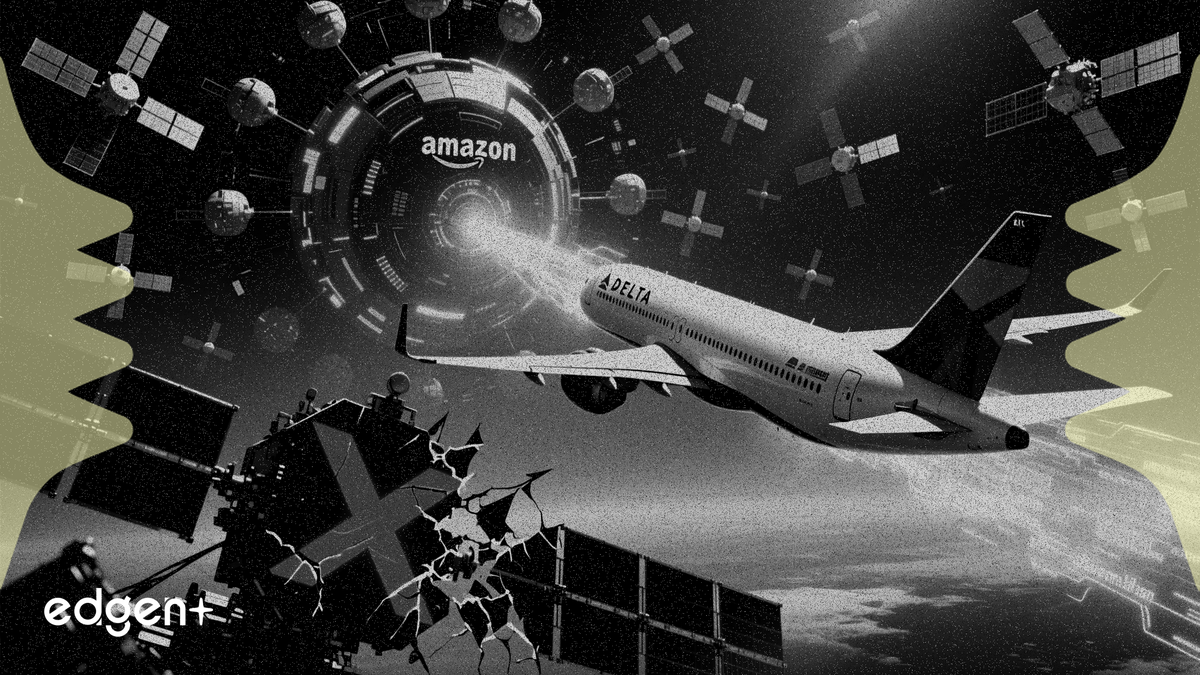
Delta Air Lines' decision to select Amazon's unproven Kuiper for its future in-flight Wi-Fi over SpaceX's established Starlink service has escalated into a public war of words, highlighting the intense competition for the lucrative aviation connectivity market.
"Delta wanted to make it painful, difficult and expensive for their customers. Hard to see how that is a winning strategy," SpaceX CEO Elon Musk said on the social media platform X.
The dispute underscores a vast difference in scale: Starlink currently operates over 10,000 satellites and serves numerous airlines, including United and Southwest. In contrast, Amazon's Kuiper has about 300 satellites in orbit, with Delta's service not expected to begin until 2028.
The conflict is more than a vendor dispute; it's a strategic bet for Delta on a deeper partnership with Amazon, potentially sacrificing the near-term benefits of a mature network for long-term ecosystem control. The move comes as benchmark oil prices rose 2.5 percent, contributing to a 2.6 percent dip in Delta's stock over five days.
A Battle Over Portals and Partnerships
At the heart of the disagreement is the user experience and control over the digital ecosystem. Musk has insisted that "Starlink WiFi must just work effortlessly every time," without an "annoying 'portal'." However, a Delta spokesperson told Business Insider the assertion was "not accurate," clarifying that its choice was based on the potential for a "broader partnership" beyond just connectivity and that Amazon shared its vision for the "next era of connected travel."
Delta's strategy appears to be centered on its Delta Sync platform, which requires a SkyMiles login. While Musk criticized this approach, other airlines using Starlink, such as United Airlines and Qatar Airways, also route access through their own branded portals to engage with passengers.
Tale of the Tape: Starlink vs. Kuiper
The decision highlights a stark contrast in network maturity. Starlink, supported by SpaceX's dominant launch capacity, has more than 10,000 satellites in orbit and over 10 million customers. It has secured deals with major carriers like United Airlines, Southwest Airlines, Alaska Air, Lufthansa, and British Airways. United expects its Starlink rollout to be complete by the end of 2027.
Amazon's Kuiper, by comparison, is in a much earlier phase with approximately 300 satellites launched. Delta's planned rollout of this next-generation connectivity is not scheduled to begin until 2028, a full year after its competitor's fleet is slated to be equipped with Starlink.
Not Musk's First Airline Feud
This is not the first time Musk has publicly clashed with an airline executive over Starlink. In January, a spat with Ryanair CEO Michael O'Leary erupted after O'Leary expressed concerns that the satellite terminals would increase drag and fuel costs. The exchange culminated in Musk suggesting he could buy the airline. For now, the choice of in-flight Wi-Fi remains a strategic watch item for airline investors as space-based technology continues to reshape the passenger experience.
This article is for informational purposes only and does not constitute investment advice.