
Key Takeaways:
- Contract revenues rose 45.6% to $2.006 billion, with 16.7% organic growth
- Adjusted EBITDA climbed 53.5% to $315.5 million, a 15.7% margin
- Backlog expanded 53.2% to a record $12.242 billion; FY2027 outlook raised
Key Takeaways:
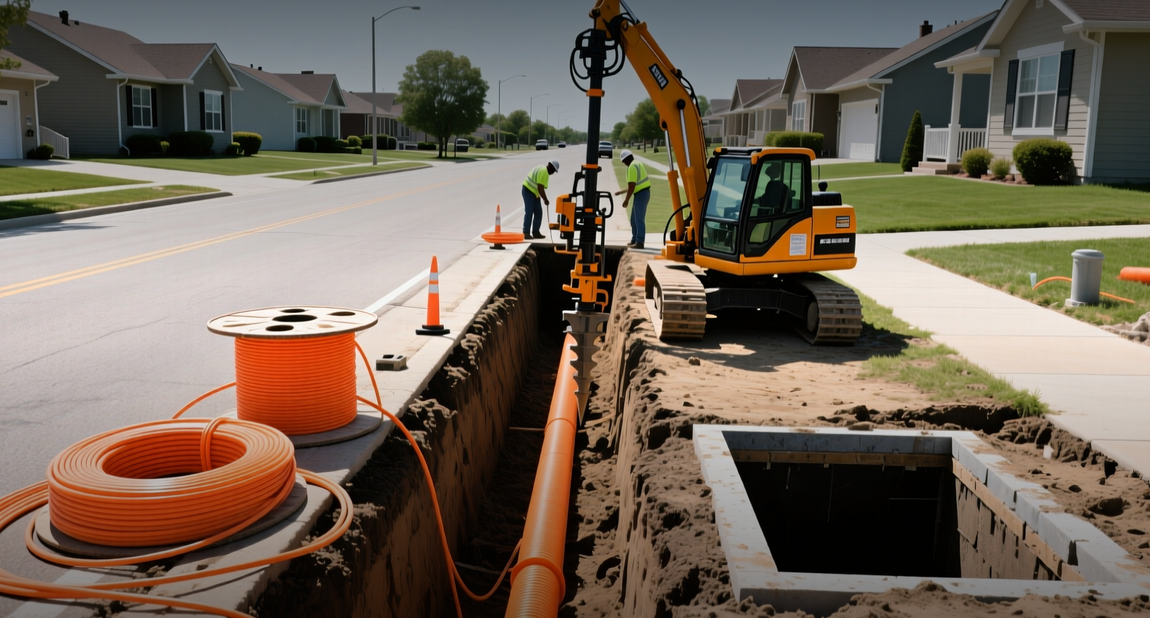
Dycom Industries reported fiscal Q2 2027 contract revenues of $2.006 billion, up 45.6% from a year earlier, with 16.7% organic growth.
"Demand across our portfolio is stronger than ever, fueled by a generational deployment of digital infrastructure that is projected to go well into the next decade," Dan Peyovich, Dycom's president and chief executive officer, said.
Adjusted EBITDA rose 53.5% to $315.5 million, a 15.7% margin, while adjusted net income climbed 51.1% to $160.7 million, or $5.29 per diluted share. GAAP net income was $115.6 million, or $3.81 a share, up 18.6%. Total backlog reached a record $12.242 billion, up 53.2%, with $6.472 billion expected in the next 12 months.
The company raised its full-year fiscal 2027 revenue outlook to $7.48 billion to $7.66 billion and guided third-quarter revenue of $1.90 billion to $1.98 billion, adjusted EBITDA of $281 million to $302 million and adjusted diluted EPS of $4.33 to $4.79.
Communications segment revenue rose 16.7% organically to $1.608 billion, driven by fiber-to-the-home programs, long-haul and middle-mile fiber builds and growing maintenance services. Adjusted EBITDA margin slipped 134 basis points to 13.6% on investments to scale operations, deferred wireless projects and higher fuel costs. Building Systems revenue reached $397.5 million with a 24.5% adjusted EBITDA margin, helped by strong execution and favorable cost-estimate changes.
Dycom completed its acquisition of National Technology Integrators during the quarter, which contributed about $22.9 million of revenue. The deal extends the company's reach into inside-plant structured cabling, data-center work and audio-visual and security systems. AT&T and Verizon each exceeded 10% of total revenue in the quarter.
The company deferred roughly $150 million of wireless program revenue into fiscal 2028, with overall program scope unchanged. Free cash flow improved to $37.9 million from $18.4 million a year earlier, and days sales outstanding fell to 101 from 108. Interest expense more than doubled to $38.0 million, and cash and equivalents dropped to $340.1 million from $709.2 million at the start of the fiscal year after $225.5 million of acquisition spending.
The raised outlook signals management expects digital-infrastructure demand to keep accelerating into next year. Investors will watch the fiscal third-quarter results, due in late November, for updated Communications segment margins as wireless revenue shifts into fiscal 2028.
This article is for informational purposes only and does not constitute investment advice.
