
Envision's Mission Gobi aims to build 5GW of AI data center capacity in desert regions by 2030, powered entirely by directly connected renewable energy.
Envision's Mission Gobi aims to build 5GW of AI data center capacity in desert regions by 2030, powered entirely by directly connected renewable energy.
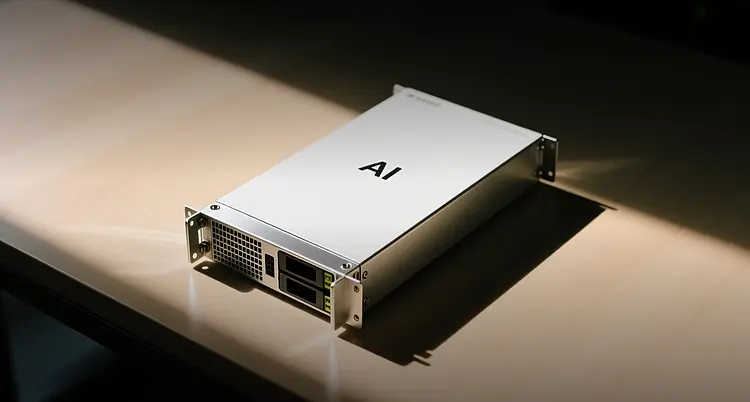
The AI revolution is straining power grids worldwide, and Envision's answer is to build data centers where the sun shines brightest — deserts — with 5GW of capacity planned by 2030.
"The traditional power system was not designed for the scale and speed of the AI era," Lei Zhang, founder and chief executive officer of Envision, said at VivaTech 2026 in Paris. "Mission Gobi offers a new system-level approach — integrating renewable energy, storage, grid infrastructure and computing."
The initiative, called Mission Gobi, targets 5GW of green AI data center capacity in desert and arid regions globally by 2030. Envision is already deploying the model at scale: in Chifeng, China, the company operates what it says is the world's first AI data center running entirely on direct green power. In Ulanqab, the Envision Galaxy Campus is being built as the only gigawatt-scale AI data center powered by directly connected renewable energy.
AI's electricity demand is growing faster than grid infrastructure can handle. Developing even 1% of global desert and Gobi regions could support terawatt-scale computing capacity at highly competitive cost, Envision said. The company will work with governments, utilities, technology companies and infrastructure investors to deploy the systems.
The AI-Energy Bottleneck
AI workloads consume exponentially more power than traditional computing. A single ChatGPT query uses roughly 10 times the electricity of a standard Google search, and training large language models can require as much energy as hundreds of homes use in a year. This demand is colliding with aging grid infrastructure and renewable energy intermittency challenges.
Envision's approach bypasses the grid entirely by co-locating data centers with renewable generation. The company's AI Power System integrates wind, solar, battery storage and computing into a single, directly connected architecture — eliminating transmission losses and grid interconnection delays that can take years to resolve.
A Replicable Blueprint for Global Scale
Mission Gobi is designed as a replicable model rather than a single project. Envision said developing just 1% of the world's desert and Gobi regions could support terawatt-scale computing capacity. The company is targeting partnerships with governments, utilities and technology firms across multiple regions.
The initiative comes as other energy technology leaders converge on similar themes at VivaTech. Schneider Electric, the French energy management giant, also used the event to push for demand-side efficiency in AI infrastructure, arguing that "the technologies to build intelligent, resilient, efficient and sustainable energy systems already exist."
Envision is privately held, but Mission Gobi signals growing momentum behind AI-native energy infrastructure — a theme that benefits publicly traded renewable energy developers, grid equipment suppliers and data center operators. Schneider Electric, which trades at about 28 times forward earnings, has been a key beneficiary of AI-driven data center demand, while pure-play renewable developers stand to gain as hyperscalers seek direct power purchase agreements for new capacity.
This article is for informational purposes only and does not constitute investment advice.
