

Key Takeaways:
- Eva Live signed LOI to acquire 51% of Airbeam Wireless for $16M
- Deal unlocks 260+ patents and $150M+ in cumulative R&D investment
- Acquisition targets $3 trillion defense, satellite and AI infrastructure opportunity
Key Takeaways:
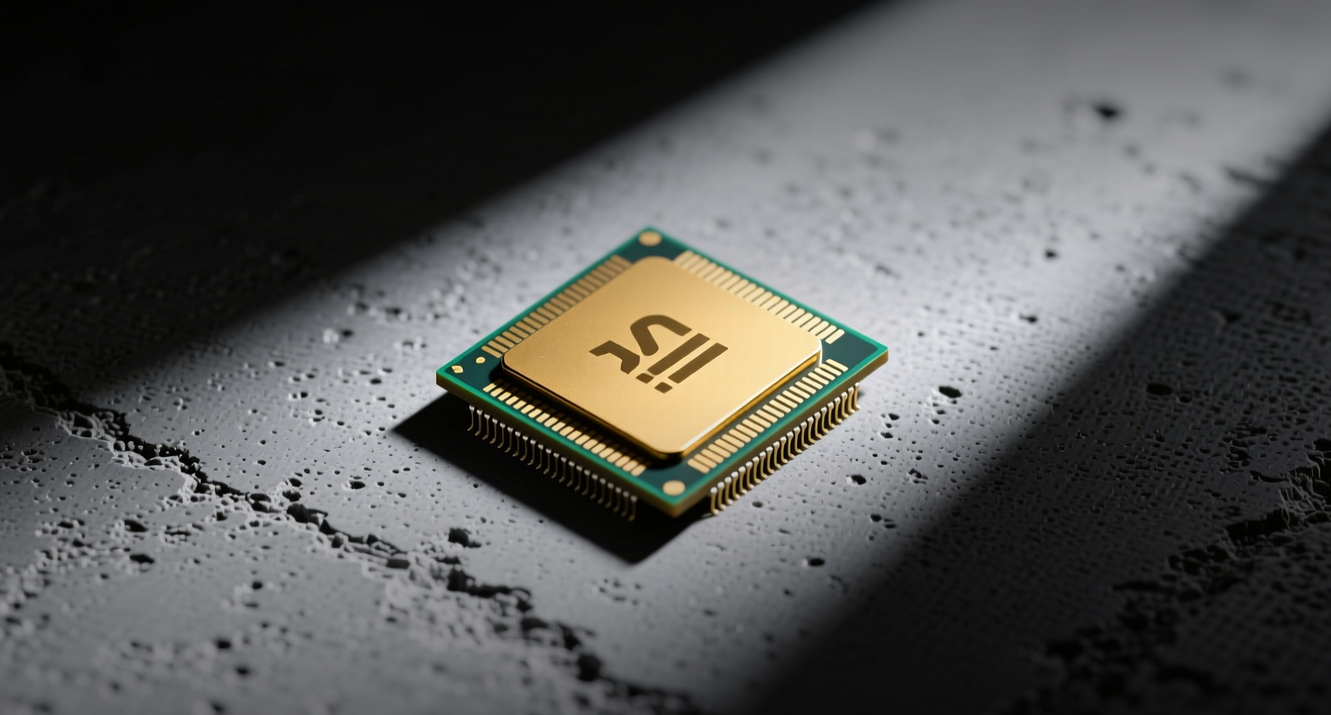
Eva Live is betting that the future of autonomous warfare and satellite communications runs through millimeter-wave semiconductors — and it just found a shortcut.
Eva Live Inc. (NASDAQ: GOAI) signed a Letter of Intent to acquire a controlling 51% stake in Airbeam Wireless Technologies Inc., with an option to buy the remaining 49%, in a transaction valuing the wireless semiconductor company at about $16 million, the company said Monday. The deal gives Eva Live access to more than 260 patents covering WiHD, WiGig and advanced 60GHz millimeter-wave technologies.
"Artificial intelligence will define the next generation of autonomous systems — but intelligence alone isn't enough," said David Boulette, chief executive officer of Eva Live. "Those systems must communicate securely, instantly and intelligently. Airbeam brings us access to more than 260 patents built upon a technology lineage that benefited from over $150 million of engineering and innovation over the past two decades."
The technology portfolio traces its origins to pioneering millimeter-wave research at the University of California, Berkeley's Berkeley Wireless Research Center, later commercialized through SiBeam, Silicon Image, Lattice Semiconductor and Qualcomm's broader millimeter-wave ecosystem before entering Airbeam's portfolio. Airbeam, founded in 2019, also developed smart city infrastructure through its Mesh Smart platform and contributes to the world's largest decentralized OpenRoaming network, ROAM. The company's wireless modules deliver multi-gigabit backhaul capable of supporting real-time AI processing at the edge.
Eva Live believes the acquisition positions it at the convergence of autonomous defense systems, AI communications infrastructure and satellite networking — markets the company estimates represent a $3 trillion global opportunity over the coming decades. Through its Eva Defense subsidiary, the company plans to combine Airbeam's directional beamforming technology with its AI platform to develop a next-generation communications architecture for autonomous drone swarms, resilient military networks and distributed mesh communications in contested electromagnetic environments.
A $150 Million Engineering Heritage
Behind Airbeam's technology is more than two decades of cumulative research and development. According to Airbeam's historical documentation, the intellectual property portfolio represents over $150 million in cumulative investment across multiple predecessor companies. Rather than building from scratch, Eva Live is acquiring a mature platform with proven engineering heritage and years of validation — a foundation the company says would otherwise require substantial capital, time and technical expertise to replicate.
The company also sees applications beyond Earth. Highly directional millimeter-wave networking could enable inter-satellite data exchange for large commercial constellations similar to SpaceX's Starlink, and the same beamforming and mesh networking principles could support future lunar communications infrastructure for habitats, autonomous mining systems and scientific installations.
Deal Risks and Timeline
The acquisition remains subject to completion of definitive agreements and customary closing conditions. Eva Live's prior acquisition announcement — a non-binding LOI to acquire Psquared in June — was followed by a 9.88% decline in the stock over the following 24 hours, according to market data. The company has an active S-3 shelf registration, adding capital-structure context for investors monitoring the deal's progress.
Following completion, Eva Defense intends to accelerate development across AI-powered autonomous drone swarm communications, advanced beamforming and adaptive wireless networking, edge AI infrastructure for military and commercial systems, smart city wireless infrastructure, satellite networking and future lunar communications technologies.
This article is for informational purposes only and does not constitute investment advice.
