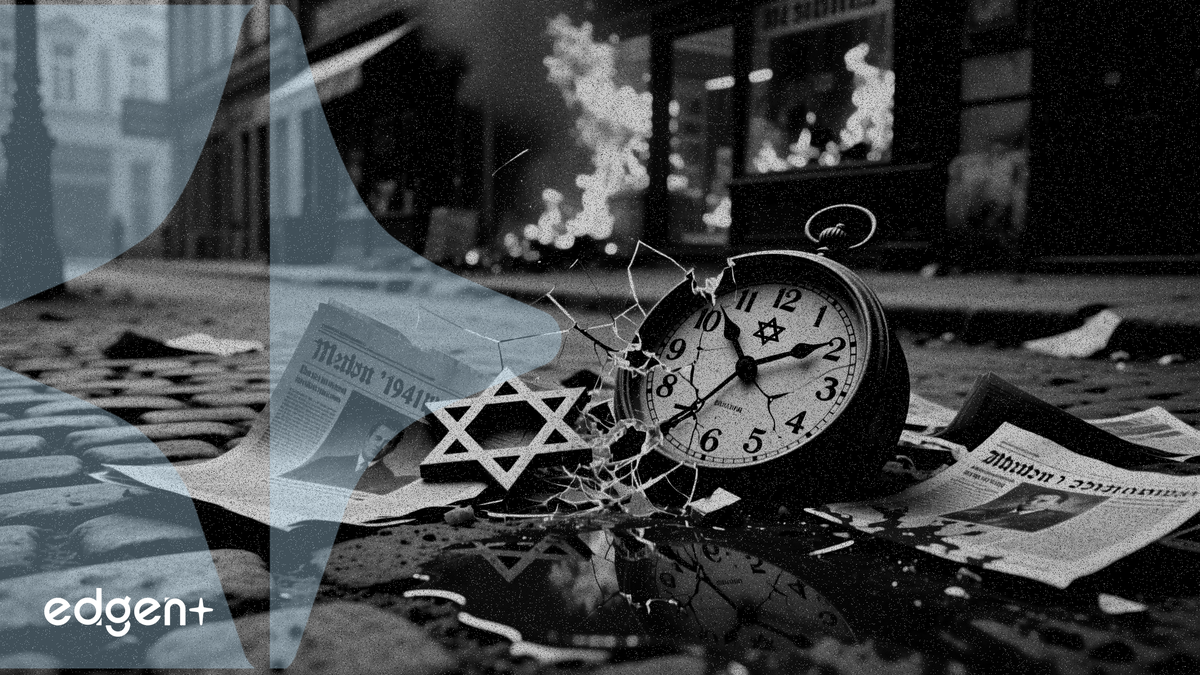
El pogromo de Farhud de 1941 en Bagdad —donde turbas pro-nazis mataron al menos a 128 judíos siete años antes de la fundación de Israel— desenmascara como históricamente falsa la afirmación de que el antisionismo es distinto del antisemitismo.
Turbas pro-nazis iraquíes mataron al menos a 128 judíos, violaron a docenas y saquearon 586 negocios en Bagdad el 1 y 2 de junio de 1941, en un pogromo conocido como Farhud, siete años antes del establecimiento de Israel y antes de que existiera algún refugiado palestino árabe.
"El Farhud ofrece el modelo ideológico del antisemitismo moderno, mostrando cómo los odiadores de judíos integraron el antisionismo en su fanatismo letal antes de que hubiera refugiados palestinos árabes", afirmó Gil Troy, investigador principal en pensamiento sionista del Jewish People Policy Institute en Jerusalén.
La violencia desplazó a 12.311 personas e hirió a otras 600, según el libro del historiador Edwin Black "The Farhud" (2010). Los alborotadores marcaban las casas judías con huellas de manos rojas pintadas por la brigada juvenil Al-Futuwa de inspiración nazi —marcas que anticiparon el triángulo rojo invertido que utiliza Hamás hoy en día. El pogromo fue cultivado por Haj Amin al-Husseini, el gran muftí de Jerusalén, quien huyó de la Palestina bajo mandato británico y llegó a Irak en 1939, escribiendo más tarde a Hitler "buscando el reconocimiento del derecho de los árabes a resolver la cuestión judía de acuerdo con las aspiraciones nacionalistas árabes y de la misma manera que en los países del Eje".
El Farhud desencadenó un éxodo que llevó a 120.000 judíos iraquíes —el 90% de la comunidad— a ser trasladados por aire a Israel en 1950 mediante las Operaciones Ezra y Nehemías, parte de la expulsión más amplia de 850.000 judíos de tierras árabes y musulmanas. El aniversario desafía las afirmaciones modernas de que el antisionismo se opone únicamente a la política israelí, argumenta Troy, aprovechando reservas históricas de antisemitismo que preceden al propio Estado judío.
Las raíces de la comunidad judía iraquí se remontaban a 2.600 años atrás, y la mayoría de los judíos iraquíes se oponían al sionismo antes de que el Farhud destrozara su sensación de seguridad. El pogromo fue facilitado por el "Cuadrado Dorado" —cuatro oficiales pro-nazis que tomaron el poder en un golpe militar el 1 de abril de 1941. Cuando las fuerzas británicas contraatacaron en mayo, los iraquíes pro-nazis señalaron a los judíos como "quinta columna".
Los soldados británicos acampados en las afueras de Bagdad ignoraron los pedidos de intervención durante el asalto de dos días. Algunos residentes musulmanes protegieron a judíos, pero muchos policías y soldados iraquíes encabezaron la violencia, documentó Black. Se registró a un soldado gritando "¡Quédate quieto, hijo de perro sionista!" antes de disparar a un joven judío —una frase que fusionó la retórica antisionista con el antisemitismo letal años antes de que Israel existiera.
De Bagdad al presente
La arquitectura ideológica del Farhud —la colaboración nazi fusionada con el antisionismo islamista— ha demostrado ser duradera. La carta de Al-Husseini a Hitler en febrero de 1941 buscando una "solución a la cuestión judía" árabe prefiguró la carta fundacional de Hamás, que exige la destrucción de Israel. Las marcas rojas de hamsa pintadas en las casas judías en Bagdad en 1941 encuentran su equivalente moderno en el símbolo del triángulo rojo invertido que utiliza Hamás para identificar objetivos israelíes.
La expulsión más amplia de 850.000 judíos de tierras árabes y musulmanas —una crisis de refugiados ampliamente ausente del discurso político occidental— se compara con los 700.000 árabes palestinos que se convirtieron en refugiados durante la Guerra de Independencia de Israel de 1948, aunque solo esta última recibe atención internacional sostenida.
El 85.º aniversario del Farhud llega mientras se intensifica el activismo antisionista en campus occidentales y foros internacionales, y los críticos de Israel enfrentan cada vez más acusaciones de antisemitismo. El registro histórico —que muestra violencia antijudía fusionada con retórica antisionista antes de que existiera el primer refugiado palestino— proporciona un ancla fáctica para un debate que a menudo se conduce en términos abstractos.
Este artículo es solo para fines informativos y no constituye asesoramiento de inversión.