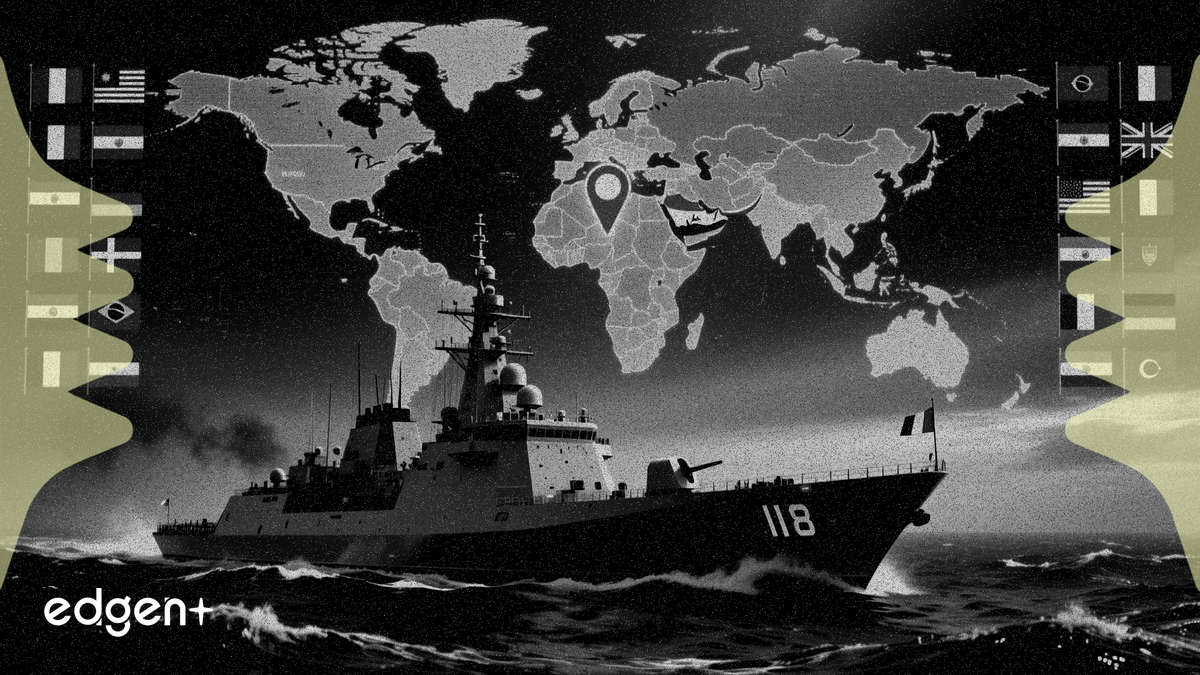
El buque insignia de la marina francesa, el portaaviones Charles de Gaulle, ha llegado al Mar Arábigo para preparar una misión multinacional destinada a asegurar el Estrecho de Ormuz, un cuello de botella para casi una quinta parte del petróleo mundial que ha estado severamente restringido desde finales de febrero. El despliegue se produce mientras los ministros de defensa de más de 40 naciones se reúnen para ultimar los planes para restaurar la confianza en la vital ruta marítima.
"Estamos convirtiendo el acuerdo diplomático en planes militares prácticos para restaurar la confianza en la navegación a través del Estrecho de Ormuz", dijo el Secretario de Defensa del Reino Unido, John Healey, copresidente de las conversaciones, antes de la reunión.
La misión se está planificando mientras se mantiene un frágil alto el fuego entre Estados Unidos, Israel e Irán. Desde que comenzó el conflicto, Irán ha cerrado en gran medida el estrecho, provocando la mayor interrupción del suministro de petróleo de la historia. Solo seis barcos transitaron por el estrecho durante un período reciente de dos días, en comparación con un promedio histórico de 138, según el Centro Conjunto de Información Marítima. Esto ha mantenido los precios del crudo Brent por encima de los 100 dólares el barril, incluso cuando las principales economías han tomado medidas para suavizar el golpe.
La operación naval prevista camina por una delgada línea entre la disuasión y la diplomacia. El presidente francés, Emmanuel Macron, ha subrayado que la iniciativa sería "coordinada con Irán" y no es el preludio de un bloqueo. El Reino Unido y Francia, que también han desplegado el destructor HMS Dragon y aviones de combate Typhoon, insisten en que cualquier acción será puramente defensiva. Teherán, sin embargo, ha advertido que cualquier despliegue de buques de guerra extranjeros se encontraría con "una respuesta decisiva e inmediata", afirmando que solo él puede garantizar la seguridad en el estrecho.
El mercado se ajusta al choque de oferta
El mercado mundial del petróleo ha evitado hasta ahora una escalada a 120 dólares el barril, en gran parte debido a las acciones de las dos economías más grandes del mundo. Estados Unidos ha aumentado las exportaciones de petróleo en 3,5 millones de barriles por día (bpd), principalmente recurriendo a sus inventarios estratégicos, según la Agencia Internacional de la Energía (AIE). Simultáneamente, China, el principal importador mundial, ha recortado sus importaciones en unos "notables" 3,6 millones de bpd, según Morgan Stanley.
Juntos, estos movimientos han compensado unos 7,1 millones de bpd de los 10 millones de bpd de exportaciones perdidas en el Golfo. Sin embargo, los analistas cuestionan la sostenibilidad de este ajuste. "La capacidad de EE. UU. para continuar con este elevado nivel de exportaciones es difícil de calibrar, pero parece estar bajo más presión", dijo Martijn Rats, estratega de materias primas de Morgan Stanley, señalando la reducción de los inventarios estadounidenses.
Impasse diplomático
Los preparativos militares avanzan en un contexto de diplomacia estancada. El presidente de EE. UU., Donald Trump, rechazó el domingo la última propuesta de paz de Irán como "totalmente inaceptable", mientras que Irán sostiene que su oferta de garantizar el paso seguro a cambio de levantar el bloqueo de EE. UU. es "generosa".
La situación sigue siendo volátil en el agua. En la última semana, un barco fue capturado frente a la costa de los Emiratos Árabes Unidos y dirigido hacia Irán, mientras que un buque de carga se hundió cerca de Omán tras ser atacado. Estos incidentes resaltan los riesgos continuos para la navegación comercial y lo mucho que está en juego para la coalición de 40 naciones mientras se prepara para actuar.
Este artículo es solo para fines informativos y no constituye asesoramiento de inversión.