
The world is shifting from financial assets to physical resources as nations stockpile commodities for economic security.
The world is shifting from financial assets to physical resources as nations stockpile commodities for economic security.
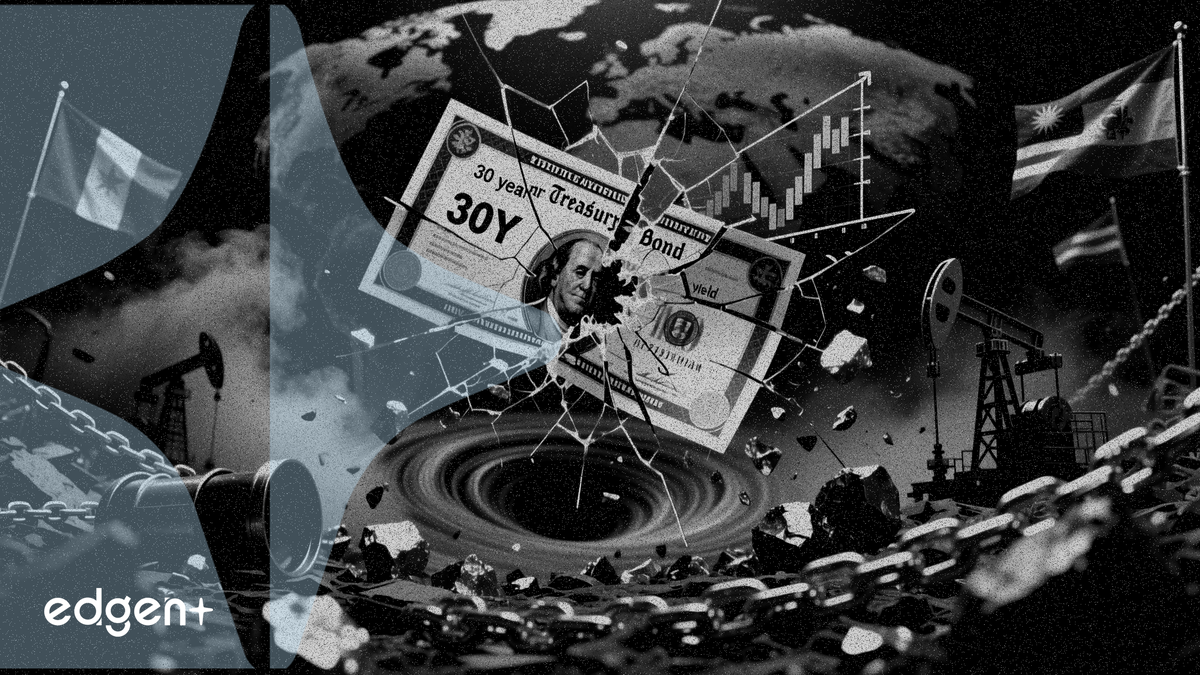
The world is shifting from financial assets to physical resources as nations stockpile commodities for economic security.
A worldwide race for physical resources is creating conditions for a sustained commodity bull market and reinforcing gold's role as a critical reserve asset, two financial leaders said at the Sohn Montreal Conference.
"We are rapidly shifting into a world where the U.S. Treasury was the very backbone against which everything was built, to now we're going to move to where it's commodities," Louis-Vincent Gave, chief executive officer at Gavekal, said.
Bridgewater Associates Co-Chief Investment Officer Karen Karniol-Tambour described the environment as "modern mercantilism," where nations prioritize resilience over efficiency. "It's really a grab for stuff," she said. "You need to get all the commodities you need, the rare earths that you need." The shift follows the freezing of Russian reserves after the 2022 invasion of Ukraine, which prompted many governments to reassess the assumption that U.S. Treasuries were the ultimate liquid asset.
The structural cost of capital must rise in a world where governments face enormous spending requirements to rebuild supply chains, expand domestic manufacturing and secure strategic resources, Karniol-Tambour said. The transition has profound implications for investors accustomed to the disinflationary environment that dominated markets for the past three decades.
Gold and Copper Lead the Commodity Rally
Karniol-Tambour singled out gold as her preferred commodity holding. "It just feels that there's so much uncertainty," she said. "There's just structurally more demand for gold." Geopolitical fragmentation and concerns over reserve security are forcing governments, institutions and investors to reconsider where they store wealth, she added.
Gave identified copper as his highest-conviction commodity trade, citing the enormous investment required to expand electricity grids and energy infrastructure to support the artificial intelligence boom. "Everybody's saying, 'I need to rebuild my electricity grid. I need to put in more solar panels. I need to become more resilient.' A lot of that is very hard to do without copper," he said. The shortages will emerge in power generation and electrical infrastructure rather than semiconductors, Gave added.
The AI buildout is creating unprecedented demand for energy, electricity transmission and industrial metals, occurring simultaneously with the broader scramble for strategic resources. That convergence is driving what Karniol-Tambour described as a structurally more inflationary world where "you need lots of physical things as quickly as possible."
Strategic Minerals and the New Geopolitical Order
The race extends beyond gold and copper to critical minerals such as lithium, cobalt, nickel, graphite and rare earth elements that power electric vehicles, renewable energy systems, semiconductors and defense technologies. China dominates global processing capacity for many of these minerals, controlling a significant share of lithium refining, graphite processing and rare earth separation, according to industry data.
The Quad's Critical Minerals Initiative, involving the U.S., Japan, Australia and India, represents a coordinated effort to diversify supply chains. Resource nationalism is also rising: Indonesia has restricted nickel ore exports to encourage domestic processing, while Chile has moved toward greater state participation in lithium development.
For decades, governments accumulated U.S. Treasuries as the ultimate liquid asset that could be converted into whatever commodity or resource a country needed during a crisis. That assumption is now being tested as nations build strategic reserves of oil, fertilizer, agricultural products and industrial materials. This trend will absorb global liquidity and reinforce inflationary pressures across commodity markets, Gave said.
The changing geopolitical environment is also altering how countries think about reserves and financial security. Karniol-Tambour said the risk in this environment is that "any vulnerability that you have in any topic can be weaponized."
This article is for informational purposes only and does not constitute investment advice.
