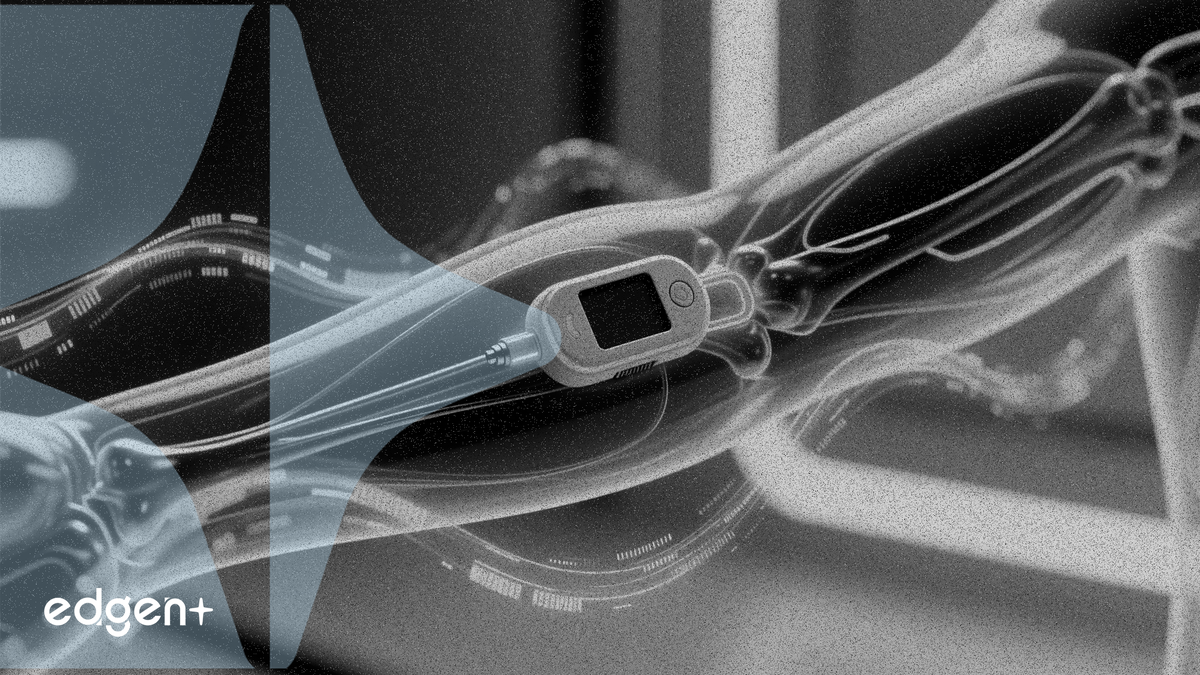
Glucotrack, Inc. has submitted its Investigational Device Exemption (IDE) application to the U.S. Food and Drug Administration, a critical step toward clinical trials for its fully implantable glucose monitor designed to operate for 3 years without an on-body wearable.
"Submission of our IDE represents meaningful progress in the development of our CBGM technology and underscores our commitment to helping people with diabetes live more fully,” said Paul V. Goode, PhD, President and Chief Executive Officer of Glucotrack. “Our fully implantable solution is designed to be comfortable and discreet so that people can focus on their daily lives."
The company's continuous blood glucose monitoring (CBGM) system is designed for a sensor longevity of three years, a significant increase over current wearable CGMs that require frequent sensor changes. The system aims to provide real-time, blood-based glucose measurements with minimal calibration. This IDE submission follows several years of preclinical evaluation and design work.
This regulatory filing moves Glucotrack (Nasdaq: GCTK) a step closer to competing in the rapidly growing diabetes technology market. Successful clinical trials and eventual FDA approval could position the company to challenge established players by offering a "set and forget" solution, potentially capturing a share of the more than 40 million people in the U.S. with diabetes.
A New Approach to Glucose Monitoring
The submission to the FDA is a key milestone for Glucotrack, potentially de-risking its development pathway. The company's technology aims to address common complaints with existing continuous glucose monitors, such as the need for frequent sensor replacements, the visibility of on-body devices, and the recurring cost of supplies.
"We look forward to generating the clinical data needed to advance toward regulatory approval and demonstrate that continuous glucose monitoring can be both highly accurate and virtually invisible,” Goode added.
The global diabetes market is vast and expanding. According to the World Health Organization, the prevalence of diabetes in adults has doubled from 7 percent in 1990 to 14 percent in 2022. In the U.S. alone, more than 115 million people are estimated to have prediabetes, with a large portion unaware of their condition.
The Broader Landscape
While Glucotrack focuses on a hardware solution, the broader field of diabetes management is seeing innovation on multiple fronts. Researchers at institutions like Stanford University are using AI to analyze data from existing CGMs to identify different types of Type 2 diabetes earlier. Others at Imperial College London are developing AI that can predict future diabetes risk by analyzing electrocardiograms (ECGs).
Glucotrack's approach, if successful, would represent a significant shift in the user experience for continuous monitoring. Current market leaders in the CGM space include Dexcom (DXCM) and Abbott Laboratories (ABT) with its FreeStyle Libre system. These systems typically involve a sensor worn on the skin that needs to be replaced every 10 to 14 days. Glucotrack’s proposed 3-year implantable sensor would be a major differentiator.
The company plans to proceed with its U.S. clinical study following FDA review and approval of the IDE application.
This article is for informational purposes only and does not constitute investment advice.