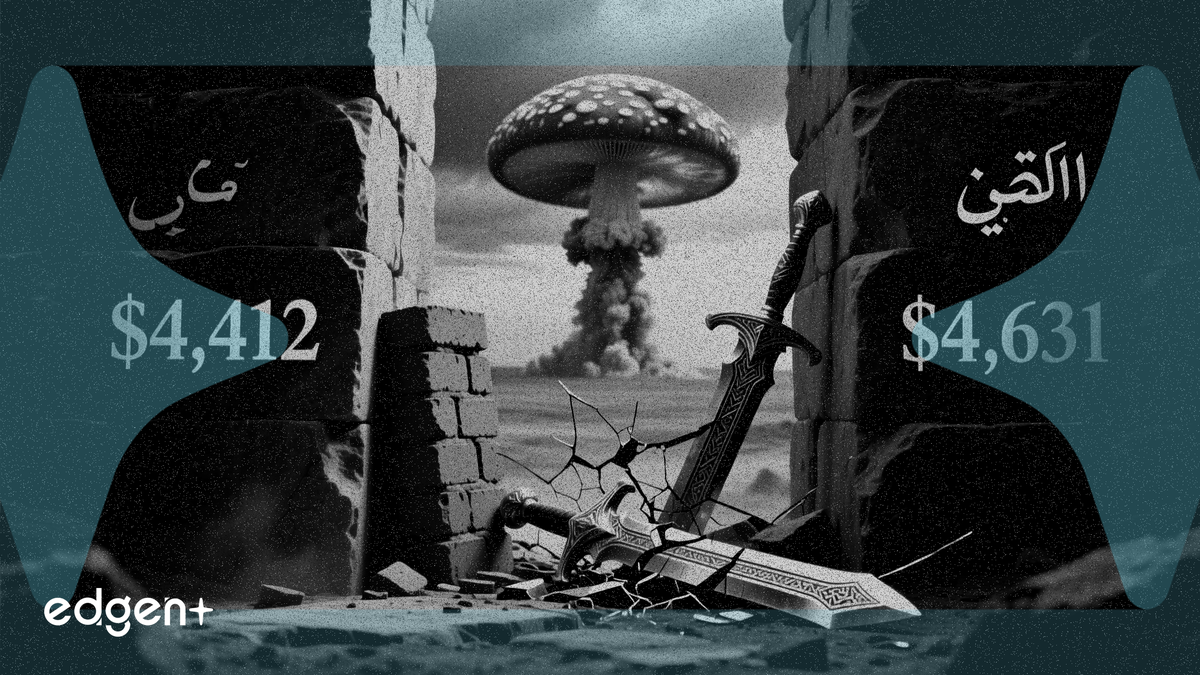
El oro de COMEX cotiza en su rango más estrecho en meses, comprimido entre la media móvil de 50 días en $4,630.62 y la media móvil de 200 días en $4,412.44, mientras el conflicto con Irán mantiene los rendimientos elevados y el dólar firme.
"El conflicto con Irán ha sostenido los rendimientos y el dólar, reduciendo las expectativas de recortes de tasas, pero las preocupaciones por la deuda, la desdolarización, la inflación persistente y la demanda constante de los bancos centrales siguen siendo pilares clave de soporte para el oro", dijo Ole Hansen, jefe de estrategia de materias primas de Saxo Bank. Esos impulsores de 2025 se reafirmarán una vez que disminuya la presión geopolítica de la guerra con Irán, añadió.
El oro al contado puso a prueba la línea alcista-bajista en $4,481.78 a principios de esta semana, encontrando soporte cerca del nivel de retroceso del 20% desde el máximo histórico de enero de $5,602.23. El metal ha caído aproximadamente un 16% desde ese máximo histórico de cierre, con expectativas de tasas más altas desde la escalada de tensiones afectando el sentimiento. El rendimiento del bono del Tesoro estadounidense a 10 años cayó al 4.43% el martes, mientras que el de 2 años se deslizó cerca del 4.02%, y el Índice del Dólar Estadounidense rondó los 99.05 — los tres vientos en contra cediendo simultáneamente por primera vez en meses.
La reducción de la brecha entre las medias móviles de 50 y 200 días señala que se acerca una ruptura importante, aunque la dirección sigue siendo incierta. Dos techos descendentes desde abril sugieren riesgo a la baja, con la media de 200 días en $4,412.44 como el próximo nivel de soporte. Una ruptura por debajo de ese nivel expondría el mínimo del 28 de mayo de $4,366.23 y el valle del 23 de marzo de $4,099.12. Al alza, recuperar la media de 50 días abriría un camino hacia el máximo de abril cerca de $4,891.
Los impulsores estructurales permanecen intactos
La demanda de oro de los bancos centrales totalizó 243.7 toneladas métricas en el primer trimestre, en línea con el promedio de 242.8 toneladas de los ocho trimestres anteriores, según el Consejo Mundial del Oro. La venta de aproximadamente 70 toneladas por parte de Turquía en marzo — una medida táctica para defender la lira en medio del aumento de los costos de importación de energía — fue la mayor venta individual, pero las tenencias se han estabilizado desde entonces en torno a las 535 toneladas.
La decisión de India a mediados de mayo de más que duplicar los aranceles de importación de oro al 15% desde el 6% podría reducir la demanda de los consumidores hasta en una cuarta parte este año, estiman los analistas. La demanda de los consumidores indios totalizó 721.1 toneladas en 2025. Un déficit de 180 toneladas representaría menos de una doceava parte de la demanda global de inversión en oro de 2,204 toneladas el año pasado, lo que sugiere que otros compradores pueden absorber la brecha.
Los precios de la energía y el cálculo de la Fed
El petróleo crudo West Texas Intermediate retrocedió el martes después de que el presidente Donald Trump afirmara que las negociaciones con Irán continúan, eliminando parte de la prima por interrupción del suministro del mercado. Un menor precio del petróleo cambia el cálculo de la inflación para el oro — los costos energéticos son el principal insumo que impulsa las expectativas de inflación, y un retroceso alivia la presión sobre la Reserva Federal para mantener una postura restrictiva.
Cuanto más tiempo permanezca efectivamente cerrado el Estrecho de Ormuz — ahora 89 días — mayor será el riesgo de impactos económicos negativos que apoyarían la demanda de cobertura del oro. Las reservas mundiales de petróleo que han amortiguado la pérdida de oferta se están agotando, y los analistas esperan que los precios de la energía y los alimentos aumenten aún más a medida que los inventarios se acerquen a los niveles mínimos operativos.
El informe de nóminas no agrícolas de mayo del viernes es el próximo catalizador. Los economistas esperan aproximadamente 85,000 empleos con una tasa de desempleo del 4.3%. Un dato inferior desafiaría la narrativa de tasas más altas por más tiempo y probablemente impulsaría el oro al alza. Un dato superior enviaría los rendimientos y el dólar nuevamente al alza, poniendo a prueba el repunte de hoy.
Este artículo tiene fines informativos únicamente y no constituye asesoramiento de inversión.