
Key Takeaways: Gold's structural under-allocation in Western portfolios means even modest capital inflows can move prices sharply.
Key Takeaways: Gold's structural under-allocation in Western portfolios means even modest capital inflows can move prices sharply.
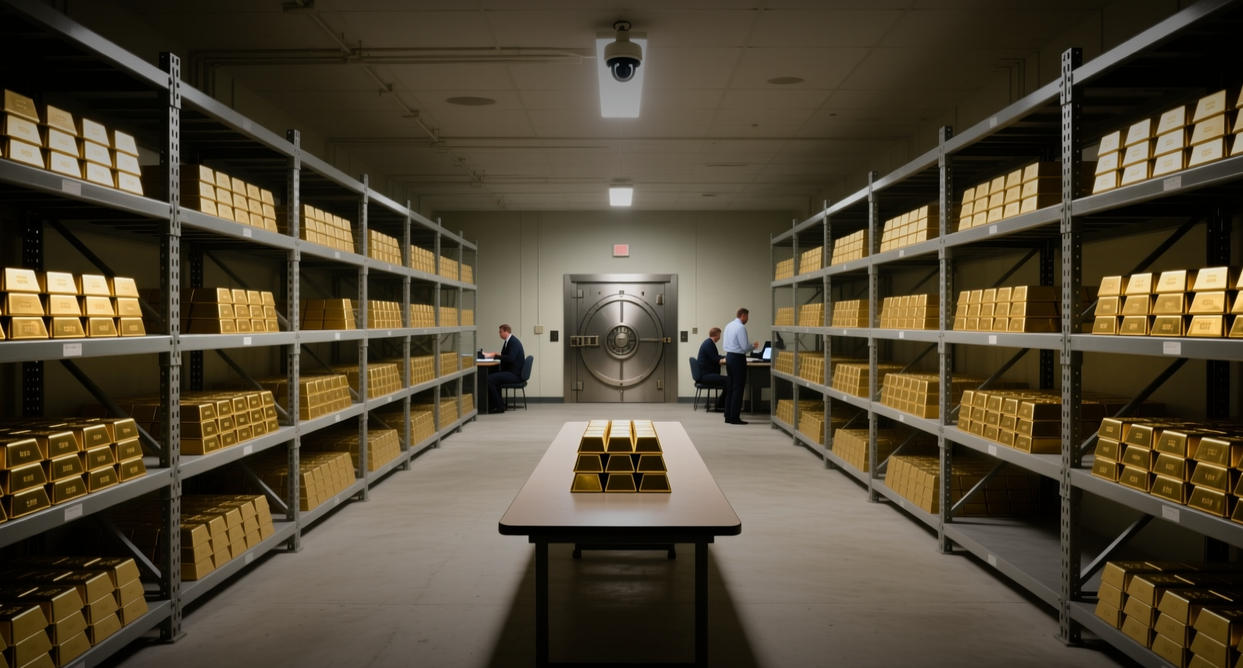
Gold's structural under-allocation in Western portfolios means even modest capital inflows can move prices sharply.
Gold's share of US private financial portfolios stood at 0.17 percent in December, below the 2012 peak, and each 0.01 percentage point increase in allocation lifts prices about 1.4 percent, Goldman Sachs estimates.
JPMorgan calculated in May 2025 that if foreign investors shifted 0.5 percent of their US asset holdings to gold — roughly $700 billion annually — prices could rise about 18 percent per year under prevailing market conditions.
The price sensitivity stems from a structural mismatch. Above-ground gold stock exceeds $30 trillion, and London spot weekly turnover surpassed $1 trillion earlier this year, yet most of that volume represents high-frequency trading among banks, market makers, and algorithmic funds rather than new investment demand for physical metal, Bloomberg reported.
Gold trades near $4,719 an ounce, up 15 percent in August, with Fed Chair Kevin Warsh's Jackson Hole speech Friday the next event to watch for the "currency debasement trade" — investors betting policymakers will erode dollar purchasing power to manage debt.
The currency debasement trade has gained momentum as Treasury Secretary Scott Bessent weighs tapping a $935 billion cash pile to fund bond buybacks, CNBC reported Monday. The Treasury General Account, the government's checking account at the Federal Reserve, stood at $935 billion as of Aug. 20. Bessent called the operation a "Treasury Twist," referencing buying long-term bonds funded by short-term issuance.
The 10-year Treasury yield fell as much as four basis points to 4.69 percent, while the 30-year dropped to around 5.215 percent. Yields remain near levels that prompted Treasury intervention last week, when the 30-year touched a 19-year high above 5.27 percent.
Portfolio Allocation Gap
Gold's 0.17 percent allocation in US private portfolios sits below the 2012 peak, reflecting years of strong US equity performance that suppressed the metal's relative appeal. This under-owned status is both the source of price sensitivity and the potential upside if investor sentiment shifts.
Société Générale raised its gold allocation to 10 percent for the third quarter, up from 7 percent in the second quarter, using the metal as a hedge against policy uncertainty rather than a direct inflation hedge. The French bank identified gold as one of seven assets investors can use to hedge against inflation risks, alongside inflation-linked bonds, copper, select equities, and private credit.
What's Next
Whether gold sustains its rally depends on whether investors continue focusing on US government debt concerns rather than shifting attention to Iran hostilities or the AI investment boom. Warsh's Jackson Hole remarks Friday will be closely watched for signals that fiscal pressures are transmitting to monetary policy.
Silver has outperformed gold in August, up almost 20 percent on the month versus gold's 15 percent, though silver slipped about 1 percent Monday as prices consolidated below the $70 resistance level. Copper gained 0.46 percent and trades just below all-time highs.
This article is for informational purposes only and does not constitute investment advice.
