
The Hong Kong dollar is testing the weak side of its 7.75-7.85 peg as near-zero borrowing costs fuel a carry trade against the greenback.
The Hong Kong dollar is testing the weak side of its 7.75-7.85 peg as near-zero borrowing costs fuel a carry trade against the greenback.
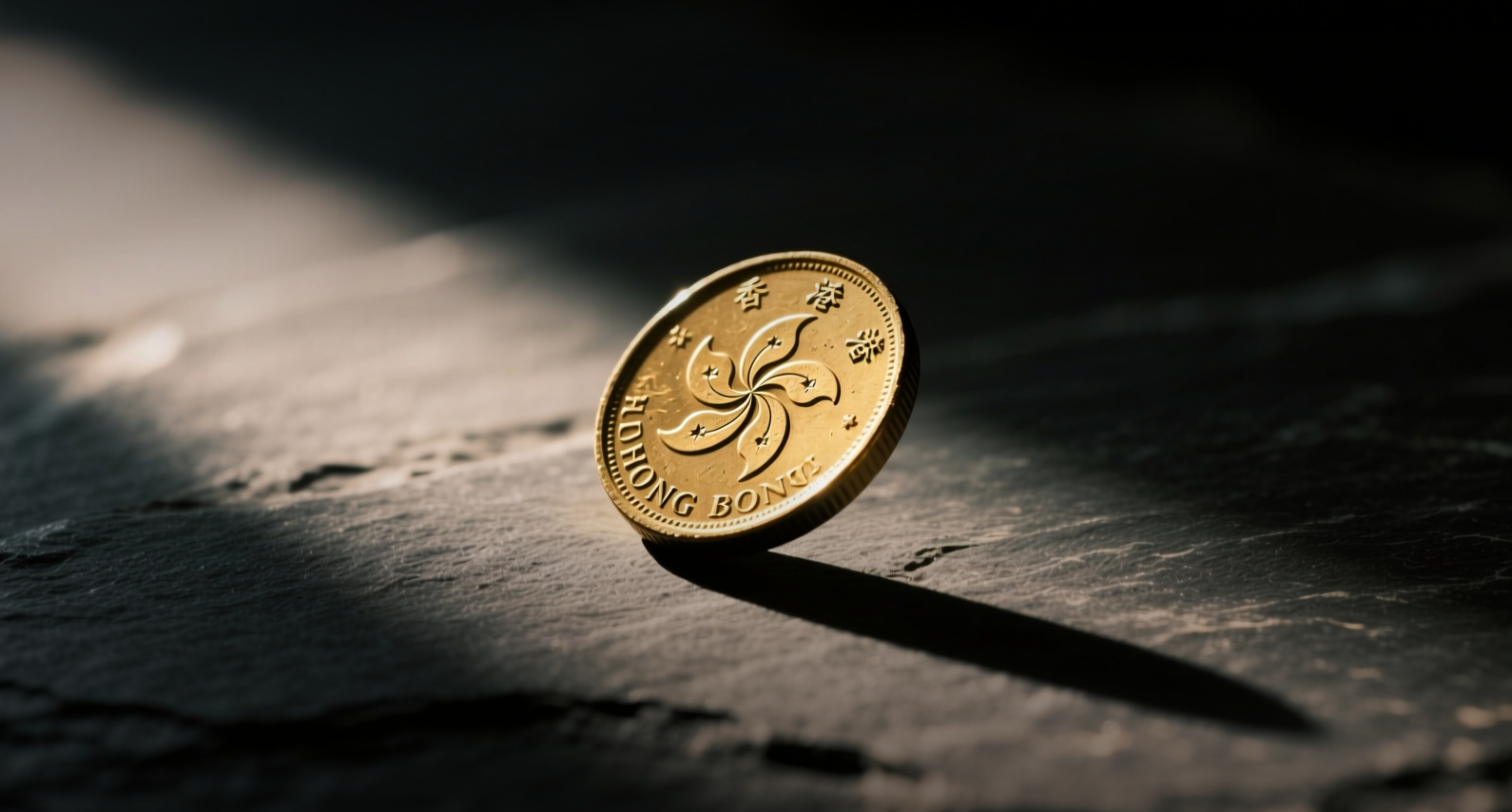
The Hong Kong dollar edged toward 7.84 per US dollar on Thursday, approaching the 7.85 weak-side convertibility guarantee as 1-year implied volatility dropped to its lowest since January 2022, Bloomberg-compiled data show.
The collapse in overnight HIBOR from about 4.5 percent to near zero, combined with multi-year low volatility, has made shorting the Hong Kong dollar unusually cheap, according to Bloomberg data. Traders borrow HKD at near-zero rates, swap into higher-yielding US dollars, and pocket the spread — a carry trade that is self-reinforcing as more short selling pushes the currency closer to the intervention boundary.
The USD/HKD exchange rate touched 7.839 on June 25, within 0.14 percent of the 7.85 weak-end limit that triggers automatic HKMA intervention. One-year USD/HKD implied volatility has fallen to levels not seen since January 2022, partly reflecting reduced demand for US dollars in Hong Kong after the start of the Iran war. The last time volatility was this low, the HKD spent several weeks oscillating near the weak end before the HKMA stepped in.
If the HKD hits 7.85, the Hong Kong Monetary Authority must sell US dollars and buy HKD, draining local liquidity. The last such intervention came in June 2025, when the HKMA sold US$1.2 billion to defend the peg, reducing the banking system's Aggregate Balance to HK$164.1 billion. A repeat intervention would tighten funding conditions and could pressure Hong Kong equities and property markets that have benefited from cheap HKD liquidity.
Rate Differentials Drive the Trade
The mechanics of the carry trade are straightforward. With overnight HIBOR near zero while US rates remain elevated, the interest rate differential between the two currencies is among the widest in recent years. Each basis point of spread represents profit for traders willing to short the HKD, and the trade is self-reinforcing — more short selling pushes the currency closer to 7.85, which attracts additional carry trades.
The June 2025 intervention offers a recent precedent. When the HKMA sold US$1.2 billion, it temporarily drained HKD liquidity and pushed interbank rates higher. But the effect proved short-lived as the banking system remained awash in Hong Kong dollars, allowing HIBOR to drift back down and the carry trade to resume within weeks.
The current environment differs from 2025 in one key respect: the Iran war has reduced demand for US dollars in Hong Kong, according to Bloomberg. This has contributed to the collapse in implied volatility, making the carry trade even more attractive by removing the hedging cost that typically discourages short positioning.
Cross-Asset Implications
A fresh HKMA intervention would have consequences beyond the currency market. Hong Kong stocks, as measured by the Hang Seng Index, have benefited from the cheap HKD funding environment that has supported leveraged positions in local equities and property. A liquidity squeeze triggered by aggressive USD sales could raise funding costs for those positions, creating a potential headwind for Hong Kong asset prices.
The impact could also spill into Asian foreign exchange markets. Sustained HKD weakness that triggers repeated HKMA intervention would indicate broader pressure on Asian currencies as the wide US-Hong Kong rate differential attracts capital outflows from the region. The Singapore dollar and Taiwan dollar, which also operate managed currency regimes, could face similar dynamics if US rates stay elevated.
The Trigger Level
The intervention threshold is clear: 7.85 per US dollar. At current levels around 7.84, the HKD has about 0.1 Hong Kong cents of room before the HKMA must act. With implied volatility at multi-year lows and the carry trade still profitable, the path of least resistance points toward the weak end. The question is not whether the HKD will test 7.85, but when — and how aggressively the HKMA will respond.
If history is a guide, the HKMA may allow the currency to trade near the weak end for some time before intervening, as it did in mid-2025. The timing of intervention is never telegraphed, and traders who are over-leveraged on the short side risk getting caught in a sharp reversal when the HKMA eventually acts.
This article is for informational purposes only and does not constitute investment advice.
