



The delisting of USD1 marks the first time a politically connected stablecoin issuer has used smart-contract freeze powers to force an exchange off-ramp.
The delisting of USD1 marks the first time a politically connected stablecoin issuer has used smart-contract freeze powers to force an exchange off-ramp.
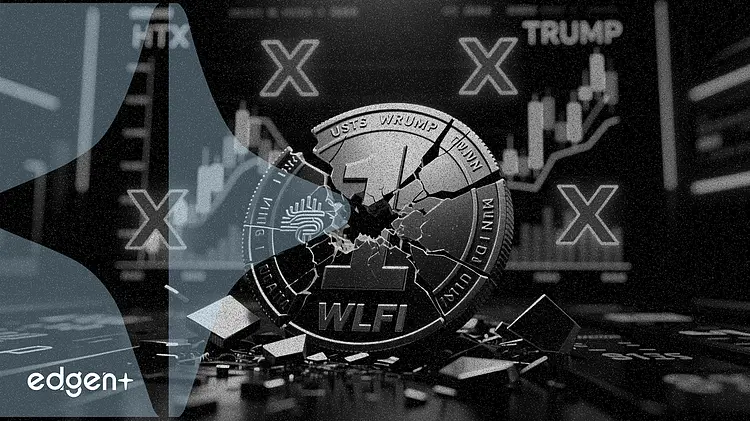
HTX, the crypto exchange linked to Tron founder Justin Sun, delisted USD1, the stablecoin issued by Trump family-backed World Liberty Financial, on June 7 after WLFI froze on-chain addresses associated with the exchange, citing sanctions compliance.
"The World Liberty Financial project team recently stated that it has unilaterally imposed a freeze on specific HTX on-chain addresses based on sanctions compliance reviews," HTX said in a June 6 statement. "As a result, the on-chain circulation of certain WLFI assets associated with these addresses has been restricted."
The exchange had already suspended four trading pairs — WLFIUSDT, USD1/USDT, BTC/USD1 and ETH/USD1 — on June 5 at 13:00 UTC. It converted all remaining user USD1 balances to Tether's USDT at a 1-to-1 ratio effective June 7. HTX characterized the freeze as procedurally illegitimate, saying it was imposed "without sufficient prior communication, adequate contractual or legal grounds, transparent disclosure or adherence to due process."
The delisting is the most operationally significant escalation yet in an acrimonious legal dispute between Sun and World Liberty Financial, one that now tests whether a stablecoin issuer may exercise smart-contract freeze powers against exchange counterparties without regulatory authorization. HTX has threatened legal action to recover what it describes as improperly restricted user assets.
The mechanism at the center of the dispute functions through WLFI's smart-contract architecture, which incorporates a designated guardian address with the technical authority to blacklist specific wallet addresses and restrict token transfers at the contract level — without court authorization, regulatory order or prior notification to the affected counterparty. When WLFI invoked this mechanism against addresses linked to HTX, the exchange could no longer process withdrawals, facilitate trading or redeem USD1 positions through standard on-chain pathways.
The UK sanctions context provides the stated rationale. On May 26, the UK government designated Huobi Global S.A., citing "reasonable grounds to suspect" the entity had supported Russia's government through financial services. HTX has disputed the applicability of this designation, stating that Huobi Global S.A. is "distinct from the online HTX exchange." WLFI has not publicly confirmed that it froze HTX's addresses, nor has it specified which sanctions framework it applied. The project posted on X on June 4 that it "maintains risk-based sanctions compliance controls" in light of recent sanctions updates.
The Broader Legal War
The USD1 delisting extends a dispute that began in September 2025, when WLFI's guardian address blacklisted a Sun-linked wallet holding approximately 545 million WLFI tokens. Sun sued WLFI in California federal court in April, alleging the platform froze his tokens and threatened to burn them "without any proper justification." WLFI countersued for defamation in May, claiming Sun made false statements and violated WLFI token sale terms through alleged prohibited transfers, short-selling and straw purchases.
For USD1, the loss of a major trading venue represents a significant setback. The stablecoin had gained visibility through its association with World Liberty Financial, whose advisers include President Donald Trump, Donald Trump Jr., Eric Trump and Barron Trump. Whether the dispute is resolved or escalates into further legal action could determine how other exchanges approach support for the asset.
This article is for informational purposes only and does not constitute investment advice.
