Hyundai Motor Group completed its five-year path to full ownership of Boston Dynamics on Thursday, paying SoftBank Group $325 million for the remaining 10% stake and clearing the way to deploy humanoid robots on automotive assembly lines starting in 2028.
Hyundai Motor Group acquired SoftBank's roughly 10% stake in Boston Dynamics for $325 million, making the U.S. robotics company a wholly owned subsidiary and locking in a captive supplier of humanoid robots for its factories.
"This transaction removes the last external governance layer and aligns Boston Dynamics' product roadmap directly with Hyundai's manufacturing strategy," said Tom Brennan, M&A analyst at Edgen. "The vertical integration — Hyundai Mobis building the actuators, Boston Dynamics building the robots, Hyundai's own factories as the launch customer — is something no other humanoid manufacturer can match."
The deal values Boston Dynamics at roughly $3.4 billion, more than triple the $1.1 billion valuation when Hyundai acquired an 80% stake from SoftBank in June 2021 for about $880 million. SoftBank's remaining 20% holding had been diluted to approximately 9.65% through subsequent capital injections — Hyundai poured roughly 3.28 trillion Korean won into Boston Dynamics to prevent capital impairment. The put option, embedded in the original 2021 agreement, allowed SoftBank to force the buyout if Boston Dynamics had not completed a U.S. IPO within roughly four years. The company did not list publicly. The final contractual window runs to July 20, though board approvals at four Hyundai affiliates — Hyundai Motor, Kia, Hyundai Mobis and Hyundai Glovis — were completed in late June.
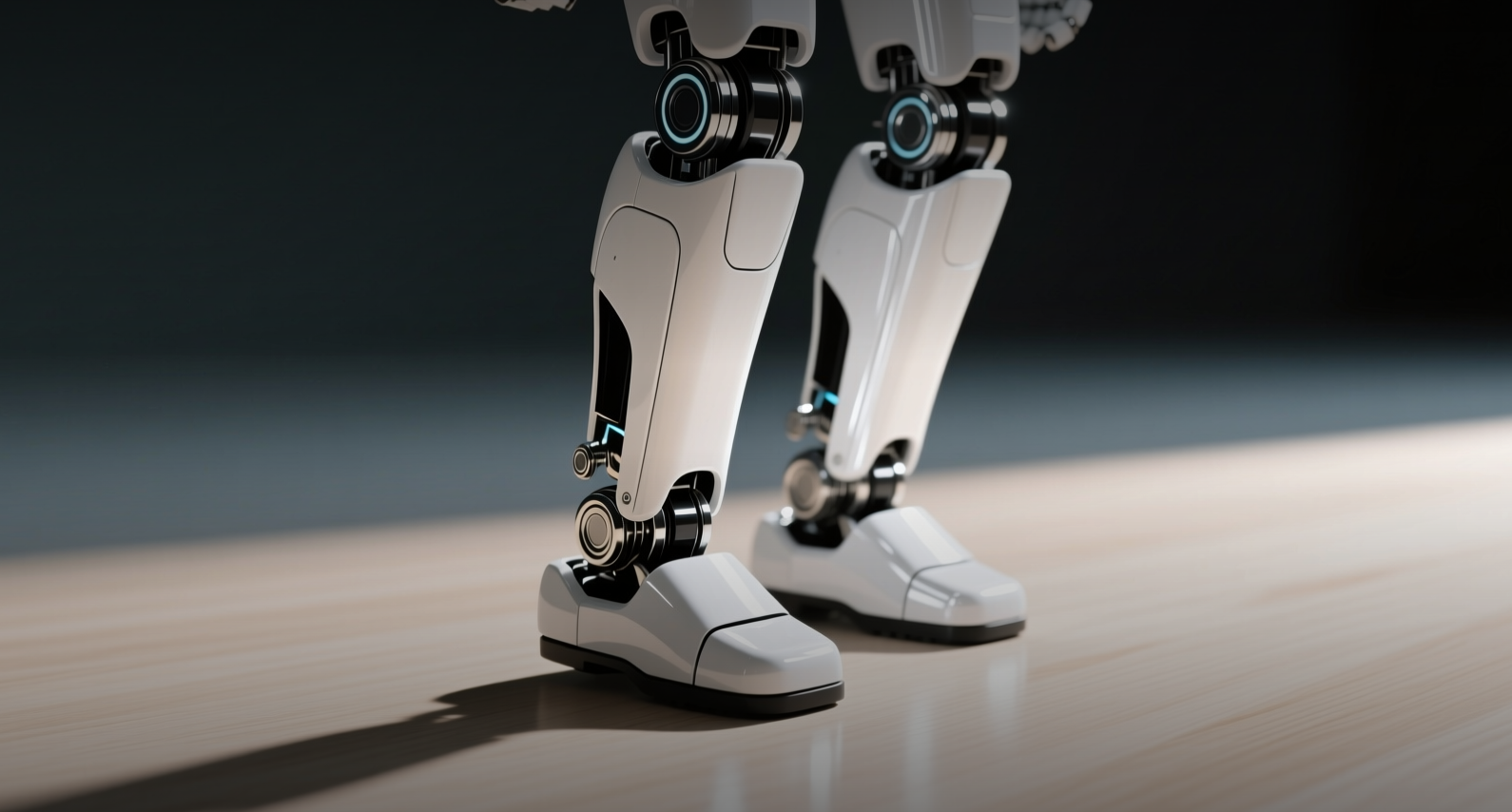
Full ownership gives Hyundai undivided authority over Atlas, the fifth-generation electric humanoid robot that Boston Dynamics began commercial production of in January. Hyundai plans to deploy more than 25,000 Atlas units across its manufacturing facilities and is targeting annual production capacity of 30,000 robots by 2028 from a dedicated factory near Savannah, Georgia. Atlas is scheduled to begin parts-sequencing work at Hyundai's Metaplant in Georgia in 2028, expanding to component assembly by 2030. The robot carries a price tag of roughly $320,000 per unit — framed internally as below the two-year payroll cost of two U.S. manufacturing workers — but has not yet been tested against arms-length commercial buyers.
What Full Ownership Changes
The acquisition removes SoftBank as a minority voice in Boston Dynamics' boardroom and aligns the company's development priorities with Hyundai's manufacturing needs. Hyundai Mobis, the group's auto-parts affiliate, manufactures the actuators that power Atlas's joints — the same supply chain that builds components for Hyundai cars produces the hardware for Hyundai robots. Boston Dynamics handles system integration, software and the reinforcement-learning training pipeline that allows Atlas to generalize across tasks rather than follow fixed scripts.
The electric Atlas, which replaced the hydraulic platform retired in April 2024, carries 56 degrees of freedom, a 2.3-meter reach and a maximum payload of 50 kilograms. Its dual battery packs can be swapped autonomously in roughly three minutes. The robot operates between minus 4 and 104 degrees Fahrenheit and can work outdoors.
Nine days after Hyundai's board approved the acquisition, Atlas appeared at the FIFA World Cup on July 5, delivering the ceremonial match ball at the Brazil-Norway match in East Rutherford, New Jersey — the first humanoid robot to appear in a live World Cup environment. The deployment tested the robot's ability to handle natural grass traction and a radio frequency environment saturated by 80,000 spectators' phones, problems that do not appear in laboratory settings.
SoftBank Exits Into a Bigger Bet
For SoftBank, the $325 million exit represents a small portion of the capital campaign Masayoshi Son is running elsewhere. SoftBank has reported a position of roughly $41 billion in OpenAI and is forming Roze AI, a new venture using artificial intelligence and robotics to build physical infrastructure including data centers. The Financial Times reported that Son is targeting a $100 billion valuation for Roze and a potential public listing as early as 2026. Roze could consolidate existing SoftBank infrastructure assets alongside ABB Robotics, which SoftBank agreed to acquire in 2025.
The strategic divergence between the two former partners is precise: Hyundai wants Atlas assembling electric vehicles in Georgia. Son wants robots assembling the buildings that run artificial intelligence.
Three days after the Hyundai board approved the acquisition, Boston Dynamics announced a separate $100 million investment in a new 323,000-square-foot robotics and AI center in Waltham, Massachusetts, near its existing headquarters. The company anticipates creating 1,250 new jobs by 2033, roughly doubling its global workforce. Interim CEO Amanda McMaster described the investment as enabling the company to "launch our third robot platform this decade" — referring to Stretch and Atlas as the first two.
The Commercial Test Ahead
What full ownership cannot yet provide is external market validation. An Atlas that works only inside Hyundai's own plants, at an internally subsidized deployment cost, has not proven itself commercially. Boston Dynamics plans to expand commercial availability to additional industrial customers in 2027. Until then, the commercial case rests on Hyundai's own operational data.
The labor question also remains unresolved. The Hyundai Motor branch of the Korean Metal Workers' Union issued a public statement in January declaring that Atlas would not be permitted to enter Hyundai factories without a formal labor-management agreement. Hyundai Vice Chair Jaehoon Chang has maintained that human workers will shift to higher-value roles such as training, supervising and maintaining robotic systems. The 2026 summer contract negotiations are the expected escalation point.
Boston Dynamics CEO Robert Playter has set the performance bar explicitly: Atlas must be capable of learning new factory tasks within a day or two and achieve 99.9% reliability before it earns a permanent place on any production line. That standard has not yet been documented in a sustained multi-shift industrial environment.
This article is for informational purposes only and does not constitute investment advice.