

Intel's bet on advanced packaging as a competitive weapon against TSMC just got a new general.
Intel's bet on advanced packaging as a competitive weapon against TSMC just got a new general.
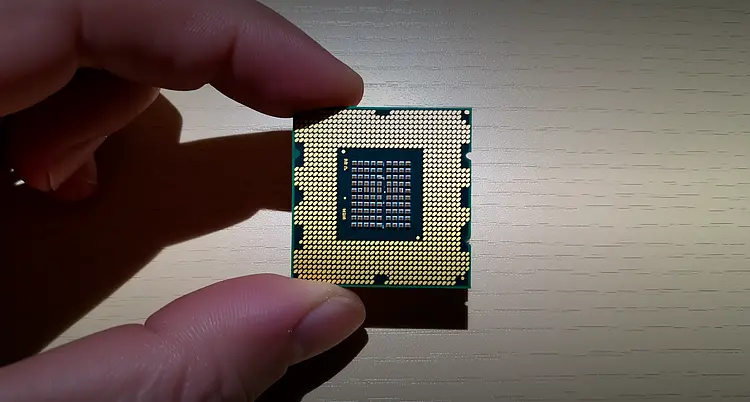
Intel's bet on advanced packaging as a competitive weapon against TSMC just got a new general.
Intel appointed former SK hynix chief Seok-Hee Lee to lead its advanced packaging business, elevating the technology as a key differentiator in its foundry push to win customers including Apple.
"Advanced packaging and system integration are becoming defining capabilities for next-generation computing systems," Lip-Bu Tan, Intel's chief executive officer, said in a statement.
Lee, who previously served as president and CEO of both SK hynix and SK On, will oversee all advanced packaging, system integration and back-end manufacturing, reporting directly to Tan. Intel is preparing to ramp two packaging technologies — EMIB-T (embedded multi-die interconnect bridge) and HBI (hybrid bonding interconnect) — to high volume for customers. Naga Chandrasekaran continues to lead front-end technology development and manufacturing, including the ramp of Intel 18A and 14A nodes.
The appointment comes as Intel seeks to prove its foundry can deliver at scale. The company posted $52.9 billion in revenue in fiscal 2025, down 0.5% from a year earlier, and recorded a net loss of $267 million. Its shares have more than tripled this year on the strength of a preliminary deal to manufacture chips for Apple and $8.9 billion in US government backing, but Intel's cost per chip still runs roughly three times that of TSMC and its yields trail well behind.
Advanced packaging — the process of stacking and connecting multiple chips in a single package — has become a critical battleground as chip designers hit physical limits on shrinking transistors. TSMC's CoWoS (chip-on-wafer-on-substrate) packaging is in such high demand for Nvidia's AI accelerators that the Taiwanese foundry has been racing to expand capacity. Intel's EMIB and HBI technologies aim to offer an alternative, particularly for customers seeking to integrate logic, memory and networking components in a single package. The global advanced packaging market is projected to reach $78 billion by 2028, according to industry estimates, making it one of the fastest-growing segments in semiconductors.
Lee's appointment reunites him with Intel after a career that began at the company in engineering roles before he rose to lead SK hynix, the world's second-largest memory maker. His experience running high-volume manufacturing at scale directly addresses Intel's biggest challenge: proving it can deliver packaging at the volumes and quality that customers like Apple demand.
Intel's foundry ambitions hinge on landing marquee customers. The preliminary agreement with Apple, announced by President Donald Trump in May after more than a year of White House-brokered negotiations, would mark the strongest signal yet of Intel's turnaround under Tan. But the deal remains preliminary, and Apple has internal doubts about whether non-TSMC silicon can match the yield, performance and timing it has built its products around. Google and Nvidia have also held exploratory talks with Intel as a backup to TSMC, part of a broader scramble for second sources as Taiwan's dominance becomes a strategic liability.
The packaging push also creates a potential conflict with TSMC, which has been investing heavily in its own advanced packaging capacity. TSMC's CoWoS capacity is expected to double in 2026, the company said on its most recent earnings call, as it struggles to keep pace with demand from Nvidia and AMD. Intel's entry into the market with EMIB-T and HBI could provide much-needed alternative capacity for customers seeking to diversify their supply chains.
Intel shares trade at 108 times forward earnings, a steep premium to the sector benchmark of 37.6 times, reflecting investor optimism about the foundry turnaround. The US government holds roughly a 10 percent stake in Intel following the $8.9 billion stock purchase in August 2025, giving Washington a direct financial interest in the company's success. Whether Lee's appointment accelerates that timeline will depend on execution: Intel must demonstrate it can match TSMC's yields and costs before the Apple deal — or any other major customer agreement — moves from preliminary to production.
This article is for informational purposes only and does not constitute investment advice.
